
Short Answer
21 Facts About Gerbils
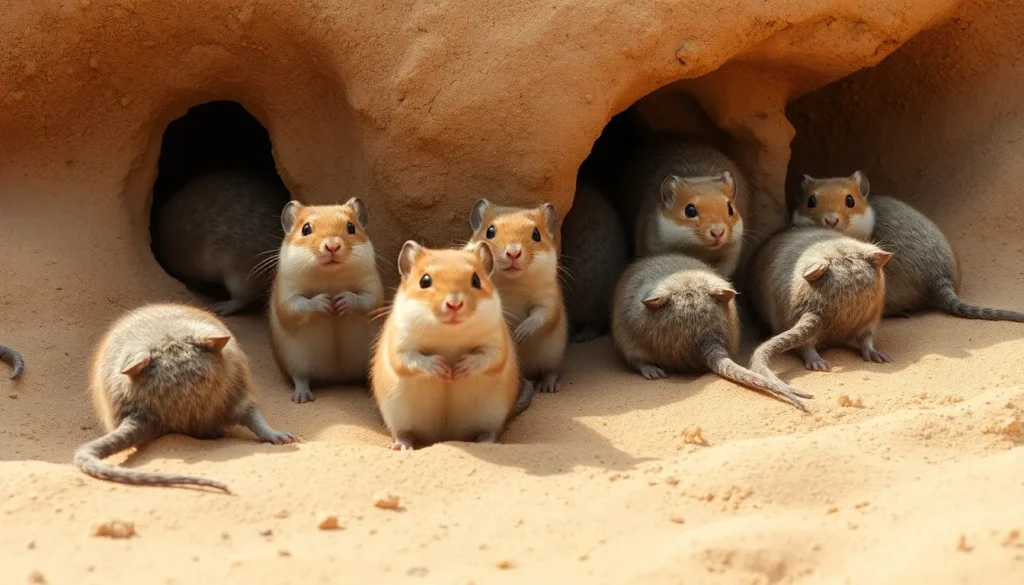
- Gerbils are small rodents: They belong to the subfamily Gerbillinae and are closely related to mice and hamsters.
- Natural habitat: Most gerbils originate from arid regions such as deserts and semi-deserts in Africa, India, and Asia.
- Burrowing behavior: Gerbils are excellent diggers and construct extensive burrow systems to escape extreme temperatures and predators.
- Social animals: They live in groups and exhibit complex social behaviors, including grooming and communal nesting.
- Activity patterns: Gerbils are mostly crepuscular, being active during dawn and dusk.
- Lifespan: In captivity, gerbils typically live 2 to 4 years, although wild lifespans may be shorter due to predation.
- Diet: Gerbils are omnivorous, feeding mostly on seeds, roots, and insects in the wild.
- Reproduction: Female gerbils have a short gestation period of about 24 to 26 days and can produce multiple litters per year.
- Distinctive tail: Gerbils have long tails covered with fur, often ending with a tuft, which aids in balance while running and jumping.
- Communication: They communicate through vocalizations, scent marking, and body language.
- Adaptations to desert life: Gerbils conserve water efficiently and can survive with limited water intake.
- Scientific research: Gerbils are commonly used as animal models in laboratories, especially for studying epilepsy and stroke.
- Pet popularity: The Mongolian gerbil is the most common species kept as a pet due to its docile nature.
- Cheek pouches: Gerbils have fur-lined cheek pouches used to carry food back to their burrows.
- Low odor: Compared to other rodents, gerbils produce minimal scent, which makes them popular as pets.
- Temperature regulation: Gerbils are capable of tolerating wide temperature ranges due to their desert origins.
- Predators: In the wild, gerbils face predation from birds of prey, snakes, and small carnivorous mammals.
- Conservation status: Most gerbil species are not currently endangered, though habitat loss may impact some populations.
- Genetic diversity: There are over 100 species of gerbils, each with unique adaptations and traits.
- Tail autotomy: Unlike some lizards, gerbils cannot shed their tails to escape predators.
- Environmental enrichment: In captivity, providing tunnels, wheels, and nesting materials improves gerbil welfare.
Habitat and Behavior
Gerbils primarily inhabit dry, arid environments, such as deserts and grasslands across Africa, the Middle East, and Asia. They thrive in sandy or loose soil, which facilitates the burrowing behavior essential for their survival. These burrows protect them from predators and extreme climate conditions, providing shelter and nesting sites. Gerbils are social animals, living in groups where they engage in grooming, playing, and cooperative nesting. Their activity is mostly crepuscular, helping them avoid the intense heat of midday and the cold of night. Gerbils communicate through a combination of vocalizations, scent marking, and physical behaviors to maintain social bonds and establish territories.
Why This Animal Matters
Gerbils play an important ecological role in their native habitats. As seed eaters and burrowers, they contribute to soil aeration and seed dispersal, which supports plant growth and ecosystem health. Their burrows provide shelter for other smaller animals and insects. In scientific research, gerbils serve as valuable models for neurological and cardiovascular studies, helping advance medical knowledge. Culturally, gerbils have gained popularity as pets worldwide, promoting interest in small mammal care and animal behavior. While most species are not threatened, understanding their biology and habitat needs is vital for conservation efforts, particularly where human development encroaches on their natural environments.
Common Misconceptions
Misconception: Gerbils can survive without water indefinitely.
Correction: Although gerbils are adapted to arid environments and can conserve water efficiently, they still require access to water to stay healthy, especially in captivity.
Misconception: Gerbils are nocturnal.
Correction: Gerbils are primarily crepuscular, meaning they are most active during dawn and dusk rather than throughout the entire night.
Misconception: Gerbils can survive well on a diet of only seeds.
Correction: While seeds are a major part of their diet, gerbils require a balanced intake including insects and vegetation to meet their nutritional needs.
Misconception: Gerbils are solitary animals.
Correction: Gerbils are social creatures that thrive in groups and often suffer stress if kept alone.
Misconception: Gerbils can regenerate their tails.
Correction: Unlike some other small animals, gerbils do not have the ability to shed or regenerate their tails.
FAQ
What is the natural habitat of gerbils?
Gerbils naturally inhabit arid and semi-arid regions such as deserts and grasslands in Africa, the Middle East, and parts of Asia, where they live in burrows to escape harsh environmental conditions.
Are gerbils suitable as pets?
Yes, gerbils, especially the Mongolian gerbil, are popular pets due to their social nature, low odor, and relatively easy care requirements. However, they do best when kept in pairs or groups and need environmental enrichment.
How do gerbils communicate?
Gerbils communicate through vocalizations such as squeaks and thumps, scent marking using glands, and body language including grooming and posturing to establish social bonds and territory.



Leave a Reply