
Short Answer
21 Facts About Priapulids (Penis Worms)
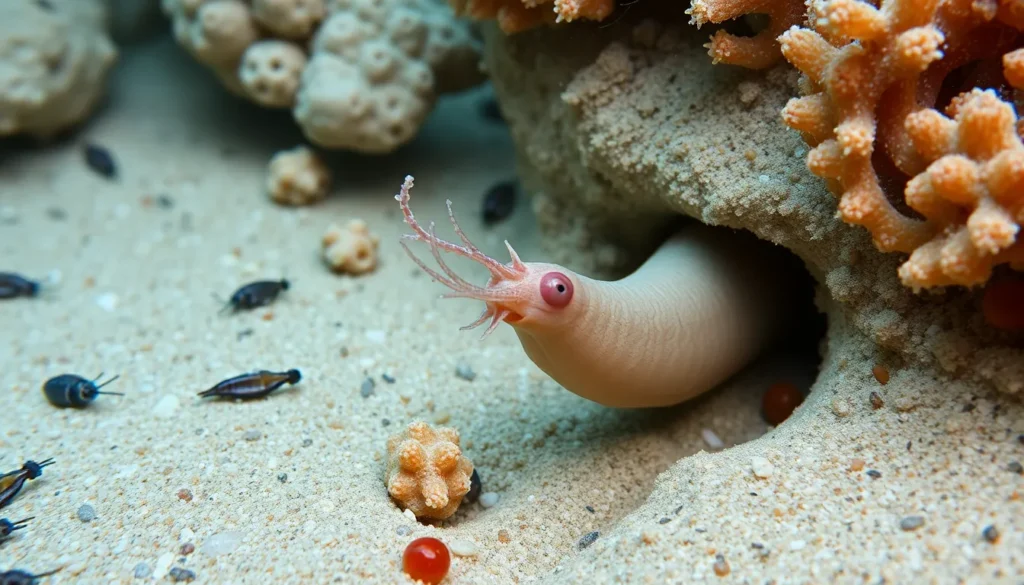
- Distinctive Shape: Priapulids are named for their cylindrical, unsegmented, and somewhat penis-shaped bodies, which are often soft and flexible.
- Ancient Lineage: They belong to a group of animals that have existed since the Cambrian period, over 500 million years ago, making them important for understanding early animal evolution.
- Size Range: Most priapulids are relatively small, usually ranging from 2 to 15 centimeters in length, although some fossil relatives were much larger.
- Marine Habitat: Priapulids are exclusively marine and are typically found burrowing in soft sediments on the ocean floor, from shallow waters to deep seas.
- Proboscis Function: They possess a retractable, spiny proboscis used to capture prey and aid in burrowing.
- Carnivorous Diet: Priapulids are predatory or scavengers, feeding mainly on small invertebrates and organic detritus in sediments.
- Tube-Dwelling Capability: Some priapulids live inside tubes made from sediment particles, which they secrete and inhabit for protection.
- Cuticle Composition: Their body is covered in a tough cuticle that is periodically molted as they grow, similar to arthropods.
- Simple Nervous System: Priapulids have a relatively simple nervous system composed of a nerve ring and longitudinal nerve cords.
- Reproductive Strategy: They reproduce sexually, with separate male and female individuals releasing gametes into the water column for external fertilization.
- Larval Development: Priapulid larvae undergo a free-swimming stage before settling and transforming into adults.
- Ecological Role: They contribute to sediment mixing and nutrient cycling by their burrowing activities, influencing benthic ecosystem dynamics.
- Phylogenetic Position: Priapulids are part of the Ecdysozoa clade, which also includes arthropods and nematodes, distinguished by molting their exoskeletons.
- Fossil Record: Fossils of priapulid-like worms provide valuable insights into the Cambrian explosion and the early diversification of animals.
- Species Diversity: Approximately 20 to 22 species of priapulids are currently recognized, although new species may still be discovered.
- Global Distribution: They are found worldwide, from polar to tropical seas, often in areas with soft sediments suitable for burrowing.
- Low Mobility: Priapulids are generally slow-moving, relying on their proboscis and body contractions to move through sediment.
- Predators: They are preyed upon by fish and other larger marine animals, forming part of the marine food web.
- Scientific Importance: Studying priapulids helps scientists understand animal development, evolutionary biology, and the origins of molting animals.
- Rarely Seen: Due to their burrowing lifestyle and often deep habitats, priapulids are infrequently observed, contributing to their relative obscurity.
- Conservation Status: There is limited data on their conservation status, but habitat disturbance and pollution could potentially impact some populations.
Habitat and Behavior
Priapulids inhabit marine environments worldwide, especially in soft sediment areas where they can burrow easily. They are benthic organisms, living on or within the sea floor, from shallow coastal waters to deep ocean trenches. Their behavior is largely characterized by slow burrowing movements using their spiny proboscis and body musculature. As carnivores or scavengers, they feed on small invertebrates such as polychaete worms and other organic matter found within sediments. Their burrowing activity plays a role in aerating the sediment and facilitating nutrient cycling, which benefits other benthic communities. Priapulids reproduce through external fertilization, releasing eggs and sperm into the water where larvae develop and disperse before settling.
Why This Animal Matters
Priapulids are ecologically important as benthic predators and contributors to sediment health through their bioturbation activities. Their ancient evolutionary lineage provides valuable information for scientists studying the early development of animals, particularly within the Ecdysozoa group. Fossil priapulids have helped illuminate the Cambrian explosion, a critical period in the history of life. Despite their obscure nature, they are integral to maintaining healthy marine sediment ecosystems. Understanding priapulids also aids in appreciating biodiversity in marine environments and the evolutionary relationships among invertebrates.
Common Misconceptions
Misconception: Priapulids are a type of worm closely related to earthworms.
Correction: While priapulids are worm-like in appearance, they are more closely related to arthropods and nematodes within the Ecdysozoa clade rather than to earthworms, which belong to a different group called annelids.
Misconception: Priapulids are harmful or dangerous to humans.
Correction: Priapulids are harmless to humans. They live in marine sediments and do not pose any threat or danger.
Misconception: Priapulids are common and easy to find.
Correction: Priapulids are relatively rare to observe because of their burrowing lifestyle and often deep-sea habitats, making them less commonly encountered by humans.
FAQ
What are priapulids commonly called?
Priapulids are commonly known as penis worms due to their distinctive cylindrical shape resembling a penis.
Where do priapulids live?
They live in marine environments, typically burrowing in soft sediments from shallow coastal areas to deep sea floors.
Are priapulids dangerous to humans?
No, priapulids are harmless to humans and do not pose any threat.
Leave a Reply