
Short Answer
21 Facts About Sea Urchin Aristotle’s Lantern
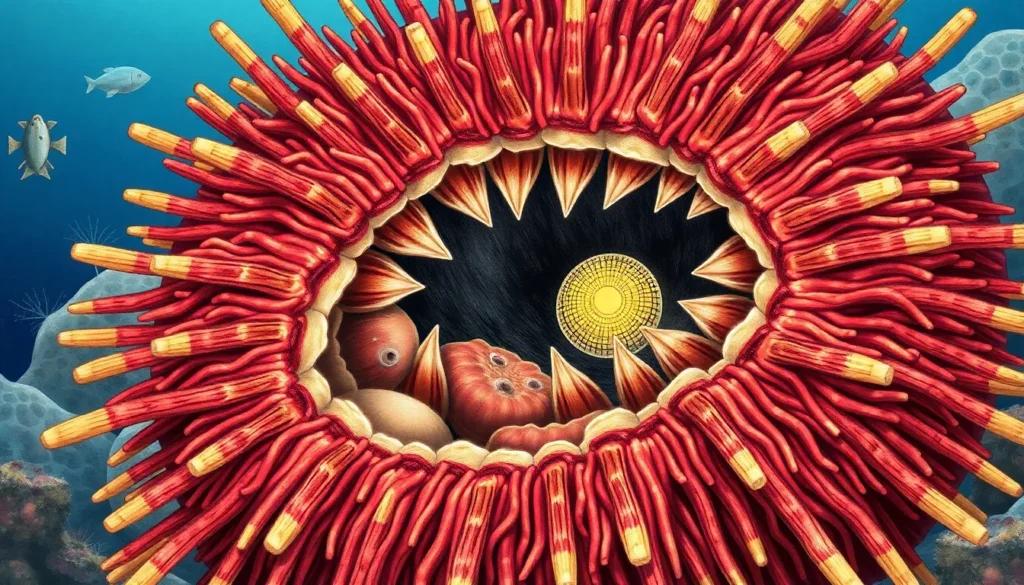
- Definition: Aristotle’s Lantern is the complex jaw structure found in sea urchins, consisting of five calcium carbonate plates.
- Feeding Mechanism: The Lantern operates through a series of muscular contractions, enabling precise movement and biting.
- Evolutionary Significance: Aristotle’s Lantern has evolved over millions of years, with its structure adapting to different dietary needs.
- Calcium Carbonate Composition: The plates of the Lantern are primarily made of calcium carbonate, providing durability and strength.
- Role in Ecosystem: Sea urchins, through their feeding habits, help maintain the balance of kelp forests and other marine ecosystems.
- Predators: The primary predators of sea urchins include sea otters, starfish, and certain fish species.
- Habitat: Sea urchins inhabit a variety of marine environments, including rocky shores, coral reefs, and sandy seabeds.
- Reproductive Strategy: Sea urchins typically reproduce by releasing eggs and sperm into the water column, allowing for external fertilization.
- Color Variability: Sea urchins can exhibit a range of colors, including purple, green, and red, influenced by their environment and species.
- Regeneration: Sea urchins possess the ability to regenerate lost spines and parts of their Aristotle’s Lantern.
- Behavior: Sea urchins are primarily nocturnal, feeding more actively during the night to avoid predation.
- Size Variation: Sea urchins can range in size from a few centimeters to over 30 centimeters in diameter, depending on species.
- Symbiotic Relationships: Some sea urchins engage in symbiotic relationships with algae and other marine organisms.
- Cultural Importance: In some cultures, sea urchins are considered a delicacy, particularly in sushi.
- Conservation Status: Some species of sea urchins are threatened due to overfishing and habitat loss.
- Research Interest: Scientists study sea urchins to understand marine biology, ecology, and evolutionary processes.
- Historical Context: Aristotle first described this unique jaw structure in ancient texts, hence the name ‘Aristotle’s Lantern.’
- Behavioral Defense: When threatened, sea urchins can retract their spines for protection.
- Environmental Indicators: Sea urchins can serve as bioindicators, reflecting the health of marine ecosystems.
- Impact of Climate Change: Sea urchin populations are affected by rising ocean temperatures and acidification.
- Research Applications: The study of sea urchins contributes to advancements in regenerative medicine.
This unique adaptation allows sea urchins to scrape algae and other food sources from hard surfaces in their marine environment.
This mechanism allows sea urchins to effectively feed on various types of algae, contributing to their role in the ecosystem.
Such adaptations reflect the diverse feeding strategies employed by various sea urchin species.
This composition is essential for protection against predators and environmental wear.
By grazing on algae, they prevent overgrowth that can harm coral reefs and other marine habitats.
This predation plays a critical role in regulating sea urchin populations, maintaining ecological balance.
Their adaptability to different habitats allows them to thrive in diverse marine ecosystems.
This strategy increases genetic diversity within populations.
Their coloration can serve as camouflage against predators.
This regeneration is crucial for survival, as it allows them to recover from injuries.
This behavior helps them utilize their feeding adaptations more effectively.
Size can influence their feeding habits and predator avoidance strategies.
These relationships can enhance their survival through mutual benefits.
This cultural significance underscores their importance in certain culinary traditions.
Conservation efforts are crucial to maintain healthy populations and ecosystems.
Their unique adaptations offer insights into evolutionary mechanisms.
This historical context highlights the long-standing interest in marine life.
This behavior enhances their chances of survival against predators.
Changes in their populations can signal shifts in environmental conditions.
These changes pose significant threats to their survival and habitat.
Their regenerative capabilities inspire research in tissue engineering and healing.
Habitat and Behavior
Sea urchins are found in a variety of marine habitats, ranging from rocky intertidal zones to deep-sea environments. They often prefer areas with ample algae, which serve as their primary food source. Sea urchins exhibit primarily nocturnal behavior, foraging at night to minimize predation risks. Their feeding habits involve scraping algae off surfaces using their Aristotle’s Lantern, which is instrumental in their survival.
Why This Animal Matters
Sea urchins play a crucial role in maintaining the balance of marine ecosystems. By grazing on algae, they help control algal growth, which can otherwise overwhelm coral reefs and disrupt marine biodiversity. Their presence is vital for the health of kelp forests, which serve as critical habitats for numerous marine species. Additionally, sea urchins contribute to the food web, serving as prey for various predators. Conservation of their populations is essential due to their ecological significance and the effects of human activities on their habitats.
Common Misconceptions
Misconception: Sea urchins are dangerous due to their spines.
Correction: While sea urchins can deliver painful stings with their spines, they are generally not aggressive and will only defend themselves when threatened.
Misconception: All sea urchins are the same.
Correction: There are over 900 species of sea urchins, each with unique adaptations, habitats, and behaviors.
FAQ
What is Aristotle's Lantern?
It is the unique jaw structure of sea urchins used for feeding.
How do sea urchins contribute to their ecosystem?
They help control algal growth, maintaining the balance in marine environments.
Are sea urchins dangerous to humans?
While they can sting, they are generally not aggressive and pose minimal risk.



Leave a Reply