
Short Answer
21 Facts About Aardwolves
- Aardwolves belong to the hyena family. Despite their name and appearance, aardwolves are the smallest members of the Hyaenidae family, closely related to true hyenas.
- They primarily feed on termites. Unlike other hyenas, aardwolves have a specialized diet consisting mainly of harvester termites, using their long, sticky tongues to capture them.
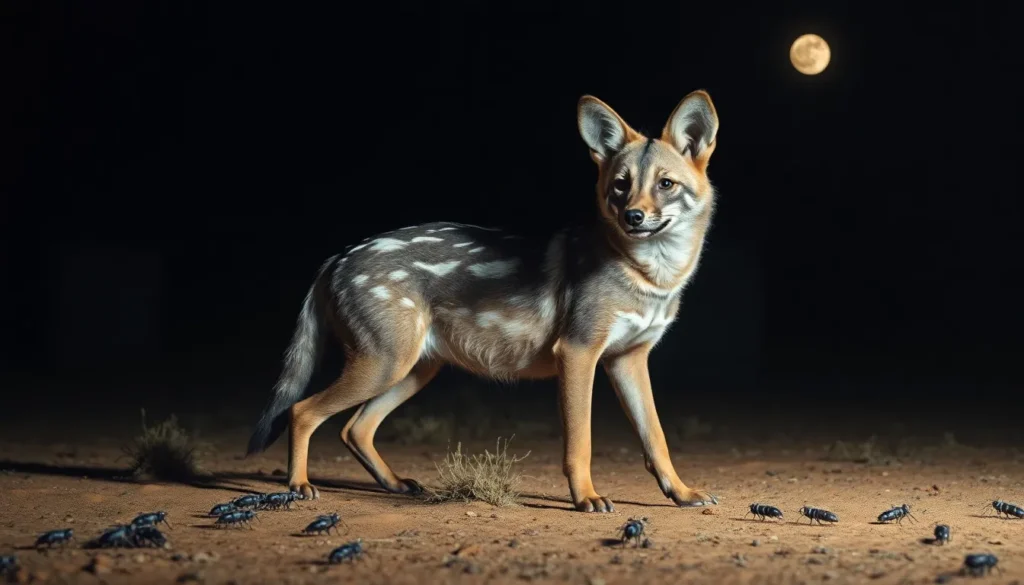
- Nocturnal behavior. Aardwolves are mostly active at night, which helps them avoid predators and the heat of the day.
- They inhabit open, dry areas. Their preferred habitats include savannas, grasslands, and scrublands across Eastern and Southern Africa.
- Distinctive striped coat. Aardwolves display vertical black stripes on a yellowish or grayish body, resembling a smaller striped hyena.
- Solitary or small family groups. While generally solitary, aardwolves sometimes form monogamous pairs or small family groups.
- Territorial marking with scent glands. They use anal glands to mark their territory, which is crucial for communication and mating.
- They have a low bite force. Unlike other hyenas, aardwolves do not need powerful jaws since they consume insects rather than large prey.
- Reproduction and offspring. Females usually give birth to two to four cubs after a gestation period of approximately 90 days.
- They are shy and elusive animals. Aardwolves tend to avoid human contact and are rarely seen despite their relatively wide distribution.
- Adaptations for termite feeding. Their tongues are covered with sticky saliva to trap termites, and their teeth are reduced in size compared to other carnivores.
- Activity peaks during termite swarming season. Aardwolves increase feeding activity when termites are most abundant and accessible.
- They do not scavenge or hunt large animals. This distinguishes them ecologically from other hyenas, which are known scavengers or hunters.
- Population status. Aardwolves are currently classified as Least Concern by the IUCN, though habitat loss may impact local populations.
- Their name means “earth wolf”. The term “aardwolf” comes from Afrikaans and Dutch, reflecting their burrowing habits and wolf-like appearance.
- They use abandoned burrows for shelter. Rather than digging their own, aardwolves often occupy burrows made by other animals.
- Communication includes vocalizations and scent markings. They emit growls, whistles, and other sounds for communication, especially during mating or territorial disputes.
- They have few natural predators. Large carnivores such as lions and hyenas occasionally prey on aardwolves, but their nocturnal and elusive nature offers protection.
- Unlike other hyenas, they lack strong social hierarchies. Aardwolves tend to have looser social structures, typically centered around mating pairs or family units.
- They play a role in termite population control. By feeding on termites, aardwolves help regulate insect populations, contributing to ecological balance.
- Scientific classification. The aardwolf’s scientific name is Proteles cristata, the only extant member of the genus Proteles.
Habitat and Behavior
Aardwolves are native to Eastern and Southern Africa, occupying open grasslands, savannas, and dry shrublands. They prefer areas with abundant termite populations, which constitute their main food source. Primarily nocturnal, aardwolves avoid the daytime heat by resting in burrows or shaded areas, often utilizing abandoned burrows of other animals. Their behavior is largely solitary, but monogamous pairs may share territories and raise offspring together. Territorial markings through scent glands and vocalizations are key aspects of their communication, especially during breeding seasons. Unlike other carnivores in the hyena family, aardwolves do not chase or hunt large prey, instead specializing in a diet of termites, which influences their physical adaptations such as reduced teeth and a long sticky tongue. Their elusive nature and nocturnal habits make them less observed in the wild compared to other members of the Hyaenidae family.
Why This Animal Matters
Aardwolves play an important ecological role by controlling termite populations, which can affect vegetation and soil health. Their specialized feeding habits differentiate them from other carnivores, illustrating diverse evolutionary adaptations within the hyena family. Although not currently threatened with extinction, aardwolves contribute to biodiversity and the stability of African savanna ecosystems. Additionally, their unique characteristics have cultural significance in some African communities, where they are recognized for their distinct behavior and appearance. Conservation efforts ensure that their habitats remain intact, supporting balanced ecosystems and preventing declines caused by habitat destruction or human encroachment.
Common Misconceptions
Misconception: Aardwolves are wolves or related to wolves.
Correction: Despite their name, aardwolves are not wolves but are part of the hyena family (Hyaenidae), more closely related to hyenas than to canids.

Misconception: Aardwolves are scavengers like other hyenas.
Correction: Unlike other hyenas, aardwolves primarily feed on termites and do not scavenge or hunt large animals.
Misconception: Aardwolves dig their own burrows.
Correction: Aardwolves typically use burrows made by other animals rather than digging their own.
FAQ
What do aardwolves eat?
Aardwolves primarily feed on termites, especially harvester termites. Their diet is highly specialized, and they use a long sticky tongue to capture termites efficiently.
Are aardwolves related to wolves?
No, aardwolves are not related to wolves despite their name. They belong to the hyena family (Hyaenidae) and are more closely related to other hyenas than to canids like wolves.
Where do aardwolves live?
Aardwolves are found in Eastern and Southern Africa, inhabiting dry savannas, grasslands, and open scrub areas where termite populations are abundant.






Leave a Reply