
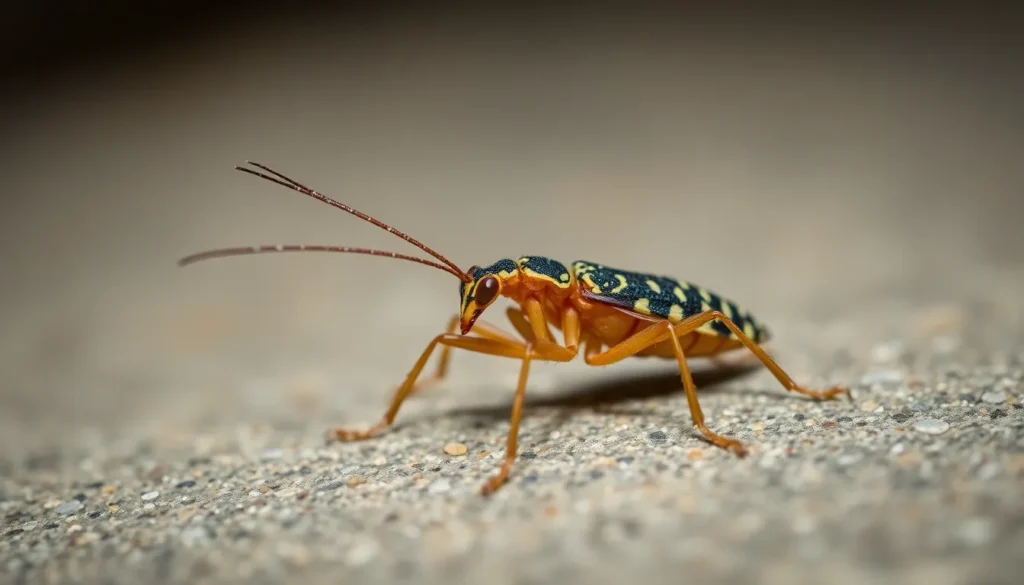
Short Answer
21 Facts About Firebrats
- Firebrats belong to the order Thysanura. They are primitive insects closely related to silverfish.
- Scientific name is Thermobia domestica. This species is the most commonly studied firebrat.
- Firebrats lack wings. They are wingless insects adapted to crawling in tight spaces.
- They prefer warm environments. Firebrats thrive in temperatures between 32-41°C (90-105°F).
- Firebrats are nocturnal. They are most active at night, avoiding light and heat during the day.
- Diet consists mainly of starchy materials. They feed on paper, glue, flour, and other carbohydrates.
- Firebrats have a lifespan of up to three years. This is relatively long for small insects.
- They reproduce by laying eggs in crevices. Female firebrats deposit eggs in hidden, humid locations.
- Firebrats undergo gradual metamorphosis. Their young resemble adults but are smaller and lack reproductive organs.
- They have scales covering their bodies. These scales help reduce water loss and provide camouflage.
- Firebrats can survive in environments with low humidity. They are more tolerant of dryness than silverfish but still prefer moist areas.
- They are often found in human dwellings. Firebrats inhabit places such as bakeries, boilers, and hot water heaters.
- Firebrats can move quickly. Their speed helps them evade predators and find food.
- They communicate via chemical signals. Pheromones are used for mating and social interactions.
- Firebrats are not harmful to humans. They do not bite or spread disease.
- They can become household pests. Firebrats may damage books, wallpaper, and stored food products.
- Firebrats have sensory antennae. These help them detect food and environmental conditions.
- They prefer dark, warm, and humid microhabitats. Such conditions support their survival and reproduction.
- Firebrats can live for months without food. This resilience aids their survival in fluctuating conditions.
- They have been known to inhabit old buildings and archaeological sites. Their presence can indicate environmental conditions over time.
- Firebrats are studied for insights into insect physiology and pest control. Their adaptations provide useful biological data.
Habitat and Behavior
Firebrats are typically found in warm, humid environments where they can find starchy or carbohydrate-rich food sources. They thrive in human-made habitats such as bakeries, boiler rooms, and near hot water heaters, where temperatures are consistently elevated. In natural settings, they may inhabit leaf litter, under rocks, or in decaying wood. Their nocturnal activity pattern helps them avoid predators and desiccation by remaining hidden during daylight hours. Firebrats move quickly and use their antennae to navigate and locate food. They reproduce by laying eggs in protected, humid crevices, and their gradual metamorphosis means young firebrats resemble adults. They are solitary or loosely social insects that rely on chemical communication for mating and other interactions. Their preference for heat and humidity distinguishes them from other similar insects like silverfish.
Why This Animal Matters
Firebrats play a role in the decomposition process by feeding on starchy materials and organic debris, helping recycle nutrients in their ecosystems. Although often considered pests in human environments due to their potential to damage stored food and paper products, they are not dangerous to humans or pets. Ecologically, firebrats contribute to nutrient cycling and serve as prey for various small predators. Their presence in buildings can also provide clues about environmental conditions such as humidity and temperature. Scientific interest in firebrats includes studies on insect physiology, survival strategies in extreme environments, and pest management approaches. Understanding firebrat biology can aid in preventing infestations and mitigating damage in sensitive environments.
Common Misconceptions
Misconception: Firebrats can bite humans.
Correction: Firebrats do not bite or sting humans; they are harmless and feed mainly on carbohydrates.
Misconception: Firebrats only live in fires or recently burned areas.
Correction: Despite their name, firebrats prefer warm environments but are not associated with fire or burned habitats.
Misconception: Firebrats and silverfish are the same insect.
Correction: While related and similar in appearance, firebrats and silverfish belong to different genera and have distinct habitat preferences and behaviors.
Misconception: Firebrats are dangerous pests that spread disease.
Correction: Firebrats do not spread diseases and are generally considered nuisance pests rather than health threats.
FAQ
What are firebrats?
Firebrats are small, wingless insects that prefer warm, humid environments and feed mainly on starchy materials. They belong to the order Thysanura and are closely related to silverfish.
Are firebrats harmful to humans?
No, firebrats do not bite or spread diseases. While they can damage paper and stored food products, they are not dangerous to humans or pets.
How can I prevent firebrat infestations?
Reducing humidity, removing food sources like flour or paper, and sealing cracks where firebrats can hide are effective measures. Maintaining cooler indoor temperatures can also deter their presence.




Leave a Reply