
Short Answer
21 Facts About Gulper Eel
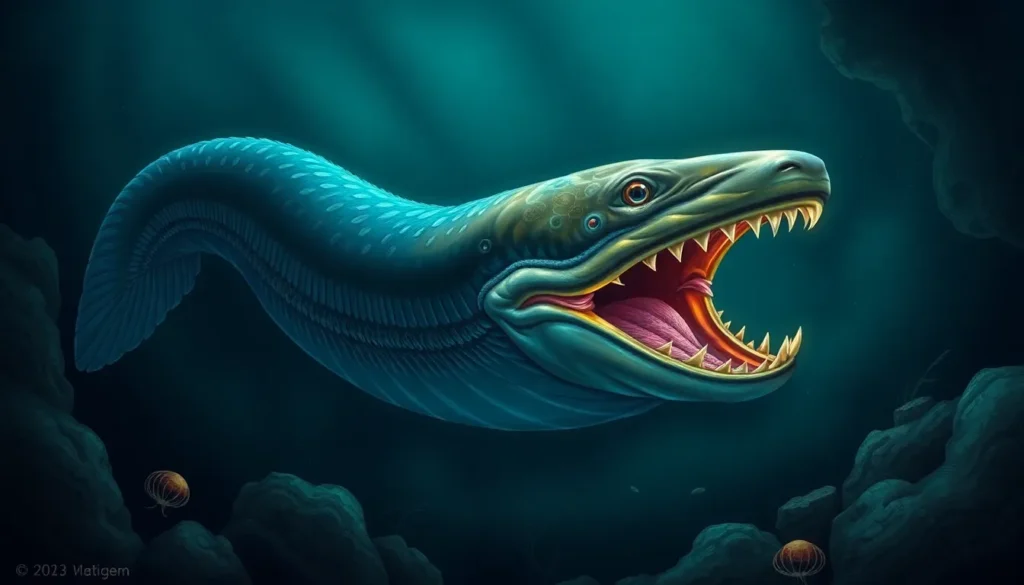
- Unique Jaw Structure: The gulper eel possesses an extraordinary jaw structure that can expand significantly to capture larger prey, allowing it to consume animals much larger than its own head.
- Flexible Body: Its body is highly flexible, enabling it to maneuver easily in the deep-sea environment where it resides.
- Size Variation: Gulper eels can grow up to 6.5 feet (2 meters) long, although sizes can vary widely among individuals.
- Diet: Their diet mainly consists of fish and other smaller marine organisms, which they capture using their expandable jaws.
- Bioluminescence: Some gulper eels exhibit bioluminescent properties, which may help attract prey in the dark depths of the ocean.
- Deep-Sea Habitat: Gulper eels are typically found at depths ranging from 1,000 to 10,000 feet (300 to 3,000 meters), inhabiting the deep-sea environment.
- Distribution: They are found in various oceans around the world, including the Atlantic and Pacific Oceans.
- Reproductive Behavior: Little is known about their reproduction, but like many deep-sea creatures, they likely have unique spawning habits.
- Adaptation to Pressure: Gulper eels are adapted to withstand the high pressure of deep-sea environments, which is crucial for their survival.
- Slow Movement: They are generally slow-moving creatures, relying on ambush tactics to capture prey rather than active hunting.
- Coloration: Gulper eels often have a dark coloration that helps them blend into the dark ocean depths, providing camouflage from predators and prey alike.
- Physiological Adaptations: Their unique physiological adaptations include a large stomach that can stretch to accommodate large meals, which is essential for their survival in nutrient-scarce environments.
- Life Span: The lifespan of gulper eels is not well-documented, but many deep-sea fish can live for several years, possibly decades.
- Predatory Strategies: They employ a strategy known as “sit-and-wait,” remaining motionless until prey comes within striking distance.
- Limited Research: Due to their deep-sea habitat, gulper eels are not well-studied, and much of their biology remains a mystery.
- Vulnerability: While not currently endangered, their deep-sea habitat makes them vulnerable to changes in ocean conditions and human activities such as deep-sea fishing.
- Fossil Record: The gulper eel family has a long evolutionary history, with fossils dating back millions of years.
- Relation to Other Eels: Gulper eels belong to the family Eurypharyngidae, which includes several other species with similar adaptations.
- Unique Feeding Mechanism: Their feeding mechanism is one of the most specialized among deep-sea fish, allowing them to thrive in a competitive environment.
- Behavioral Observations: Observations of gulper eels in their natural habitat are rare, making it difficult to study their behavior comprehensively.
- Impact of Climate Change: Changes in ocean temperature and acidity could impact their habitat and food sources, raising concerns about their future survival.
Habitat and Behavior
Gulper eels are predominantly found in the deep-sea regions of the Atlantic and Pacific Oceans, typically at depths of 1,000 to 10,000 feet (300 to 3,000 meters). Their habitat is characterized by high pressure, low light, and cold temperatures. Gulper eels exhibit a sit-and-wait predatory behavior, remaining motionless in the water column until prey comes within reach. Their unique, flexible bodies aid in maneuvering through rocky and uneven ocean floors, while their expansive jaws enable them to swallow prey whole.
Why This Animal Matters
Gulper eels play a crucial role in the deep-sea ecosystem as predators of smaller marine organisms. They contribute to the balance of marine food webs and serve as prey for larger predators. Understanding gulper eels can provide insights into deep-sea biodiversity and the health of ocean ecosystems. Additionally, studying their adaptations may inform conservation efforts, particularly as deep-sea habitats face threats from climate change and human activities.
Common Misconceptions
Misconception: Gulper eels are aggressive predators that actively hunt down their prey.
Correction: Gulper eels are primarily ambush predators, relying on a sit-and-wait strategy rather than active hunting.
Misconception: All gulper eels are large in size.
Correction: While gulper eels can reach lengths of up to 6.5 feet, sizes can vary significantly, and many individuals are smaller.
FAQ
What is a gulper eel?
The gulper eel is a deep-sea fish known for its expandable jaws and unique predatory behavior.
Where do gulper eels live?
Gulper eels inhabit deep-sea environments, typically found at depths between 1,000 to 10,000 feet.
How do gulper eels catch their prey?
They use their expandable jaws to capture prey much larger than their head by employing an ambush strategy.





Leave a Reply