
Short Answer
21 Facts About Emperor Penguins
- Largest Penguin Species
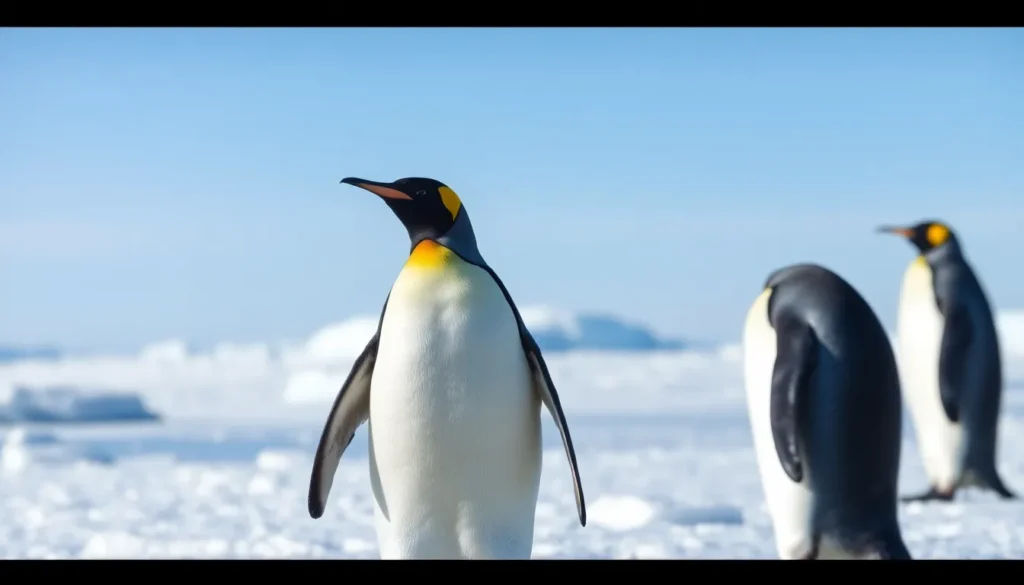
Emperor penguins are the tallest and heaviest of all penguin species, reaching heights up to 122 cm (48 inches) and weighing between 22 and 45 kg (49-99 lbs). - Native to Antarctica
They are endemic to the Antarctic continent, where they breed on stable sea ice during the harsh winter months. - Unique Breeding Cycle
Emperor penguins breed in the coldest environment of any bird species, with males incubating eggs through the Antarctic winter without eating for up to two months. - Egg Incubation by Males
After the female lays a single egg, the male balances it on his feet under a brood pouch to keep it warm until it hatches. - Long-Distance Foraging
Adults travel up to 50–120 km (31–75 miles) to reach feeding areas, diving deeply to hunt for fish, krill, and squid. - Exceptional Diving Ability
Emperor penguins can dive to depths over 500 meters (1,640 feet) and remain underwater for more than 20 minutes. - Thermoregulation Adaptations
They have dense feathers and a thick layer of subcutaneous fat to insulate against freezing temperatures that can drop below -50°C (-58°F). - Huddling Behavior
To conserve warmth, emperor penguins gather in large huddles, rotating positions to share exposure to the cold winds. - Counter-Shaded Plumage
Their black backs and white fronts provide camouflage while swimming, protecting them from predators both above and below water. - Social Animals
Emperor penguins breed in large colonies that can number in the thousands, facilitating cooperative survival during winter. - Vocal Communication
They use unique calls to recognize mates and chicks among the crowded colonies. - Chick Development
Chicks are born covered with gray down feathers that are replaced with waterproof plumage before they start swimming. - Diet Composition
Their diet primarily includes fish, but also krill and squid depending on availability in their marine environment. - Predators
Emperor penguins face predation from leopard seals and killer whales in the water, and skuas preying on eggs and chicks on land. - Longevity
They can live up to 20 years in the wild, although many die earlier due to harsh environmental conditions. - Molting Period
Once a year, they undergo a molting process, shedding old feathers and growing new ones, during which they cannot enter the water to feed. - Flightless Birds
Like all penguins, emperor penguins cannot fly but are excellent swimmers adapted to aquatic life. - Scientific Name
The species is scientifically known as Aptenodytes forsteri, named after Johann Reinhold Forster, a naturalist on Captain Cook’s second voyage. - Cultural Significance
Emperor penguins have been featured in documentaries and research studies, highlighting their remarkable survival strategies in Antarctica. - Climate Change Impact
Changes in sea ice patterns due to global warming pose a threat to their breeding habitat and food availability. - Conservation Status
Currently, emperor penguins are classified as Near Threatened by the IUCN due to environmental pressures and habitat vulnerability.
Habitat and Behavior
Emperor penguins inhabit the Antarctic ice and surrounding ocean waters. They breed on stable sea ice, often forming large colonies that endure the continent’s extreme winter conditions. Their behavior is highly adapted to survival in this environment, including cooperative huddling to maintain warmth and long fasting periods during breeding. Foraging occurs primarily in the Southern Ocean, where they dive to great depths to catch prey. The species relies on dense insulating feathers and fat reserves to withstand subzero temperatures and harsh winds.
Why This Animal Matters
Emperor penguins play a vital role in the Antarctic marine ecosystem as predators of fish, squid, and krill, helping maintain ecological balance. They are indicator species for climate change impacts due to their sensitivity to sea ice conditions. Culturally, emperor penguins have become symbols of polar wildlife resilience and are important subjects for scientific research on adaptation to extreme environments. Conservation efforts focus on monitoring populations and protecting their habitat against the effects of global warming.
Common Misconceptions
Misconception: Emperor penguins live at the North Pole.
Correction: Emperor penguins are native to Antarctica, the South Pole, and are not found in the Arctic.
Misconception: Penguins can fly.
Correction: Penguins, including emperor penguins, are flightless birds but are specialized swimmers.
Misconception: Male emperor penguins feed their chicks.
Correction: Male penguins incubate the egg and fast during this time; females provide food by feeding chicks after hatching.
Misconception: Emperor penguins live on land.
Correction: Emperor penguins live primarily on sea ice and in ocean waters, not terrestrial environments.
FAQ
Where do emperor penguins live?
Emperor penguins live exclusively in Antarctica, primarily on stable sea ice where they breed and in the surrounding Southern Ocean waters.
How do emperor penguins survive the Antarctic winter?
They survive by huddling together to conserve warmth, relying on thick insulation from feathers and fat, and fasting during breeding when food is inaccessible.
What do emperor penguins eat?
Their diet mainly consists of fish, krill, and squid, which they catch during deep dives in the Southern Ocean.


Leave a Reply