
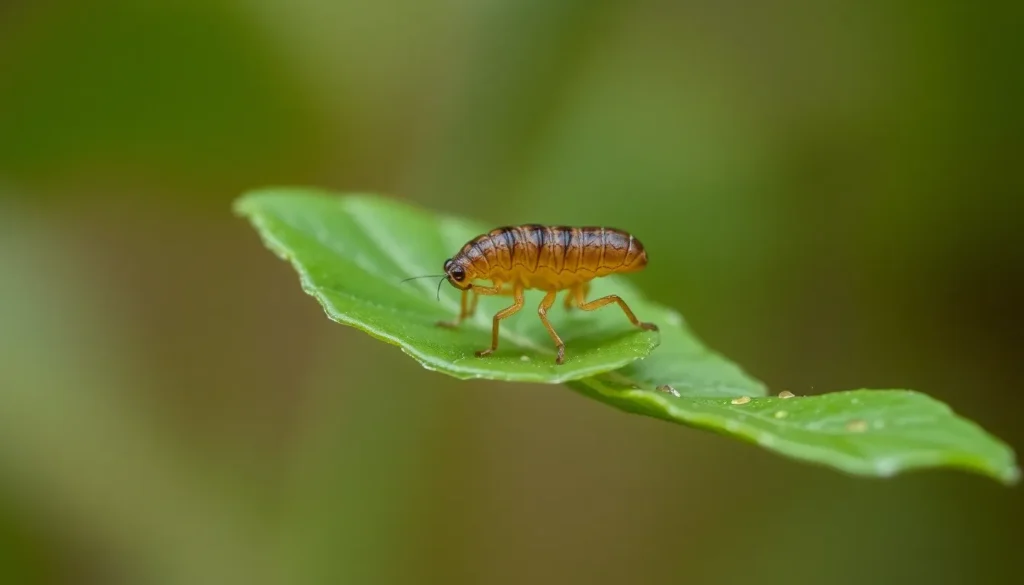
Short Answer
21 Facts About Chiggers
- Chiggers are the larval stage of mites.
Chiggers are the immature form of mites belonging to the family Trombiculidae. Only their larval stage is parasitic to animals and humans. - They are extremely small and often invisible to the naked eye.
Chiggers typically measure about 0.15 to 0.3 millimeters, making them difficult to see without magnification. - Chiggers do not burrow into the skin.
Contrary to popular belief, chiggers attach to the skin surface and inject digestive enzymes rather than burrowing beneath the skin. - The itching caused by chiggers is due to their saliva.
The saliva injected by chiggers dissolves skin cells, which causes intense itching and inflammation as the body’s immune system reacts. - Only the larval chiggers are parasitic; adult chiggers are free-living predators.
Adult and nymph stages of chiggers feed on small arthropods and insect eggs rather than on vertebrates. - Chiggers are found worldwide but are most common in humid and warm climates.
They thrive in grassy, wooded, and brushy areas where hosts are abundant. - They prefer to attach to areas where clothing fits tightly.
Chiggers often bite where skin is thin and where clothing is tight, such as around waistbands, sock tops, and behind knees. - Chiggers do not transmit diseases in most regions.
While some species can transmit scrub typhus in Asia and the Pacific, chiggers in North America are not known to be significant disease vectors. - Chigger bites often appear as red, itchy welts or bumps.
The bites usually develop 24 to 48 hours after exposure and can last for several days to weeks. - Chiggers inject saliva that dissolves skin cells for feeding.
This process forms a hardened tube called a stylostome, through which the chigger feeds on digested tissue. - Chiggers do not feed on blood.
Instead, they consume liquefied skin cells created by their digestive enzymes. - They are most active during late spring and summer months.
Chiggers are generally encountered in warmer months when environmental conditions favor their development. - Chiggers have a complex life cycle involving multiple stages.
They progress through egg, larva, nymph, and adult stages, with only the larval stage parasitic. - Chiggers are not insects but arachnids.
Like spiders and ticks, chiggers belong to the class Arachnida. - They primarily feed on reptiles, birds, mammals, and amphibians as hosts.
Chiggers use various animals as hosts during their larval stage, not exclusively humans. - Chiggers attach to hosts by clinging to hair or clothing.
They often wait on vegetation to latch onto passing hosts. - Washing promptly after exposure can help remove chiggers.
Bathing and laundering clothes soon after being in infested areas can reduce bites. - Preventive measures include wearing protective clothing and using insect repellents.
Long sleeves, pants, and repellents containing DEET or permethrin can reduce chigger exposure. - Chigger bites sometimes become secondarily infected if scratched excessively.
Scratching the itchy welts can break the skin and lead to bacterial infections. - They play a role in natural ecosystems as predators in their non-parasitic stages.
Adult and nymph chiggers help control populations of small arthropods and insect eggs. - Chigger populations can fluctuate significantly based on environmental conditions.
Weather patterns, humidity, and availability of hosts influence chigger abundance year to year.
Habitat and Behavior
Chiggers are typically found in environments with dense vegetation such as forests, grasslands, and areas with tall grasses or weeds. They thrive in warm, humid climates, and their populations peak in late spring through summer. Chigger larvae climb onto blades of grass or low vegetation and wait for a host to brush past. Once a host is encountered, the larvae attach themselves, usually to areas where clothing fits tightly or skin is thin, and feed for several days before dropping off to continue their development. Adult chiggers are free-living predatory mites that consume other small arthropods and insect eggs, playing an important ecological role.
Why This Animal Matters
Chiggers, although often considered pests, serve an ecological function by participating in the control of small arthropod populations during their adult stages. Their parasitic larval stage, while irritating to humans and animals, is a natural part of many ecosystems, contributing to biodiversity. In some parts of the world, chiggers can transmit diseases such as scrub typhus, highlighting their importance in public health studies. Understanding their biology and behavior helps in managing chigger bites and preventing disease transmission where applicable.
Common Misconceptions
Misconception: Chiggers burrow under the skin.
Correction: Chiggers do not burrow into the skin; they remain on the surface, injecting digestive enzymes that cause itching.
Misconception: Chiggers feed on human blood.
Correction: Chiggers feed on liquefied skin cells, not blood.
Misconception: All chiggers transmit diseases.
Correction: Most chiggers, particularly in North America, do not transmit diseases. Only specific species in parts of Asia and the Pacific are known vectors of scrub typhus.
Misconception: Chigger bites appear immediately.
Correction: Symptoms of chigger bites usually develop 24 to 48 hours after exposure.
FAQ
What exactly are chiggers?
Chiggers are the larval form of mites in the family Trombiculidae. They are tiny arachnids whose larvae feed on the skin cells of animals and humans.
Do chiggers burrow under the skin?
No, chiggers do not burrow into the skin. They stay on the surface and inject enzymes that digest skin cells, causing itching.
Can chiggers transmit diseases to humans?
In most regions, including North America, chiggers are not known to transmit diseases. However, some species in Asia and the Pacific can transmit scrub typhus.


Leave a Reply