
Short Answer
21 Facts About Clownfish
- Clownfish belong to the family Pomacentridae. They are classified within the damselfish family and belong to the genus Amphiprion.
- There are around 30 species of clownfish. These species vary in size, coloration, and geographic distribution.
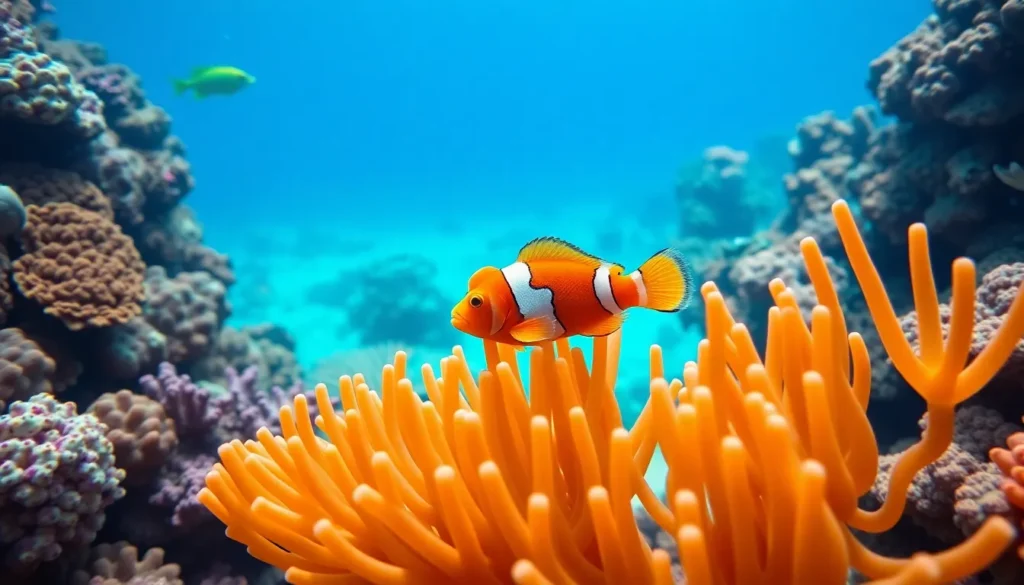
- Clownfish are known for their bright orange coloration with white bands. However, some species display different colors such as yellow, red, or black.
- They form a mutualistic relationship with sea anemones. The anemone provides protection with its stinging tentacles, while the clownfish defends the anemone from predators.
- Clownfish are immune to the stings of their host anemones. They have a special mucus coating that prevents them from being harmed by the anemone’s nematocysts.
- They exhibit sequential hermaphroditism. Clownfish are born male and can later change to female if the dominant female in their group dies.
- Clownfish live in social groups with a strict hierarchy. The largest and dominant fish is the female, followed by the breeding male and subordinate males.
- They communicate through popping and clicking sounds. These sounds help maintain social order within their groups.
- Clownfish primarily feed on algae, plankton, and small invertebrates. Their diet can vary depending on availability and their habitat.
- They are found in warm waters of the Indian and Pacific Oceans. Including the Great Barrier Reef, Red Sea, and parts of Southeast Asia.
- Clownfish have a lifespan of 6 to 10 years in the wild. In captivity, with proper care, they can live longer.
- The symbiotic relationship benefits both clownfish and anemones. The clownfish gains protection while the anemone receives cleaning and nutrients from clownfish waste.
- Clownfish can be territorial and fiercely defend their host anemone. They chase away intruders and predators that approach their anemone.
- They lay their eggs on flat surfaces near the host anemone. The male typically guards and aerates the eggs until they hatch.
- Clownfish have become popular in marine aquariums. Their vibrant colors and interesting behaviors have made them favorite choices among hobbyists.
- They are important indicators of coral reef health. Their presence and population can reflect the condition of the reef ecosystem.
- Clownfish were popularized by the animated film “Finding Nemo.” This increased public interest and awareness about the species.
- The mucus coating that protects clownfish is acquired by gently brushing against the anemone. This acclimatization process allows them to live safely among anemone tentacles.
- Clownfish do not have a swim bladder. This anatomical feature limits their swimming speed and maneuverability compared to other fish.
- Some clownfish species can host multiple anemone species. While others are specific to only one type of anemone.
- Climate change and coral reef degradation threaten clownfish habitats. Loss of sea anemones and reef structures impact clownfish populations adversely.
Habitat and Behavior
Clownfish inhabit shallow waters of coral reefs and lagoons primarily in the Indian and Pacific Oceans. They are closely associated with sea anemones, which provide shelter and protection. Their behavior is characterized by complex social hierarchies where a dominant female leads a group of males. Clownfish exhibit protandrous hermaphroditism, meaning individuals start life as males and can change to females when necessary. They communicate using sounds and body movements, and are territorial around their anemone hosts. Their diet consists mainly of algae, plankton, and small invertebrates. Clownfish often remain close to their host anemone, rarely venturing far from it.
Why This Animal Matters
Clownfish play an important ecological role in coral reef ecosystems by maintaining symbiotic relationships with sea anemones. This relationship enhances the health and protection of both species. Clownfish contribute to nutrient cycling within reef environments and help control algae growth. They also serve as indicator species for reef health, as their population status often reflects broader environmental conditions. Culturally, clownfish have gained global recognition through media such as the film “Finding Nemo,” raising awareness about marine biodiversity. Conservation of clownfish and their habitats is crucial amid growing threats from climate change, ocean acidification, and reef degradation.
Common Misconceptions
Misconception: Clownfish live independently and do not need anemones.
Correction: Clownfish rely on their symbiotic relationship with sea anemones for protection and survival, rarely living far from them.
Misconception: All clownfish are orange with white stripes.
Correction: While many species share this coloration, clownfish can vary widely in color and pattern depending on the species.
Misconception: Clownfish are immune to all types of stings.
Correction: Clownfish are specifically immune to the stings of their host anemones due to a protective mucus layer, but not to other stinging organisms.
FAQ
What makes clownfish immune to sea anemone stings?
Clownfish have a special mucus coating on their skin that prevents the stinging cells of the sea anemone from firing, allowing them to live safely among the anemone's tentacles.
Can clownfish change sex?
Yes, clownfish exhibit sequential hermaphroditism; they are born male and can change to female, usually the dominant female in a group.
Where are clownfish commonly found?
Clownfish are found in warm shallow waters of the Indian and Pacific Oceans, particularly around coral reefs where their host sea anemones live.



Leave a Reply