
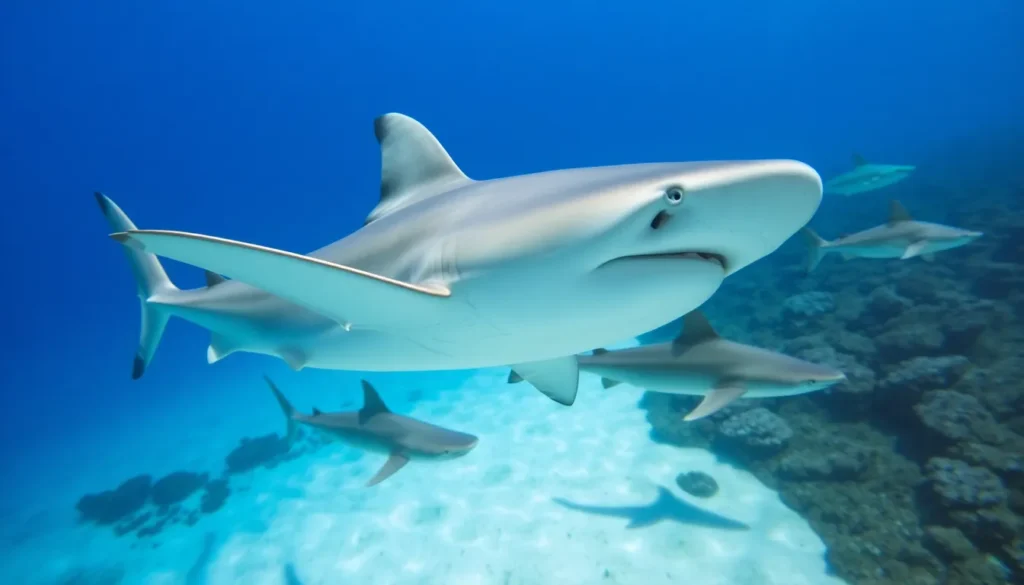
Short Answer
21 Facts About Hammerhead Sharks
- Unique Head Shape: Hammerhead sharks are named for their unusual, flattened, and laterally extended heads called cephalofoils, which resemble a hammer.
- Enhanced Sensory Perception: The wide spacing of their eyes on the cephalofoil provides a 360-degree visual range, allowing better detection of prey and predators.
- Electroreception: Hammerheads have specialized sensory organs called ampullae of Lorenzini on their heads that detect electric fields produced by other animals, aiding in hunting.
- Species Diversity: There are nine recognized species of hammerhead sharks, including the great hammerhead (Sphyrna mokarran) and the scalloped hammerhead (Sphyrna lewini).
- Size Variation: Sizes vary by species; the great hammerhead can reach lengths of up to 20 feet (6 meters), while smaller species like the bonnethead measure around 3 to 5 feet (1 to 1.5 meters).
- Diet: Hammerheads primarily feed on fish, squid, octopus, and crustaceans, with some species known to prey on stingrays and other sharks.
- Schooling Behavior: Some hammerhead species, especially the scalloped hammerhead, form large schools during the day, which can number in the hundreds.
- Reproductive Mode: Hammerhead sharks are viviparous, meaning females give birth to live young after internal egg fertilization and development.
- Gestation Period: The gestation period ranges from approximately 9 to 12 months, varying among species.
- Nursery Areas: Females often use shallow coastal areas as nurseries where pups can grow with reduced predation risk.
- Migration: Some hammerhead species undertake long-distance migrations, likely related to breeding or following food availability.
- Predators: Larger sharks and orcas may prey on hammerheads, particularly juveniles.
- Conservation Status: Many hammerhead species are listed as vulnerable or endangered due to overfishing and bycatch.
- Fins Valued in Trade: Hammerhead fins are highly prized in the shark fin trade, contributing to population declines.
- Role in Ecosystem: As mid-level predators, hammerheads help maintain balance in marine food webs by controlling prey populations.
- Behavioral Adaptations: The cephalofoil may enhance maneuverability in the water, improving hunting efficiency.
- Vision Adaptation: Their eyes are adapted to see both above and below them simultaneously due to the head shape.
- Social Interactions: Schooling may provide protection from predators and improve foraging success.
- Scientific Interest: Hammerheads are studied extensively for their unique morphology and sensory capabilities.
- Longevity: Hammerhead sharks can live up to 20-30 years in the wild, depending on the species.
- Human Interaction: They are generally not aggressive toward humans but can defend themselves if threatened.
Habitat and Behavior
Hammerhead sharks inhabit warm temperate and tropical waters worldwide, typically found along continental shelves and coastal areas. They prefer depths ranging from shallow reefs to around 80 meters but can dive deeper. These sharks exhibit both solitary and schooling behaviors; certain species like the scalloped hammerhead are known for forming large daytime schools, while others are more solitary. Their unique cephalofoil aids in improved sensory perception, allowing them to detect prey hidden in sand or sediment. Hammerheads are active hunters feeding mostly on fish, cephalopods, and crustaceans. Reproductively, they give birth to live young, with mothers often selecting protected nursery areas in shallow waters to safeguard their offspring during early development stages. Migration patterns vary by species and are thought to be linked to breeding and feeding requirements.
Why This Animal Matters
Hammerhead sharks play a crucial ecological role as mesopredators, helping to regulate populations of prey species and maintain the health of marine ecosystems. Their presence indicates healthy oceanic environments, as they require diverse prey and suitable habitats. Additionally, hammerheads hold cultural significance in some coastal communities, often appearing in folklore and marine conservation efforts. Unfortunately, hammerhead populations face threats from overfishing, habitat degradation, and the shark fin trade, making their conservation a priority for biodiversity preservation. Protecting hammerheads contributes to the broader management of marine ecosystems and supports sustainable fisheries.
Common Misconceptions
Misconception: Hammerhead sharks are highly aggressive and dangerous to humans.
Correction: While capable of defending themselves, hammerhead sharks are generally not aggressive toward humans and attacks are rare.

Misconception: The hammer-shaped head serves only as a weapon.
Correction: The cephalofoil primarily enhances sensory perception and maneuverability, not for offensive use.
Misconception: All hammerhead species are large and dangerous.
Correction: Hammerhead species vary widely in size and behavior, with many being relatively small and non-threatening.
FAQ
Why do hammerhead sharks have such a unique head shape?
The hammer-shaped head, or cephalofoil, improves their sensory capabilities by allowing a wider visual field and enhanced electroreception, which helps in detecting prey and navigating their environment.
Are hammerhead sharks dangerous to humans?
Hammerhead sharks are generally not aggressive toward humans and attacks are rare. They tend to avoid human contact unless provoked or threatened.
What threats do hammerhead sharks face in the wild?
They are threatened primarily by overfishing, bycatch, and the shark fin trade, which have led to declines in many species, prompting conservation concerns.




Leave a Reply