
Short Answer
21 Facts About Cave Animals
- Adaptation to Darkness: Many cave animals have evolved to live in complete darkness, often losing their eyesight or pigmentation over generations.
- Troglobites: These are animals fully adapted to cave life and cannot survive outside caves, such as certain species of fish, salamanders, and insects.
- Blindness Is Common: Numerous cave species are blind or have highly reduced eyes, relying on other senses to navigate and find food.
- Lack of Pigmentation: Cave animals often lack coloration, appearing white or translucent due to the absence of light in their environment.
- Slow Metabolism: To cope with scarce food, many cave animals have slow metabolisms, allowing them to survive on limited resources.
- Long Lifespans: Some cave species live longer than their surface relatives, possibly due to slower metabolisms and fewer predators.
- Unique Sensory Organs: Many cave animals develop enhanced tactile, chemical, or auditory senses to compensate for the lack of vision.
- Isolated Evolution: Cave animals often evolve in isolation, leading to unique species found only in specific cave systems.
- Energy Sources: Instead of sunlight, cave ecosystems often depend on organic matter washed in from outside or chemosynthesis by bacteria.
- Specialized Diets: Cave animals may feed on detritus, bacteria, fungi, or other cave organisms adapted to nutrient-poor environments.
- Reproductive Adaptations: Some cave species have reduced reproduction rates, producing fewer offspring but investing more in their survival.
- Examples of Cave Fish: Species like the Mexican blind cavefish (Astyanax mexicanus) are well-studied for their evolutionary adaptations.
- Cave Salamanders: Certain salamanders, such as the olm, live exclusively in caves and show remarkable longevity and low metabolic rates.
- Invertebrate Diversity: Many cave invertebrates, including spiders, beetles, and crustaceans, have evolved unique traits for cave life.
- Energy Conservation: Cave animals often show behaviors that conserve energy, such as reduced movement and inactivity for long periods.
- Use of Vibrations: Some cave animals detect prey or predators through vibrations transmitted in water or air within the cave.
- Symbiotic Relationships: Certain cave species rely on symbiotic relationships with bacteria or fungi to obtain nutrients.
- Vulnerability to Disturbance: Cave ecosystems are fragile, and many cave animals are sensitive to environmental changes or human intrusion.
- Scientific Importance: Cave animals are valuable for studying evolution, adaptation, and extremophile biology.
- Conservation Challenges: Many cave species are endangered due to habitat destruction, pollution, and climate change.
- Cultural Significance: Cave animals often feature in folklore and local traditions, highlighting human fascination with subterranean life.
Habitat and Behavior
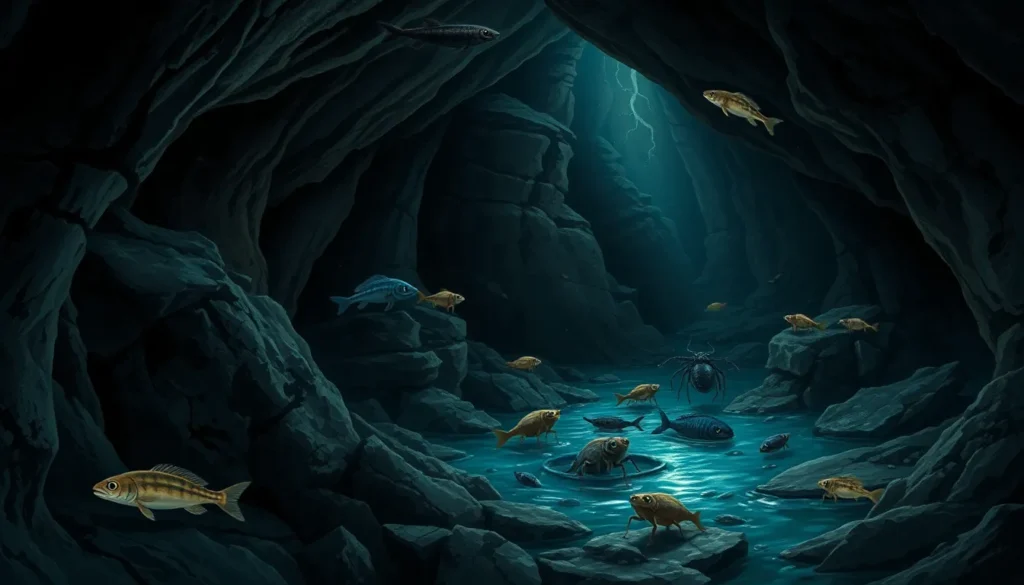
Cave animals inhabit diverse subterranean environments including limestone caves, lava tubes, and underwater cave systems. These habitats are characterized by perpetual darkness, high humidity, stable but often low temperatures, and limited food availability. Behaviorally, cave animals exhibit adaptations such as reduced activity levels to conserve energy and specialized feeding strategies that utilize detritus, microbial mats, or prey adapted to the cave environment. Many cave species have developed heightened non-visual senses, enabling them to navigate and hunt in total darkness. Reproductive strategies are often adjusted to the resource-scarce environment, with some species producing fewer offspring but investing more in their survival. The isolation of cave habitats has led to the evolution of species found nowhere else on Earth, making these ecosystems unique biodiversity hotspots.
Why This Animal Matters
Cave animals play crucial roles in subterranean ecosystems, contributing to nutrient cycling and energy flow in environments devoid of sunlight. Their specialized adaptations provide important insights into evolutionary biology, particularly regarding how life can thrive under extreme conditions. Studying cave animals helps scientists understand genetic mechanisms of adaptation, sensory biology, and longevity. Additionally, many cave species are bioindicators of environmental health, as their sensitivity to pollution and habitat change reflects broader ecosystem integrity. Conservation of cave fauna is vital not only for preserving biodiversity but also for maintaining the stability of underground water systems and ecological processes linked to surface environments. Culturally, cave animals have inspired folklore, art, and scientific curiosity, highlighting humanity’s enduring interest in the hidden natural world.
Common Misconceptions
Misconception: Cave animals are blind because they are sick or damaged.
Correction: Blindness in cave animals is an evolutionary adaptation to the dark environment rather than a sign of illness or injury.
Misconception: All cave animals are small and primitive.
Correction: While many cave species are small due to limited resources, some can be relatively large, and their adaptations are highly specialized, reflecting complex evolutionary processes.
Misconception: Cave animals can survive easily outside caves.
Correction: Many cave animals, especially troglobites, are so specialized that they cannot survive outside their cave habitats.
Misconception: Cave environments are lifeless and barren.
Correction: Caves host diverse, often highly specialized ecosystems that support a variety of life forms uniquely adapted to subterranean conditions.
Misconception: Cave animals are rare curiosities with no ecological importance.
Correction: Cave animals have important ecological roles and help maintain subterranean ecosystem balance, making them vital components of biodiversity.
FAQ
Why do many cave animals lose their eyesight?
Many cave animals lose their eyesight over evolutionary time because eyesight is unnecessary in complete darkness. Energy conservation favors the reduction of non-essential organs, so eyes often diminish or disappear.
How do cave animals find food in the dark?
Cave animals use enhanced senses such as touch, smell, and vibration detection to locate food. They often feed on detritus, microbial communities, or other cave organisms.
Are cave animals endangered?
Yes, many cave animals are vulnerable or endangered due to habitat disturbance, pollution, groundwater depletion, and climate change, as cave ecosystems are fragile and isolated.


Leave a Reply