
Short Answer
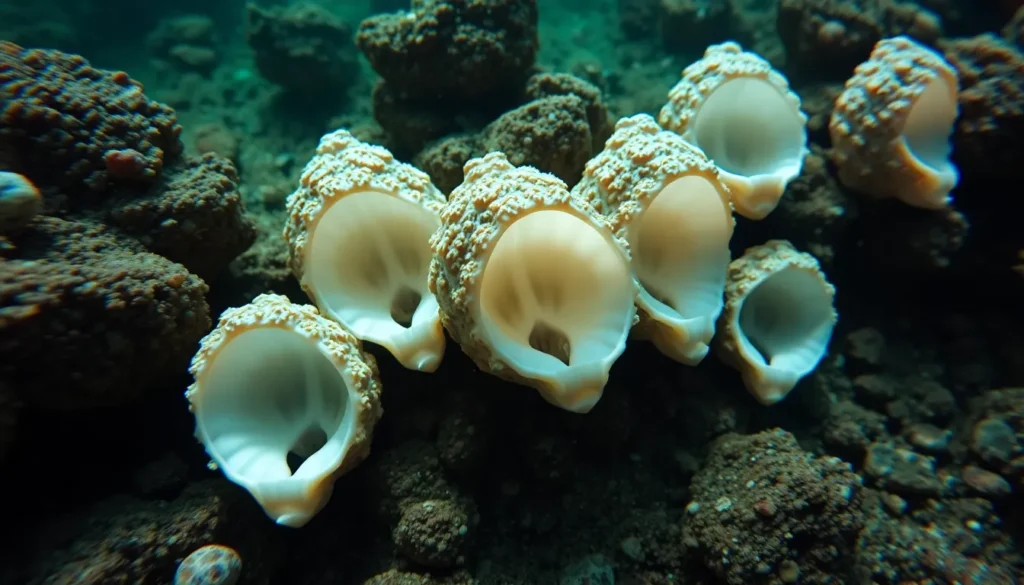
21 Facts About Brachiopods (Lamp Shells)
- Ancient Origins: Brachiopods first appeared in the Cambrian period, over 500 million years ago, making them one of the oldest marine animal groups still existing today.
- Distinctive Shells: They have two shells, or valves, that are dorsal and ventral, unlike bivalve mollusks whose shells are lateral.
- Lamp Shell Nickname: Their common name, lamp shells, comes from the shape of their shells, which resemble ancient oil lamps.
- Filter Feeders: Brachiopods feed by filtering microscopic particles from seawater using a specialized feeding organ called a lophophore.
- Marine Habitat: They are exclusively marine animals, found mostly attached to the seafloor by a stalk-like structure called a pedicle.
- Low Diversity Today: While brachiopods were abundant and diverse in Paleozoic seas, only about 300 species exist currently.
- Calcium Carbonate Shells: Their shells are typically composed of calcium carbonate, sometimes phosphatic material in ancient species.
- Symmetry Differences: Brachiopods have bilateral symmetry perpendicular to the hinge line, differing from bivalves whose symmetry is along the hinge.
- Simple Nervous System: Brachiopods have a simple nervous system without a centralized brain.
- Slow Movers: Most brachiopods are sessile or move very slowly, relying on their stalk to anchor them.
- Fossil Importance: Their well-preserved shells make brachiopods important index fossils for studying Paleozoic marine environments.
- Two Major Groups: Brachiopods are classified mainly into two groups: Articulata with hinged shells and Inarticulata with shells held by muscles.
- Reproductive Strategies: They reproduce sexually, with most species releasing eggs and sperm into the water.
- Larval Stage: Brachiopods have a free-swimming larval stage during early development before settling to the substrate.
- Cold and Deep Waters: Many modern brachiopods are found in cold or deep ocean waters, where competition is lower.
- Slow Recovery After Extinctions: Brachiopods have shown slow recovery rates following mass extinction events.
- Shell Growth Lines: Growth lines on their shells provide information about their age and environmental conditions.
- Ecosystem Role: As filter feeders, brachiopods contribute to nutrient cycling in marine ecosystems.
- Misidentified as Mollusks: Despite their appearance, brachiopods are not mollusks but belong to their own phylum, Brachiopoda.
- Limited Movement: Their pedicle allows only limited movement, mainly for positioning and attachment.
- Conservation Status: While not generally endangered, some species may be vulnerable due to habitat changes.
Habitat and Behavior
Brachiopods are marine invertebrates primarily found on the seabed attached to substrates such as rocks or shells using their pedicle. They inhabit a variety of oceanic environments, from shallow coastal waters to deep-sea habitats, often favoring colder and nutrient-rich waters. Their sessile lifestyle involves minimal movement, relying on their lophophore to filter plankton and organic particles from passing currents. Brachiopods’ behavior is generally passive; they open their shells to allow water flow through the lophophore to feed and close tightly to protect against predators and environmental stressors. Their reproductive cycle includes free-swimming larvae that eventually settle and metamorphose into the adult form.
Why This Animal Matters
Brachiopods play an important ecological role as filter feeders, contributing to the marine food web and nutrient cycling. Their extensive fossil record provides valuable insights into the evolution of marine ecosystems and environmental changes over hundreds of millions of years. Brachiopods serve as key index fossils, helping geologists correlate rock layers and date geological formations. While they are less diverse today, their presence helps scientists understand the long-term effects of mass extinctions and marine biodiversity shifts. Additionally, studying brachiopods aids in understanding the evolutionary divergence between different lophophorate animals.
Common Misconceptions
Misconception: Brachiopods are a type of clam or mollusk.
Correction: Brachiopods belong to their own phylum, Brachiopoda, and are distinct from mollusks despite superficial similarities in shell structure.
Misconception: Brachiopods are extinct.
Correction: Although brachiopods were more abundant in the past, around 300 species still exist in modern oceans.
Misconception: Brachiopod shells are symmetrical like bivalve shells.
Correction: Brachiopod shells have bilateral symmetry perpendicular to the hinge line, unlike bivalves whose shells mirror each other along the hinge.
Misconception: Brachiopods are fast-moving animals.
Correction: Brachiopods are mostly sessile or slow-moving, attaching to substrates via a pedicle and relying on water currents for feeding.
Misconception: Brachiopods can live in freshwater environments.
Correction: Brachiopods are exclusively marine animals, never found in freshwater habitats.
FAQ
What are brachiopods?
Brachiopods are marine invertebrates with two shells or valves, known as lamp shells. They use a lophophore to filter feed and have existed since the Cambrian period.
How are brachiopods different from clams?
Unlike clams, which are mollusks with lateral shells, brachiopods have dorsal and ventral shells with bilateral symmetry perpendicular to the hinge line. They also belong to a different phylum.
Where do brachiopods live?
Brachiopods live exclusively in marine environments, commonly attaching themselves to substrates on the ocean floor, often in cold or deep waters.

Leave a Reply