
Short Answer
21 Facts About Orb Weaver Spiders
- Orb weavers belong to the family Araneidae. This family includes over 3,000 species worldwide, making it one of the largest spider families.
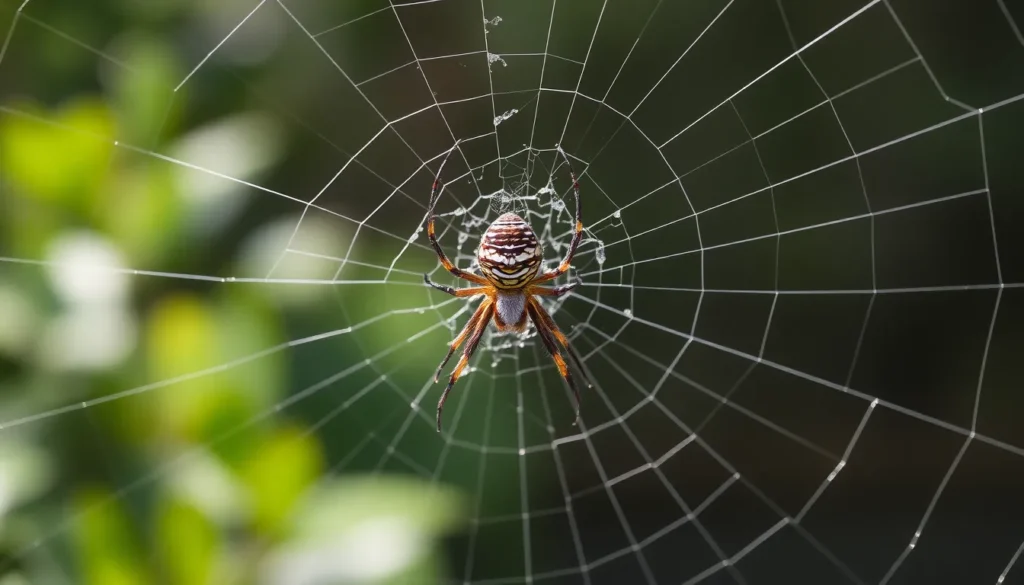
- They are known for their characteristic orb-shaped webs. The circular, wheel-like webs are highly efficient for catching flying insects.
- Orb weaver webs are made from silk produced by spinnerets. The silk is both sticky and strong, enabling effective prey capture.
- Most orb weavers are nocturnal. They often build or repair their webs at night and retreat during the day.
- They display sexual dimorphism, with females typically larger than males. Female orb weavers can be several times bigger than males.
- Some orb weavers can rebuild their webs daily. They may consume old silk to recycle proteins before spinning a new web.
- Orb weavers use vibration as a primary sense to detect prey. They monitor their webs for movements indicating trapped insects.
- They are generally non-aggressive to humans. Orb weavers may bite if provoked but their venom is not harmful to people.
- These spiders have poor eyesight. They rely mainly on tactile and vibrational cues rather than vision.
- Orb weaver webs can reach up to 2 feet (60 cm) in diameter. Size varies depending on the species and environmental conditions.
- The golden silk orb weaver produces yellow-colored silk. This silk is unusually strong and has been studied for potential industrial applications.
- Orb weavers contribute to natural pest control. By capturing numerous insects, they help regulate insect populations.
- Some species exhibit unique web decorations called stabilimenta. These patterns may help attract prey or deter predators.
- The lifespan of most orb weavers is about one year. They generally complete their life cycle within a single season.
- Orb weavers are found on every continent except Antarctica. They inhabit diverse ecosystems from forests to gardens.
- Female orb weavers sometimes consume males after mating. This behavior varies by species and is not universal.
- Orb weaver silk has remarkable elasticity and tensile strength. It is among the toughest natural fibers known.
- Juvenile orb weavers disperse by ballooning. They release silk threads to catch the wind and travel to new locations.
- Orb weaver coloration varies widely. Many species have bright colors or patterns that provide camouflage or warning signals.
- Some orb weavers build webs in unusual places. They can adapt to urban environments, constructing webs on buildings and streetlights.
- Orb weaver spiders play a significant role in scientific research. Their silk properties and behaviors continue to be important study subjects.
Habitat and Behavior
Orb weaver spiders inhabit a diverse range of environments including forests, grasslands, gardens, and urban areas. They typically prefer locations where they can anchor their webs between plants, trees, or man-made structures to maximize prey capture. Most orb weavers are nocturnal, constructing or repairing their webs during the evening or night and retreating to a hiding place during the day to avoid predators. Their webs are intricately spun and can be rebuilt daily, allowing them to maintain effective traps for flying insects such as flies, moths, and beetles. Orb weavers rely primarily on vibrations transmitted through their webs to detect prey rather than visual cues. They are generally solitary creatures, except during mating seasons when males seek out females. Some species show unique behaviors such as building decorative stabilimenta within their webs or demonstrating sexual cannibalism. Juveniles disperse by ballooning, which enables them to colonize new areas. Overall, orb weavers are highly adaptable and can thrive in a variety of ecological niches worldwide.
Why This Animal Matters
Orb weaver spiders play an essential ecological role by controlling insect populations, including many pest species. Their webs efficiently capture flying insects, helping to maintain the balance of ecosystems. The silk produced by orb weavers is of scientific interest due to its extraordinary strength and elasticity, inspiring biomimetic research and potential applications in materials science and medicine. Culturally, orb weavers often appear in folklore and art, symbolizing creativity and patience because of their intricate web-building skills. Conservation-wise, while most orb weaver species are not threatened, their presence indicates healthy environments, and changes in their populations can signal ecological shifts. Protecting their habitats contributes to broader biodiversity and ecosystem stability.
Common Misconceptions
Misconception: Orb weaver spiders are dangerous to humans.
Correction: Orb weavers are generally harmless to humans. Their venom is not toxic to people, and they rarely bite unless provoked.
Misconception: Orb weavers build webs only in forests.
Correction: Orb weavers can build webs in a wide range of environments, including urban areas, gardens, and grasslands.
Misconception: All orb weaver spiders consume males after mating.
Correction: Sexual cannibalism occurs in some species but is not universal across all orb weavers.
Misconception: Orb weavers rely mainly on eyesight to catch prey.
Correction: They depend mostly on sensing vibrations through their webs rather than vision.
Misconception: Orb weaver webs are permanent structures.
Correction: Many orb weavers rebuild their webs daily, recycling the silk for efficiency.
FAQ
Are orb weaver spider bites dangerous to humans?
Orb weaver spider bites are generally not dangerous to humans. These spiders are non-aggressive and their venom is not harmful to people, typically causing only mild irritation if bitten.
How do orb weaver spiders build their webs?
Orb weaver spiders use silk produced by spinnerets to create their characteristic wheel-shaped webs. They start by creating a frame and then spin concentric circles with sticky silk to trap prey effectively.
Why do orb weavers rebuild their webs daily?
Many orb weaver species rebuild their webs daily to maintain the web's effectiveness and to recycle silk proteins by consuming old silk before spinning a new web.
Leave a Reply