
Short Answer
21 Facts About Leopard Geckos
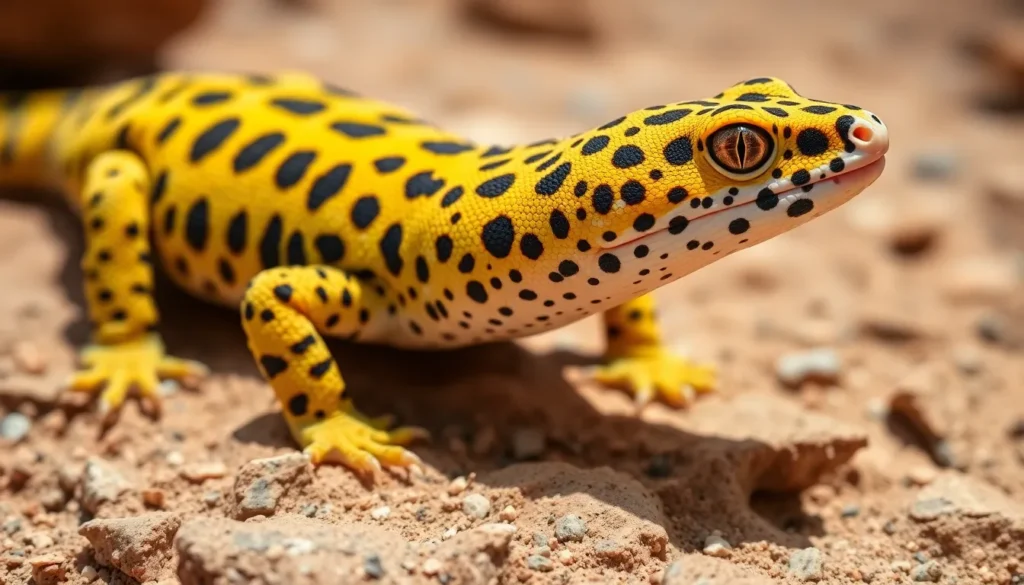
- Distinctive spotted pattern: Leopard geckos are named for their unique yellow and black spotted skin, which provides camouflage in their natural rocky and arid habitats.
- Nocturnal behavior: Unlike many lizards, leopard geckos are primarily nocturnal, hunting insects at night to avoid daytime heat.
- Tail autotomy: They can detach their tails to escape predators, and the tail will regenerate over time, although the new tail may differ in appearance.
- Fat storage in tails: Their tails serve as fat reserves, which helps them survive periods of food scarcity.
- Communication through vocalizations: Leopard geckos can produce chirping or clicking sounds, which are believed to be forms of communication.
- Temperature-dependent sex determination: The sex of leopard gecko hatchlings can be influenced by the incubation temperature of their eggs.
- Wide variety of morphs: Selective breeding has produced numerous color and pattern morphs in captive populations.
- Insectivorous diet: They primarily feed on insects such as crickets, mealworms, and other small invertebrates.
- Sticky toe pads absence: Unlike many geckos, leopard geckos lack adhesive toe pads and instead have small claws for climbing on rough surfaces.
- Long lifespan: In captivity, leopard geckos can live up to 20 years or more, which is relatively long for small lizards.
- Slow metabolism: Their metabolism is adapted to conserve energy in harsh environments.
- Habitat range: Native to arid and semi-arid regions of Afghanistan, Pakistan, India, and Iran.
- Nocturnal hunting adaptations: Their large eyes have vertical pupils adapted for enhanced night vision.
- Territorial behavior: Males can be territorial and may fight if housed together without enough space.
- Breeding habits: Females lay clutches of one or two eggs several times per year under suitable conditions.
- Low water needs: They obtain most of their hydration from prey and require minimal direct water intake.
- Docile temperament: Leopard geckos are generally calm and tolerant of handling, contributing to their popularity as pets.
- Shedding process: They regularly shed their skin and may eat it afterward to recycle nutrients.
- Natural predators: Common predators include snakes, birds, and small mammals.
- Role in ecosystem: They help control insect populations, contributing to ecological balance.
- Conservation status: Currently, leopard geckos are not considered endangered, but habitat loss and collection for the pet trade can impact local populations.
Habitat and Behavior
Leopard geckos inhabit dry, rocky, and arid regions across parts of South Asia and the Middle East, including Afghanistan, Pakistan, northwestern India, and Iran. Their natural environment consists of deserts and scrublands with sparse vegetation, where they seek shelter under rocks or in burrows during the day to avoid extreme heat. Being nocturnal, they emerge at night to hunt insects and other small invertebrates, using their keen eyesight adapted for low-light conditions.
They are primarily ground-dwelling and do not possess the adhesive toe pads common to many other gecko species, instead relying on claws to navigate their environment. Leopard geckos exhibit solitary and territorial behavior, particularly among males, and communicate through a variety of vocalizations such as chirps or clicks. Their ability to detach their tails as a defense mechanism helps them evade predators, while the stored fat in their tails provides an energy reserve during scarce periods.
Why This Animal Matters
Ecologically, leopard geckos play an important role as insect predators, helping to manage populations of various invertebrates within their habitats. This contributes to the overall balance of ecosystems in arid environments. Culturally, leopard geckos have gained popularity as pets worldwide due to their manageable size, docile temperament, and relatively simple care requirements, making them important in the exotic pet trade.
From a conservation perspective, while leopard geckos are not currently classified as endangered, localized habitat degradation and overcollection for the pet market can threaten wild populations. Studying their biology and habitat needs contributes to understanding desert ecosystems and supports responsible pet ownership and conservation efforts.
Common Misconceptions
Misconception: Leopard geckos can climb smooth surfaces like other geckos.
Correction: Leopard geckos lack adhesive toe pads and cannot climb smooth vertical surfaces; they use claws to climb rough terrain only.
Misconception: Leopard geckos require a lot of water to survive.
Correction: They obtain most of their hydration from their prey and require minimal direct water intake.
Misconception: Leopard geckos are aggressive and difficult to handle.
Correction: Generally, leopard geckos are known for their calm and docile nature, often tolerating gentle handling well.
FAQ
Are leopard geckos good pets for beginners?
Yes, leopard geckos are often recommended for beginner reptile keepers due to their manageable size, docile nature, and relatively simple care requirements.
How do leopard geckos communicate?
Leopard geckos communicate primarily through vocalizations such as chirping and clicking sounds, which may serve social or territorial functions.
Can leopard geckos regenerate their tails?
Yes, leopard geckos can drop their tails to escape predators, and the tail will regenerate over time, although the new tail often differs in appearance from the original.



Leave a Reply