
Short Answer
21 Facts About Cooperative Hunting in Wolves and Lions
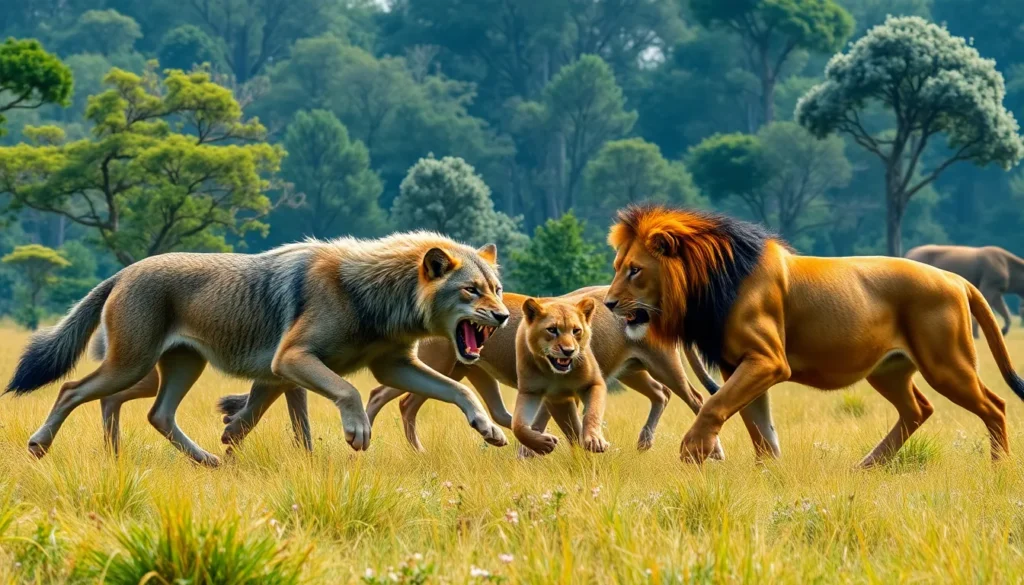
- Cooperative hunting increases success rates. Wolves and lions hunting together can take down larger prey than individuals could manage alone, improving food acquisition efficiency.
- Pack and pride structures facilitate teamwork. Wolves hunt in packs and lions in prides, social groups that coordinate roles during hunts.
- Communication is essential during hunts. Both species use vocalizations, body language, and positioning to coordinate movements and strategies.
- Role differentiation occurs in hunts. Some individuals flank prey while others chase or ambush, showing task specialization within groups.
- Hunting strategies vary by environment. Wolves in forests may rely on endurance and tracking, while lions in savannas often use stealth and ambush tactics.
- Experience influences hunting skill. Older or more experienced individuals often lead or teach hunting techniques to younger pack or pride members.
- Energy conservation is a benefit. By working together, individuals expend less energy per hunt than if hunting alone.
- Cooperative hunting reduces injury risk. Group hunting disperses the danger posed by prey, lowering the chance of serious injury.
- Social bonds are strengthened through hunting. Cooperative hunting reinforces relationships and hierarchy within wolf packs and lion prides.
- Prey selection is influenced by group size. Larger groups can target bigger or more dangerous animals, while smaller groups focus on smaller prey.
- Wolves often hunt in phases. They use endurance to tire prey before closing in for the kill.
- Lions employ ambush and stalking. Lions typically approach prey stealthily before a rapid, powerful attack.
- Cooperative hunting is energy efficient. Sharing the workload allows the group to optimize energy expenditure.
- Some members may not participate equally. In lion prides, male lions often play a different hunting role compared to females, who do most of the cooperative hunting.
- Hunting success impacts social dynamics. Successful hunts can increase social status and reproductive opportunities.
- Environmental changes affect cooperative hunting. Habitat loss and prey availability can influence hunting strategies and group behavior.
- Cooperative hunting is observed in other species. While notable in wolves and lions, other animals such as dolphins and wild dogs also show similar behaviors.
- Learning and imitation are key. Younger wolves and lions learn hunting techniques by observing and mimicking elders.
- Cooperation extends beyond hunting. In wolf packs, cooperative behaviors include pup rearing and territory defense, complementing hunting cooperation.
- Group size affects hunting efficiency. There is an optimal group size for hunting that balances coordination and resource sharing.
- Cooperative hunting has evolutionary benefits. It likely evolved because it increases survival and reproductive success in social carnivores.
Habitat and Behavior
Wolves (Canis lupus) inhabit diverse ecosystems including forests, tundras, and grasslands across North America, Europe, and Asia. They live in packs typically composed of family units, with strong social hierarchies. Wolves are territorial animals that rely heavily on cooperation for hunting large ungulates such as deer and elk. Their hunting behavior includes endurance chasing and strategic encirclement.
Lions (Panthera leo) primarily inhabit savannas, grasslands, and open woodlands in sub-Saharan Africa. They live in prides consisting of related females, their offspring, and a few resident males. Lions use cooperative hunting to bring down large herbivores like zebras, wildebeests, and buffalo. Their hunting style usually involves stalking and ambush, followed by a short, powerful chase.
Both species demonstrate complex social behaviors that are closely tied to their cooperative hunting strategies, which are critical for survival in their respective habitats.
Why This Animal Matters
Wolves and lions play vital roles as apex predators in their ecosystems, regulating prey populations and maintaining ecological balance. Their cooperative hunting behaviors influence prey dynamics and ecosystem health. Additionally, these species have cultural significance; they appear in folklore, symbolism, and conservation efforts worldwide.
Conservation of wolves and lions is important due to habitat loss, human-wildlife conflict, and declining prey populations. Understanding their cooperative hunting behavior aids in managing populations and preserving biodiversity. Their presence often indicates a healthy ecosystem, making them keystone species in their environments.
Common Misconceptions
Misconception: Wolves and lions always hunt in large groups.
Correction: While cooperative hunting is common, group size varies. Sometimes wolves or lions hunt alone or in small groups depending on prey size and environmental conditions.
Misconception: Only female lions hunt cooperatively.
Correction: Female lions do most cooperative hunting, but males may participate occasionally, especially when hunting large prey.
FAQ
What is cooperative hunting?
Cooperative hunting is a behavior where animals hunt in groups, coordinating their efforts to increase the chance of capturing prey.
Why do wolves and lions hunt cooperatively?
Cooperative hunting allows these social carnivores to take down larger prey, conserve energy, reduce injury risk, and improve hunting success.
Do all members of a wolf pack or lion pride participate equally in hunts?
Participation can vary; experienced individuals often lead hunts, while others may play supportive roles. In lion prides, females typically do most of the hunting.




Leave a Reply