
Short Answer
21 Facts About Grassland Animals
- Grassland animals are adapted to open environments. Many species have evolved physical and behavioral traits that help them survive in wide, open spaces with limited cover.
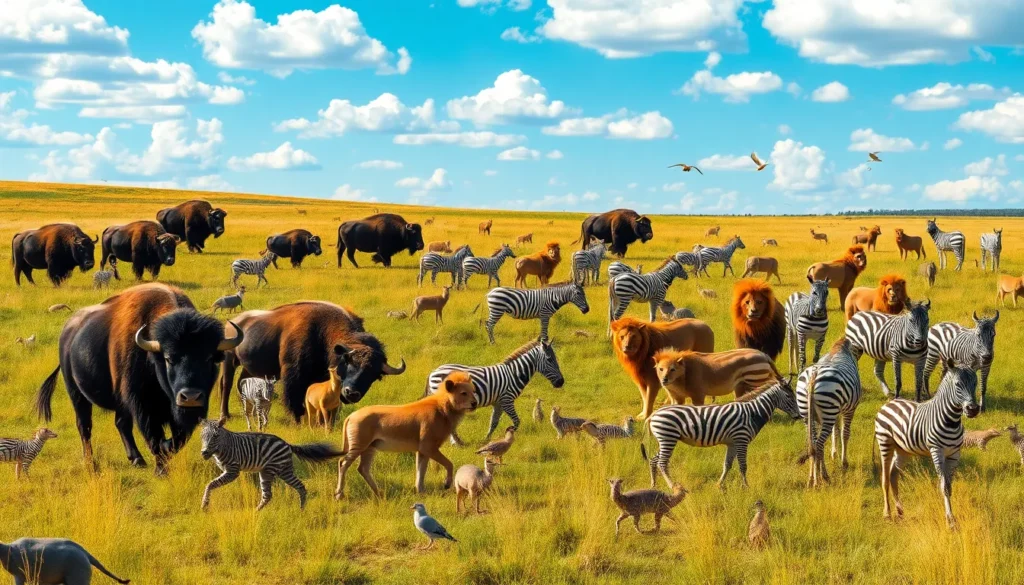
- Herbivores like bison and zebras dominate grasslands. These large grazers play a critical role in maintaining the ecosystem by controlling vegetation growth.
- Grassland carnivores include animals such as lions and cheetahs. These predators rely on speed and stealth to hunt prey in open terrain.
- Many grassland animals migrate seasonally. Migration helps them find food and water during dry or harsh seasons.
- Grassland animals often have keen senses. Enhanced hearing, sight, and smell aid in detecting predators and locating food.
- Burrowing animals are common in grasslands. Species like prairie dogs and meerkats dig extensive tunnel systems for shelter and protection.
- Some grassland birds, such as the greater prairie chicken, perform elaborate mating displays. These behaviors ensure reproductive success in open habitats.
- Grassland animals contribute to soil health. Their grazing and movement help aerate soil and distribute nutrients.
- Predators in grasslands often hunt cooperatively. Lions and African wild dogs use group strategies to capture prey more effectively.
- Grassland animals face threats from habitat loss and climate change. Conversion of grasslands to agriculture reduces available habitat for many species.
- Some grassland species are keystone animals. Their presence significantly influences ecosystem structure and function.
- Grassland animals display diverse reproductive strategies. From large litters in rodents to single offspring in large mammals, strategies vary widely.
- Grassland insects, such as grasshoppers, are crucial food sources. They form a key part of the diet for many bird and small mammal species.
- Many grassland animals have camouflage coloring. Their fur or feathers often match the dry grasses, helping them avoid predators.
- Grassland ecosystems support both diurnal and nocturnal animals. This temporal separation reduces competition for resources.
- Grassland animals often rely on water sources like rivers or seasonal ponds. Availability of water influences their distribution and survival.
- Some grassland species, such as the pronghorn, have evolved exceptional speed. These adaptations help them escape from fast predators in open terrain.
- Grassland animal populations can fluctuate dramatically. Factors such as predation, drought, and disease impact their numbers.
- Grassland animals are important indicators of ecosystem health. Changes in their populations can signal shifts in environmental conditions.
- Grassland species exhibit a wide range of social structures. From solitary animals to complex herds, social behavior varies extensively.
- Grassland animals contribute to human culture and livelihoods. They have significance in indigenous traditions, ecotourism, and agriculture.
Habitat and Behavior
Grassland animals inhabit ecosystems characterized by vast expanses of grasses, few trees, and diverse climatic conditions. These habitats include temperate prairies, savannas, steppes, and pampas across continents such as Africa, North America, and Eurasia. Animals in these areas have adapted to the open landscape by developing traits like speed, camouflage, and social behaviors that aid in predator avoidance and resource acquisition. Many species engage in seasonal migrations to cope with changes in food and water availability. Burrowing animals create complex underground networks to escape predators and harsh weather. Social structures vary widely, with some species forming large herds for defense, while others remain solitary. The balance between herbivores and carnivores is essential for maintaining the health of grassland ecosystems.
Why This Animal Matters
Grassland animals play crucial ecological roles, including regulating plant communities through grazing and seed dispersal, supporting predator-prey dynamics, and contributing to nutrient cycling. Many species are considered keystone species, whose presence or absence significantly impacts ecosystem stability. Grasslands themselves are important carbon sinks, and their animal inhabitants influence this function. Culturally, grassland animals hold significance for indigenous peoples and local communities, often featuring in folklore, rituals, and as sources of sustenance. Conservation of grassland species is vital, as many face threats from habitat destruction, climate change, and human activities. Protecting these animals helps preserve biodiversity and ecosystem services essential for human well-being.
Common Misconceptions
Misconception: Grasslands are empty and barren landscapes.
Correction: Grasslands are rich ecosystems teeming with diverse animal species, including mammals, birds, insects, and reptiles.
Misconception: All grassland animals are large herbivores.
Correction: While large herbivores are prominent, grasslands also support numerous small mammals, carnivores, birds, and insects that play key roles.
Misconception: Grassland animals do not migrate.
Correction: Many grassland species undertake seasonal migrations to access food and water resources.
Misconception: Grassland animals are not threatened because these areas are vast.
Correction: Grassland habitats are among the most endangered ecosystems, and many animal species face significant conservation challenges.
Misconception: Grassland animals have limited adaptations.
Correction: Grassland species exhibit a wide range of specialized adaptations for survival in variable and open environments.
FAQ
What are the main types of grassland ecosystems?
The main types of grassland ecosystems include temperate grasslands (prairies and steppes), tropical savannas, and pampas. Each varies in climate, vegetation, and animal species.
Why do many grassland animals migrate?
Many grassland animals migrate seasonally to access food and water as these resources can become scarce during dry or harsh seasons in open grassland environments.
How do grassland animals adapt to predators?
Grassland animals adapt through speed, camouflage, vigilant behavior, social grouping, and burrowing to evade or deter predators in the open landscape.



Leave a Reply