
Short Answer
21 Facts About Animal Symbiosis
- Symbiosis includes mutualism, commensalism, and parasitism. These are the three primary types of symbiotic relationships where species interact differently: mutualism benefits both partners, commensalism benefits one without harming the other, and parasitism benefits one at the expense of the other.
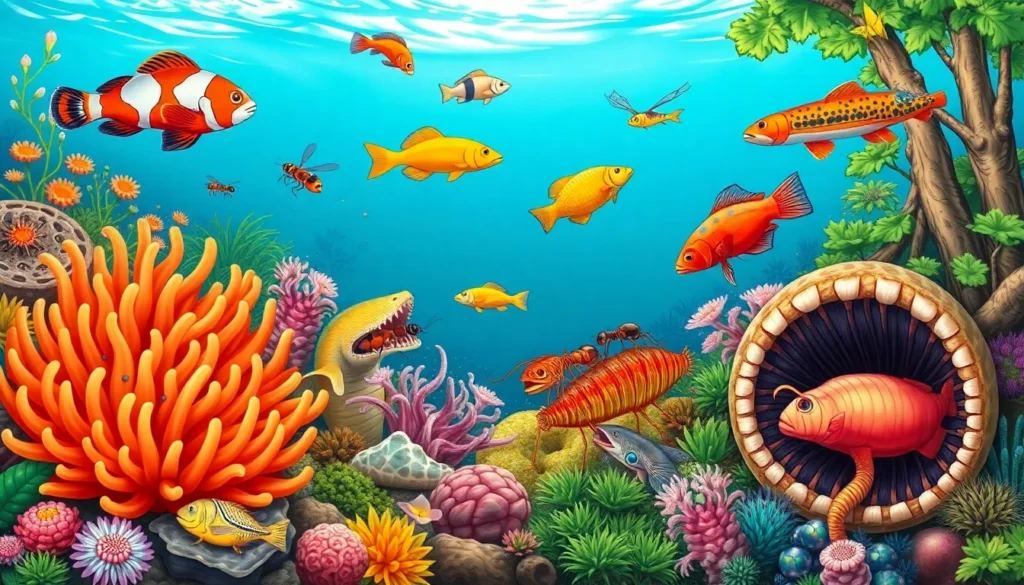
- Clownfish and sea anemones exhibit mutualism. Clownfish gain protection from predators by living among the stinging tentacles of sea anemones, which in turn receive food scraps and cleaning from the fish.
- Cleaner fish remove parasites from larger fish. Cleaner wrasses and gobies eat parasites off the skin of bigger fish, gaining food while keeping their hosts healthy.
- Leafcutter ants cultivate fungus. These ants farm fungus on collected leaf material, which serves as their primary food source, demonstrating an obligate mutualism.
- Remoras attach to sharks and other large marine animals. Remoras benefit by gaining transportation and leftover food, while the host is typically unharmed, an example of commensalism.
- Oxpeckers feed on ticks found on large mammals. This relationship benefits the oxpecker with food and the mammal with parasite removal.
- Termites rely on gut protozoans to digest cellulose. Termites house symbiotic protozoans in their guts that break down wood fibers, enabling nutrient absorption.
- Parasitic relationships can influence animal behavior. Parasites like the lancet liver fluke manipulate ant behavior to increase transmission to their next host.
- Some symbioses are species-specific. Certain ants only associate with specific plant species, demonstrating co-evolution.
- Mycorrhizal fungi form symbiosis with plant roots. While not animals, these fungi are a critical part of many animal habitats by enhancing plant nutrition and soil health.
- Symbiosis can improve survival in harsh environments. For example, coral reefs depend on symbiotic algae for energy in nutrient-poor waters.
- Some birds and mammals have gut bacteria aiding digestion. These microbes help break down complex food substances, improving nutrient uptake.
- Symbiotic relationships can influence evolution. Co-evolution occurs when species reciprocally affect each other’s adaptations over time.
- Parasitism is widespread and ecologically important. Parasites regulate host populations and community structure despite often being overlooked.
- Symbiosis is not always beneficial to both parties. Relationships can shift along a continuum from mutualism to parasitism depending on environmental conditions.
- Some ants protect aphids in exchange for honeydew. Ants herd aphids, defending them from predators while collecting sugary secretions.
- Deep-sea tube worms host chemosynthetic bacteria. These worms rely on bacteria to convert inorganic chemicals into energy in environments without sunlight.
- Symbiotic relationships can be temporary or lifelong. Some interactions occur only during certain life stages or environmental conditions.
- Symbiosis contributes to biodiversity. These interactions create complex ecological networks promoting species coexistence.
- Human activities impact symbiotic relationships. Pollution, habitat destruction, and climate change can disrupt these essential interactions.
- Studying symbiosis advances ecological and medical knowledge. Understanding these relationships informs ecosystem management and disease control.
Habitat and Behavior
Animal symbiosis occurs across virtually all habitats, from tropical rainforests and coral reefs to deserts and deep oceans. The behavior involved varies widely depending on the species and type of symbiosis. Mutualistic partners often engage in close physical contact or cohabitation, such as clownfish living within anemones or ants tending aphids. Commensal species may attach temporarily or follow hosts for food and protection, as seen with remoras. Parasitic animals often have specialized adaptations for host attachment and nutrient extraction, and some manipulate host behavior to complete their life cycles. Survival strategies tied to symbiosis include cooperation for food acquisition, defense against predators, and enhanced digestion. These relationships can be obligate, where one or both species cannot survive without the other, or facultative, where the association is beneficial but not essential.
Why This Animal Matters
Animal symbiosis plays a crucial ecological role by maintaining community structure, promoting nutrient cycling, and supporting biodiversity. Mutualistic relationships, such as pollination and seed dispersal by animals, sustain plant populations and ecosystem productivity. Parasites regulate host populations, preventing overgrazing and enabling diverse species coexistence. Symbiotic bacteria and fungi aid digestion and nutrient uptake in a variety of animals, influencing health and survival. Culturally, many symbiotic animals, such as clownfish and cleaner fish, fascinate human observers and contribute to ecotourism. Conservation of symbiotic species and their interactions is vital, as disruptions can lead to ecosystem imbalance and species decline. Recognizing the importance of symbiosis helps inform habitat protection, restoration efforts, and sustainable resource management.
Common Misconceptions
Misconception: Symbiosis always means both species benefit.
Correction: Symbiosis includes parasitism, where one species benefits at the expense of the other, not mutual benefit exclusively.
Misconception: Symbiotic relationships are always permanent.
Correction: Some symbiotic relationships are temporary or conditional, changing with environmental factors or life stages.
Misconception: Parasitic animals are always harmful to ecosystems.
Correction: Parasites play important ecological roles, such as controlling host populations and maintaining biodiversity.
Misconception: Only specialized or rare animals engage in symbiosis.
Correction: Symbiosis is widespread and common among many animal groups across diverse habitats.
Misconception: Symbiosis only occurs between animals.
Correction: Symbiosis can involve plants, fungi, bacteria, and animals in complex multi-species interactions.
FAQ
What is animal symbiosis?
Animal symbiosis refers to close and long-term biological interactions between two or more animal species, which can be beneficial, neutral, or harmful to one or all involved.
How do mutualistic relationships benefit animals?
In mutualism, both species gain advantages such as protection, food, or improved survival, enhancing their fitness and ecological success.
Are all parasites harmful to their hosts?
While parasites often harm their hosts, they play important roles in ecosystems by regulating host populations and contributing to biodiversity.

Leave a Reply