
Short Answer
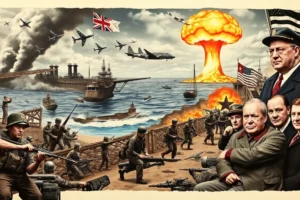
World War II, a cataclysmic event that reshaped global dynamics, evokes myriad emotions and deep curiosity. From the ashes of destruction arose stories of bravery, innovation, and the unyielding human spirit. Are you ready to embark on a challenge of knowledge? How well do you understand the intricacies of this monumental conflict? Here are 100 fascinating facts that encapsulate the far-reaching implications, pivotal moments, and compelling human narratives of WWII.
1. The Catalyst of Conflict
World War II began on September 1, 1939, when Germany invaded Poland, signaling the beginning of widespread hostilities across Europe.
2. A Global Coalition
The war pitted two major alliances against each other: the Allies and the Axis powers, with over 30 nations involved in various capacities.
3. A Global Theater
The conflict extended across multiple theaters, including Europe, the Pacific, North Africa, and Asia, each with its unique battles and strategies.
4. The Holocaust
The genocide perpetrated by the Nazis led to the deaths of approximately six million Jews, among millions of others, in a haunting chapter of human history.
5. The Blitz
London endured extensive bombings during the Blitz in 1940, as Germany aimed to demoralize the British populace.
6. The Battle of Britain
This pivotal air campaign saw the Royal Air Force defending the UK from the German Luftwaffe, ultimately thwarting a planned invasion.
7. Pearl Harbor
The surprise attack by Japan on December 7, 1941, propelled the United States into the war and marked a turning point in global conflict.
8. The Axis Powers
The principal axis powers were Germany, Italy, and Japan, united by their ambitions for territorial expansion and dominance.
9. The United Nations
The devastation of WWII emphasized the need for international cooperation, leading to the establishment of the United Nations in 1945.
10. D-Day
A monumental Allied invasion on June 6, 1944, marked the beginning of the liberation of Western Europe from Nazi occupation.
11. The Manhattan Project
This top-secret U.S. defense project developed the atomic bomb, forever altering warfare and international relations.
12. War Crimes Trials
Following the war, the Nuremberg Trials were held to prosecute prominent leaders of Nazi Germany for crimes against humanity.
13. The Role of Women
Women played a crucial role in the war effort, taking on various jobs in factories and serving in auxiliary military roles.
14. The Fall of Berlin
The Battle of Berlin in April-May 1945 concluded with the fall of the city and the suicide of Adolf Hitler.
15. Allies in Disguise
Joining forces, the Soviet Union, initially an Axis ally through the Molotov-Ribbentrop Pact, found itself at odds with Germany in 1941 when Operation Barbarossa commenced.
16. Victory in Europe
VE Day, celebrated on May 8, 1945, marked the official surrender of Nazi Germany, ending the war in Europe.
17. The Pacific Campaign
The Pacific Theater was characterized by fierce island-hopping campaigns, culminating in decisive battles such as Midway and Iwo Jima.
18. The Final Solution
Nazism’s horrific plan to annihilate the Jewish population was infrastructure-wide, culminating in concentration and extermination camps.
19. The Blitzkrieg Tactics
Germany’s innovative “lightning war” strategy allowed for rapid invasions and overwhelming force through coordinated attacks via air and ground units.
20. Massive Armaments
The war saw unparalleled advancements in military technology, with innovations such as radar, jet engines, and the first-ever guided missiles.
21. The Economic Impact
Grey economies boomed during the war, while the Great Depression was effectively abated through military production and employment opportunities.
22. Allied Propaganda
Effective propaganda campaigns were launched by both sides to galvanize public support and mobilize resources; think of iconic characters like Uncle Sam.
23. The Yalta Conference
In February 1945, world leaders convened to discuss post-war reorganization, setting the stage for the Cold War.
24. The Italian Campaign
This protracted battle involved numerous Allied operations to liberate Italy from Axis control, demonstrating the challenges of mountainous terrains.
25. Rations and Sacrifices
Civilians faced strict rationing of food and goods, illustrating the profound societal adjustments necessitated by war.
26. The Use of Spies
Espionage played a critical role, with spies such as the famed British intelligence officer, Sir William Stephenson, gathering vital information.
27. The Surrender of Japan
Japan officially surrendered on September 2, 1945, following the harrowing atomic bombings of Hiroshima and Nagasaki.
28. The Iron Curtain
The war’s conclusion heralded the stark division of Europe, setting the stage for decades of geopolitical tension between the East and West.
29. Resistance Movements
Across occupied nations, various resistance groups emerged, risking their lives to undermine Axis powers and support Allied forces.
30. The Battle of Stalingrad
This brutal confrontation from 1942-1943 marked a significant turning point on the Eastern Front, with Soviet forces decisively defeating the Germans.
31. The Tuskegee Airmen
This distinguished group of African American pilots broke racial barriers and demonstrated exceptional skill during the war.
32. The Battle of the Bulge
The final major German offensive campaign launched in December 1944 caught the Allies off guard but ultimately led to a decisive victory.
33. Innovations in Warfare
World War II saw the advent of aircraft carriers, tanks, and improved firearms, marking a profound shift in military tactics.
34. Children of the War
The conflict disproportionally affected children, many of whom became orphaned or displaced due to bombings and invasions.
35. The Navajo Code Talkers
Navajo soldiers developed an unbreakable code used in the Pacific campaign, contributing to key Allied victories.
36. The Role of Bamboo Networks
In Asia, local resistance movements employed bamboo networks, leveraging traditional communication methods to evade detection.
37. The War Economy
The demand for military supplies transformed industries and hastened technological advancements, affecting the post-war economy.
38. Medical Advancements
Innovations such as penicillin became widely used, greatly improving the treatment of battlefield injuries and infections.
39. The Fallout of Colonization
The war accelerated decolonization, as colonial subjects sought independence inspired by the Allied principles of self-determination.
40. The Role of Music
Music became a vital morale booster for troops and civilians alike, with songs like “We’ll Meet Again” resonating in hearts.
41. Women in Combat
The Soviet Union allowed women to serve in combat roles, leading to historic contributions at the front lines.
42. The Secret War
Intelligence operations, such as those conducted by the SOE and OSS, influenced significant military strategies throughout the global conflict.
43. Economic Devastation
Post-war Europe grappled with a devastated economy, leading to the Marshall Plan’s establishment to facilitate recovery.
44. The Cold War’s Birth
Different ideological tenets between the U.S. and the Soviet Union ultimately intensified tensions leading to the Cold War.
45. The Battle of El Alamein
This battle in 1942 marked a significant turning point in North Africa, as Allied forces began to push back against Axis powers.
46. Human Rights Revolution
The atrocities of WWII prompted a movement toward international human rights legislation, emphasizing the need for universal protection.
47. Supply Chain Innovations
Military logistics necessitated the establishment of complex supply chains, paving the way for modern logistical strategies.
48. Wartime Propaganda Films
Films served as tools for both morale boosting and propaganda, depicting the heroism of troops and the vilification of enemy forces.
49. The Big Three
Winston Churchill, Franklin D. Roosevelt, and Joseph Stalin became the pivotal figures in the Allied alliance, shaping post-war geopolitics.
50. The Nuremberg Rallies
Nazi Germany’s mass rallies exemplified propaganda’s power, galvanizing public support for the regime and fostering unity among its citizens.
51. The Atlantic Charter
In 1941, Roosevelt and Churchill articulated shared goals for a post-war world, laying the groundwork for future Allied collaboration.
52. The Vichy Regime
A puppet government established in France during the German occupation, the Vichy regime was marked by collaboration and repression.
53. War Bonds
To finance military efforts, governments issued war bonds, encouraging citizens to invest in the war and fostering a sense of shared sacrifice.
54. The Siege of Leningrad
This lengthy siege resulted in devastating starvation for citizens but ultimately showcased Soviet resilience and determination.
55. Military Intelligence Units
Intelligence units like the 442nd Regimental Combat Team proved instrumental, displaying courage while combating prejudice against Japanese Americans.
56. The Doolittle Raid
This air raid on Tokyo in 1942 demonstrated American resolve and served as a morale booster for the U.S. following Pearl Harbor.
57. Cultural Liberation
Allied victories led to the gradual liberation of various cultures, enabling the resurgence of arts and humanities in post-war Europe.
58. The Fall of France
Germany’s swift invasion in May 1940 resulted in the rapid fall of France, underscoring the effectiveness of Blitzkrieg tactics.
59. Internment Camps
In the U.S., thousands of Japanese Americans were unjustly detained in internment camps during the war, illustrating wartime prejudice.
60. The Red Army’s Might
With ferocity unparalleled, the Soviet Red Army played an essential role in the defeat of Nazi forces on the Eastern Front.
61. America’s Industrial Output
The U.S. became the arsenal of democracy, supplying immense volumes of arms to Allied nations and fueling global military efforts.
62. The Liberation of Concentration Camps
Allied forces encountered the horrific realities of Nazi concentration camps, uncovering the extent of the Holocaust’s depravity.
63. The Role of Technology
Radar technology transformed aerial warfare, enabling early detection of enemy aircraft and enhancing strategic military planning.
64. War Time Education
Governments initiated educational campaigns to prepare citizens for wartime roles, from mechanical skills to first aid training.
65. The Formation of NATO
In 1949, NATO was established as a collective defense alliance, fortifying relationships among Western nations in the wake of WWII.
66. The Use of Enigma
The German Enigma machine encoded communications, but Allied codebreakers, including those at Bletchley Park, were pivotal in deciphering crucial messages.
67. The Liberation of France
The liberation of France began with D-Day and culminated in the recapture of Paris in August 1944, symbolizing a significant setback for the Nazis.
68. The Warsaw Pact
In response to NATO, the USSR established the Warsaw Pact in 1955, solidifying the divide within Europe during the Cold War era.
69. The Miracle at Dunkirk
In May 1940, Operation Dynamo resulted in the miraculous evacuation of Allied troops from Dunkirk, preserving a fighting force against Nazi aggression.
70. The Fight for Guadalcanal
This pivotal battle marked the beginning of the Allied offensive in the Pacific, signifying a shift in momentum against Japanese forces.
71. Aerial Bombing Strategies
Strategic bombing campaigns targeted enemy infrastructure, aiming to disrupt supply chains and weaken morale among civilian populations.
72. The Battle of Kursk
Fought in 1943, this colossal clash resulted in a significant Soviet victory, marking a turning point in the Eastern Front narrative.
73. The Use of Atomic Warfare
The atomic bombings of Hiroshima and Nagasaki not only facilitated Japan’s surrender but also ushered in an era of nuclear warfare and fear.
74. The Allies’ Tactical Partnerships
Cooperation among Allied nations was paramount, with joint operations executed and strategies devised to leverage collective strengths.
75. The Role of Clandestine Operations
Secret operations, such as Operation Gladio, showcased the depth of military strategy beyond conventional warfare, influencing future military doctrines.
76. The Moscow Declaration
In 1943, Allied leaders reaffirmed their commitment to unconditional surrender, setting the tone for post-war negotiations.
77. The Sinking of the Lusitania
Though sunk prior to WWII, the controversies surrounding maritime warfare were echoed throughout the conflict, highlighting issues of innocent civilians.
78. The Development of Plastic Surgery
WWII advanced the field of reconstructive surgery, driven by the need to treat injuries sustained by returning soldiers.
79. The Spanish Civil War Influence
Pre-war conflicts, such as the Spanish Civil War, acted as a harbinger, influencing military tactics and alliances in WWII.
80. The Eruption of Partisan Warfare
Partisan groups operated throughout occupied territories, employing guerrilla warfare tactics to disrupt enemy operations and support the Allies.
81. Humanitarian Efforts
The Red Cross and other organizations played vital roles in providing humanitarian assistance to victims of wartime atrocities.
82. Psychological Warfare
Both sides engaged in psychological warfare, using misinformation and propaganda to undermine morale and encourage defections.
83. The Concept of Total War
WWII exemplified total war, where entire economies were harnessed to support military endeavors and the distinction between combatants and civilians blurred.
84. The Changing Nature of Alliances
Shifting allegiances and complex diplomacy characterized the geopolitical landscape throughout the war and its aftermath.
85. The Impact of Technology on Communication
Advancements in communication technology changed military strategies, with radio and telecommunication networks facilitating rapid coordination.
86. The Homefront Experience
Civilians on the home front contributed through rationing, scrap drives, and war industries, shaping societal shifts and roles.
87. The Soviet Women Warriors
Women served as snipers, pilots, and combatants in the Soviet military, showcasing courage while challenging societal norms.
88. The Ghetto Revolts
Resistance against Nazi oppression emerged from within ghettos, reflecting the indomitable spirit amid unthinkable cruelty.
89. The Role of the Merchant Marine
Merchant marines were crucial in transporting troops and supplies, often at great risk to their lives, ensuring successful operations.
90. The Recovery of Artifacts
After the war, efforts were made to recover stolen artifacts and cultural heritage, rekindling connections to national identities.
91. The Resilience of Civilians
The indomitable spirit of civilians—soldiers’ families, refugees, and those enduring hardships—shone through, highlighting resilience amid despair.
92. Enduring Legacy
The ramifications of WWII continue to shape international relations, conflict resolution, and global military strategies even today.
93. The Creation of the IMF
The International Monetary Fund was established in 1944 to promote global economic stability, reflecting lessons learned during wartime economic upheaval.
94. The Codename “Operation Overlord”
Operation Overlord, referring to the D-Day invasion, illustrated the logistical complexities and strategic planning required for large-scale military endeavors.
95. The Kielce Pogrom
Post-war anti-Semitic violence, exemplified in incidents like the Kielce Pogrom, highlights ongoing tensions and challenges for returning Holocaust survivors.
96. War Memorials
From the Vietnam Veterans Memorial to the Holocaust Memorial, societies have erected structures to honor sacrifices and ensure history is not forgotten.
97. The Significance of War Movies
War movies such as “Saving Private Ryan” and “Schindler’s List” have emerged as cultural touchstones, influencing public perception and historical narrative.
98. The Impact on Gender Roles
The war challenged and expanded traditional gender roles, paving the way for movements advocating for women’s rights and societal equity.
99. The Nature of Alliances Post-War
Allied collaboration fostered treaties and alliances that transcended borders, enshrining principles of mutual protection and cooperation.
100. An Ever-Evolving Historical Discourse
The discourse surrounding WWII continually evolves, with new narratives challenging established perspectives, enabling a deeper understanding of history.
World War II remains a harrowing yet illuminating chapter in history. Through this exploration of 100 facts, we can appreciate not just the voluminous impact of the war, but also the enduring human narratives that underscore our shared past. From the valiant stories of heroism to the lessons learned from adversity, this global conflict invites reflection and introspection. How does your knowledge stack up against these astonishing facts? Take the challenge! Reflect, discuss, and honor the immense legacy of those who lived through this tumultuous period.
FAQ
What were the main causes of World War II?
The main causes included the Treaty of Versailles, economic instability, and the rise of totalitarian regimes.
How did World War II end?
World War II ended with the unconditional surrender of the Axis powers in 1945, marked by VE Day in Europe and VJ Day in the Pacific.



Leave a Reply