
Short Answer
21 Facts About Penguins
- Flightless Birds: Penguins are flightless birds that have adapted to life in water rather than air, using their wings as flippers for swimming.
- Diverse Species: There are approximately 18 species of penguins, ranging from the tiny Little Blue Penguin to the large Emperor Penguin.
- Habitat Range: Although commonly associated with Antarctica, penguins can be found in various climates including temperate islands and even near the equator.
- Water Adaptations: Penguins have streamlined bodies and dense bones that help them dive efficiently underwater in search of food.
- Black and White Plumage: Their distinctive coloration acts as camouflage while swimming—dark backs blend with the ocean depths and white bellies with the bright surface.
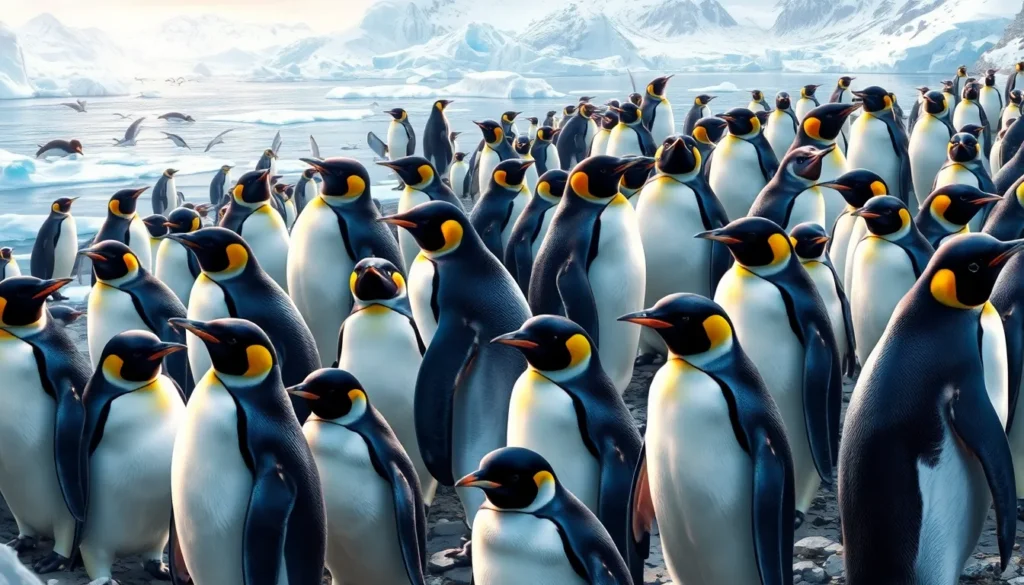
- Social Birds: Penguins often live in large colonies called rookeries, which can number in the thousands.
- Diet: Their diet primarily consists of fish, squid, and krill, depending on the species and available resources.
- Breeding Behavior: Most penguin species are monogamous during breeding seasons, with parents sharing incubation and chick-rearing duties.
- Temperature Regulation: Penguins have a layer of fat called blubber and tightly packed feathers to insulate against cold temperatures.
- Vocal Communication: They use vocal calls and body language to identify mates and chicks within noisy colonies.
- Swimming Speed: Penguins can swim at speeds of up to 15 miles per hour (24 km/h), making them agile underwater hunters.
- Molting: Penguins undergo a molt, during which they lose and regrow their feathers simultaneously, leaving them land-bound for several weeks.
- Predators: Natural predators include seals, sea lions, sharks, and orcas in water, while eggs and chicks may be vulnerable to birds like skuas on land.
- Emperor Penguin Size: The Emperor Penguin is the tallest and heaviest species, standing nearly 4 feet (1.2 meters) tall and weighing up to 90 pounds (40 kg).
- Unique Locomotion: On land, penguins often waddle or slide on their bellies over ice, a movement called tobogganing.
- Longevity: Penguins typically live between 15 to 20 years in the wild, though this can vary by species.
- Conservation Status: Some penguin species are threatened by climate change, overfishing, and habitat destruction.
- Evolutionary History: Penguins evolved from flying ancestors around 60 million years ago, adapting to marine life over time.
- Temperature Extremes: While many penguins live in cold climates, species like the Galápagos Penguin live near the equator and have adapted to warmer environments.
- Swimming Depth: Emperor Penguins can dive to depths exceeding 500 meters (1,640 feet) to hunt for food.
- Role in Ecosystem: Penguins serve as important indicators of ocean health and help maintain balance in marine food webs.
Habitat and Behavior
Penguins primarily inhabit the Southern Hemisphere, with species found on Antarctic ice sheets, sub-Antarctic islands, and temperate coastal regions. Their behavior is highly adapted to aquatic life; they spend much of their time swimming and hunting underwater. Penguins form large breeding colonies on land or ice, where they nest and raise their young collaboratively. Many species exhibit strong pair bonds during breeding seasons, with both parents involved in incubation and chick care. Their social interactions include vocalizations and physical displays to communicate within noisy colonies. Adaptations such as dense feathers, waterproofing oils, and a thick layer of blubber enable them to survive in cold water environments, although some species have evolved to tolerate warmer climates.
Why This Animal Matters
Penguins play a crucial ecological role as mid-level predators in marine ecosystems, controlling populations of fish and krill. Their health and population trends are indicative of changes in ocean environments, making them important bioindicators for climate change and ecosystem disturbances. Culturally, penguins have become symbols of the Antarctic and marine wildlife, inspiring scientific research, conservation efforts, and public interest worldwide. Conservation of penguin habitats helps protect broader marine biodiversity and promotes sustainable management of ocean resources.
Common Misconceptions
Misconception: All penguins live in icy, Antarctic environments.
Correction: While many penguin species inhabit Antarctica and surrounding ice-covered regions, several species live in temperate or even tropical climates, such as the Galápagos Penguin near the equator.
Misconception: Penguins can fly like other birds.
Correction: Penguins are flightless birds; instead of flying, they are excellent swimmers that use their wings as flippers to propel through water.
Misconception: Penguins are slow and clumsy on land.
Correction: Although penguins waddle on land, they are adapted to efficient movement such as tobogganing on their bellies, and their agility in water is highly developed.
FAQ
Why can't penguins fly?
Penguins have evolved with wings adapted for swimming rather than flying. Their wing bones are denser and their muscles are specialized to propel them underwater, which makes flight impossible.
Where do penguins live?
Penguins live primarily in the Southern Hemisphere, inhabiting Antarctica, sub-Antarctic islands, and temperate coastal areas. Some species, like the Galápagos Penguin, live near the equator.
How do penguins stay warm in cold environments?
Penguins have thick layers of blubber, densely packed waterproof feathers, and behaviors such as huddling together to conserve heat in cold climates.



Leave a Reply