
Short Answer
21 Facts About Emperor Penguins
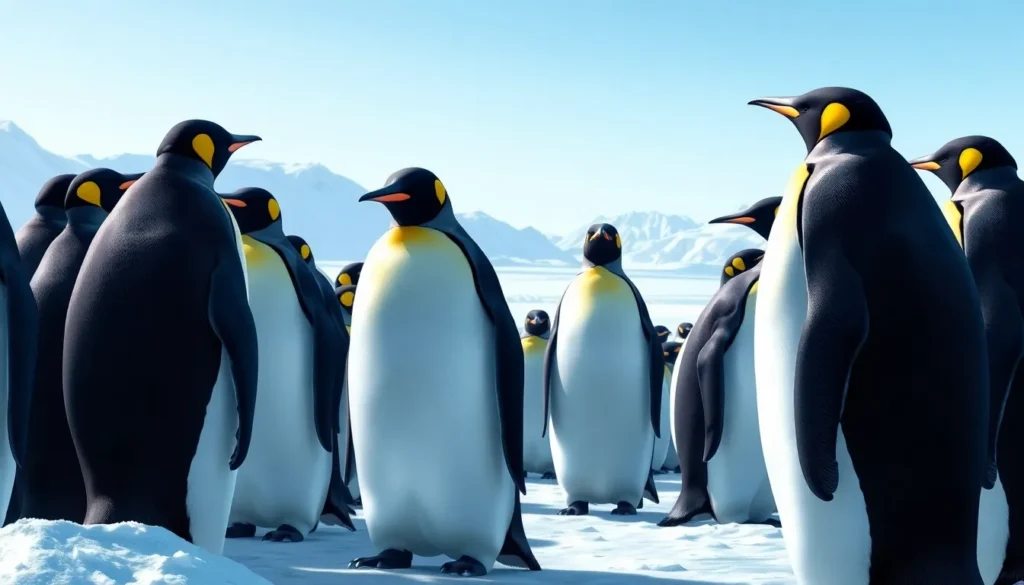
- Largest Penguin Species: Emperor penguins (Aptenodytes forsteri) are the tallest and heaviest penguins, standing up to 122 cm (48 inches) tall and weighing between 22 to 45 kg (49 to 99 pounds).
- Antarctic Endemic: They are native exclusively to Antarctica, making them the only penguin species breeding during the harsh Antarctic winter.
- Unique Breeding Cycle: Emperor penguins breed during the Antarctic winter, with males incubating the eggs for about two months while females hunt at sea.
- Male Incubation Role: Males balance the single egg on their feet under a brood pouch to keep it warm, fasting throughout the incubation period.
- Adaptations to Cold: Their dense feathers and a thick layer of blubber provide insulation against temperatures that can drop below -50°C (-58°F).
- Social Huddling Behavior: To conserve heat, emperor penguins form large huddles, rotating positions so that individuals cycle between warmer and colder areas.
- Diving Abilities: They are exceptional divers, capable of reaching depths of over 500 meters (1,640 feet) and holding their breath for more than 20 minutes.
- Diet: Their diet consists primarily of fish, krill, and squid, which they catch during underwater foraging trips.
- Longevity: Emperor penguins typically live 15 to 20 years in the wild, although some individuals may live longer under optimal conditions.
- Vocal Communication: They use distinctive vocalizations to recognize mates and chicks within large breeding colonies.
- Colony Size: Emperor penguin colonies can number several thousand breeding pairs, with some colonies exceeding 20,000 individuals.
- Swimming Speed: They are agile swimmers, reaching speeds up to 6 to 9 km/h (3.7 to 5.6 mph) underwater.
- Flightless Birds: Like all penguins, emperor penguins cannot fly; their wings have evolved into flippers for efficient swimming.
- Molting Period: They undergo a catastrophic molt once a year, replacing all their feathers over about two to three weeks during which they cannot enter the water to feed.
- Conservation Status: Currently classified as Near Threatened by the IUCN, their populations are affected by climate change and changing sea ice conditions.
- Scientific Study: They have been subjects of extensive scientific research due to their unique adaptations to extreme environments.
- Symbol of Antarctica: Emperor penguins are often considered iconic animals representing the Antarctic ecosystem.
- Chick Development: Chicks are born with a downy gray plumage and rely on parents for warmth and feeding until they develop waterproof feathers.
- Long-distance Travel: After fledging, young emperor penguins may travel hundreds of kilometers at sea before returning to breed.
- Predators: Their main natural predators include leopard seals and killer whales in the marine environment.
- Climate Sensitivity: Their breeding success is closely linked to stable sea ice conditions, making them vulnerable to environmental changes.
Habitat and Behavior
Emperor penguins inhabit the Antarctic continent and surrounding sea ice. They are uniquely adapted to survive and breed in one of the most extreme environments on Earth. Their breeding colonies are typically located on stable sea ice, where they endure months of darkness and freezing temperatures. Emperor penguins are social birds that rely heavily on group behaviors such as huddling to conserve warmth and protect against the elements. Their foraging behavior involves deep and prolonged dives to catch prey in the Southern Ocean. The species demonstrates remarkable endurance, with males fasting during incubation and females traveling long distances to feed. Their life cycle is tightly synchronized with the Antarctic seasons, ensuring that chicks hatch during times when food availability increases.
Why This Animal Matters
Emperor penguins play a critical ecological role in the Antarctic marine ecosystem as both predators and prey. By consuming fish, krill, and squid, they help maintain the balance of marine food webs. Their presence also serves as an indicator of environmental health, particularly in relation to sea ice conditions and climate change impacts. Culturally, emperor penguins captivate public imagination and contribute to awareness about polar conservation issues. They are frequently featured in documentaries and scientific studies that highlight adaptation and survival in extreme conditions. Conservation efforts aimed at protecting emperor penguins support broader initiatives to preserve Antarctic biodiversity and ecosystems.
Common Misconceptions
Misconception: Emperor penguins live at the North Pole.
Correction: Emperor penguins are native exclusively to Antarctica in the Southern Hemisphere and do not live in the Arctic or at the North Pole.
Misconception: Emperor penguins can fly.
Correction: Like all penguins, emperor penguins are flightless birds; their wings have evolved into flippers specialized for swimming.
Misconception: Only female emperor penguins incubate the eggs.
Correction: It is the male emperor penguins who incubate the single egg by balancing it on their feet under a brood pouch while females hunt for food.
FAQ
How do emperor penguins survive the Antarctic winter?
Emperor penguins survive the Antarctic winter by breeding on sea ice, huddling together to conserve warmth, and relying on dense feathers and blubber for insulation. Males incubate eggs while fasting, enduring extremely low temperatures and high winds.
Why do male emperor penguins incubate the eggs?
Male emperor penguins incubate the single egg by balancing it on their feet under a brood pouch to keep it warm. This allows females to return to the sea to feed and replenish energy after laying the egg.
What threats do emperor penguins face due to climate change?
Climate change threatens emperor penguins by altering sea ice extent and stability, which affects breeding habitat and food availability. Warming temperatures may reduce sea ice, impacting chick survival and overall population dynamics.


Leave a Reply