
Short Answer
21 Facts About Thresher Shark Tail Whip
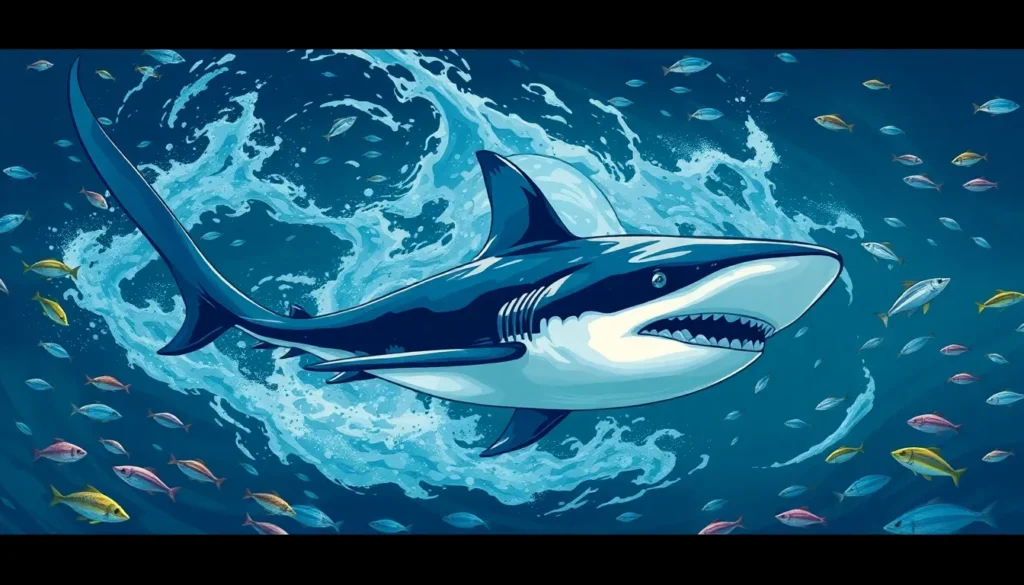
- Unique Tail Structure: The thresher shark possesses an exceptionally long tail that can be up to half the length of its body, which it uses to hunt and communicate.
- Whip-Like Motion: The tail is capable of a whip-like motion that can stun prey, such as small fish and squid, making it an effective hunting tool.
- Hunting Technique: Thresher sharks often use their tail to herd prey into tight groups before striking with their mouths.
- Social Behavior: While often solitary, thresher sharks have been observed exhibiting social behaviors, especially during feeding times.
- Species Variability: There are three recognized species of thresher sharks, each exhibiting slightly different tail characteristics and behaviors.
- Habitat Range: Thresher sharks are found in temperate and tropical oceans worldwide, typically in deep waters.
- Vulnerability: These sharks face threats from overfishing and habitat loss, leading to declining populations in some areas.
- Reproduction: Thresher sharks are viviparous, meaning they give birth to live young, which adds to their vulnerability as they have fewer offspring.
- Migration Patterns: They are known to undertake long migrations for breeding and feeding, showcasing their adaptability to different environments.
- Environmental Indicators: As apex predators, thresher sharks play a critical role in maintaining the balance of marine ecosystems.
- Human Interaction: They are often targeted by sport fishermen, further contributing to their decline.
- Conservation Status: The International Union for Conservation of Nature (IUCN) lists some thresher shark species as vulnerable or endangered.
- Tail as a Defense Mechanism: The thresher shark can also use its tail to defend itself against larger predators.
- Distinctive Appearance: Their long, slender bodies and unique tail make them easily recognizable among shark species.
- Impact of Climate Change: Changes in ocean temperatures can affect their migratory patterns and prey availability.
- Behavioral Studies: Research on thresher sharks’ hunting techniques has provided insights into the complex behaviors of elasmobranchs.
- Tail Whip in Captivity: In aquariums, thresher sharks have shown the ability to adapt their tail whipping behavior to capture alternative food sources.
- Ecological Role: Thresher sharks help regulate fish populations, contributing to the overall health of marine environments.
- Public Awareness: Increasing awareness about their ecological importance can aid in conservation efforts.
- Scientific Research: Ongoing studies aim to better understand their biology and behavior, which can assist in developing effective conservation strategies.
- Future Conservation Efforts: Collaborative international efforts are essential for the protection of thresher sharks and their habitats.
Habitat and Behavior
Thresher sharks inhabit a variety of marine environments, from coastal areas to the open ocean, often found at depths ranging from 100 to 500 meters. They are known for their migratory behaviors, traveling long distances to find food and suitable breeding grounds. Their social structure can vary, with some individuals showing solitary behavior while others may congregate in groups during specific times, such as feeding or mating. Thresher sharks primarily feed on small fish and squid, employing their long tails to herd and stun prey before capturing them with their mouths.
Why This Animal Matters
Thresher sharks serve an important ecological role as apex predators, helping to control the populations of smaller fish species. Their presence is indicative of a healthy marine ecosystem, and they contribute to the balance of the food chain. Furthermore, thresher sharks have cultural significance in various coastal communities, where they are often featured in local folklore and traditions. As their populations decline, there is increasing urgency to promote conservation efforts to protect these remarkable creatures and their habitats.
Common Misconceptions
Misconception: Thresher sharks are aggressive towards humans.
Correction: Thresher sharks are generally not aggressive and pose little threat to humans, preferring to avoid encounters.
Misconception: The tail whip is used only for hunting.
Correction: While primarily a hunting tool, the tail whip can also serve as a defense mechanism against predators.
FAQ
What is the primary diet of thresher sharks?
Thresher sharks primarily feed on small fish and squid.
Are thresher sharks dangerous to humans?
No, thresher sharks generally avoid humans and are not considered dangerous.
How do thresher sharks use their tails?
They use their tails for hunting by stunning prey and for defense against predators.


Leave a Reply