
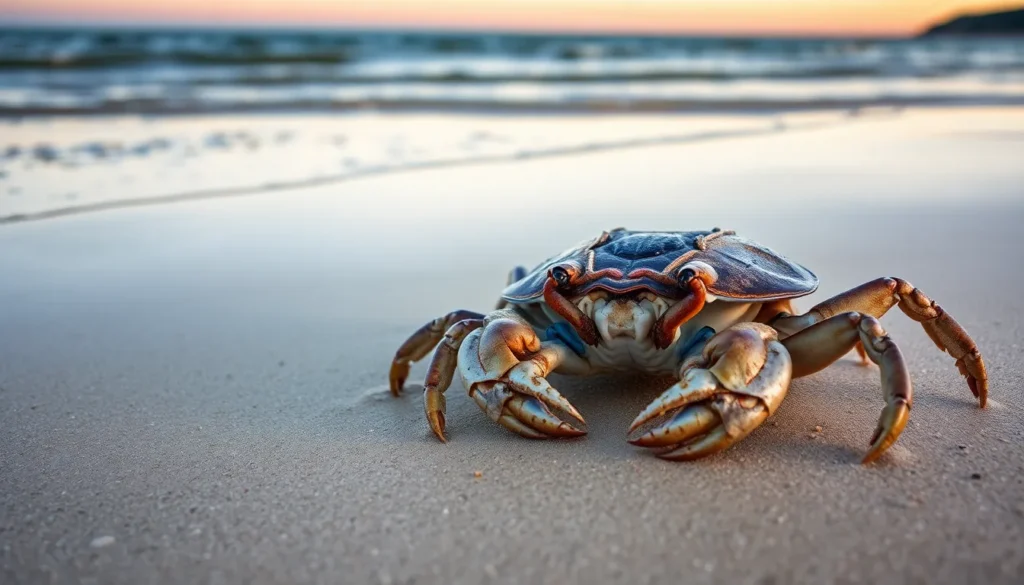
Short Answer
21 Facts About Horseshoe Crabs
- Ancient lineage: Horseshoe crabs have existed for more than 450 million years, predating the dinosaurs and surviving multiple mass extinction events.
- Not true crabs: Despite their name, horseshoe crabs are more closely related to arachnids, such as spiders and scorpions, than to true crabs.
- Distinctive shell shape: Their hard, horseshoe-shaped carapace protects their body and gives them their common name.
- Blue blood: Horseshoe crabs have blue blood due to the presence of copper-based hemocyanin, which transports oxygen.
- Medical importance: Their blood contains Limulus Amebocyte Lysate (LAL), used to test for bacterial endotoxins in vaccines and medical equipment.
- Compound eyes: They have two large compound eyes and several smaller simple eyes that detect light and movement.
- Use of tail spine: The long, pointed tail spine, or telson, is used primarily for righting themselves if flipped over, not for defense.
- Feeding habits: Horseshoe crabs are bottom feeders, eating worms, mollusks, and small invertebrates found in the sediment.
- Reproduction timing: They spawn in large numbers during spring high tides, especially on full and new moons.
- Egg-laying behavior: Females dig nests in sandy beaches where they deposit thousands of eggs, which are a crucial food source for migratory birds.
- Molting process: Horseshoe crabs molt their exoskeleton multiple times as they grow, a process essential for development.
- Longevity: They can live up to 20 years in the wild, with some individuals reaching even greater ages.
- Global distribution: Horseshoe crabs inhabit shallow coastal waters along the Atlantic coast of North America and the Gulf of Mexico, as well as the coastal regions of Asia.
- Limited swimming ability: They primarily crawl on the seafloor but can swim using their legs if necessary.
- Respiration: They breathe through book gills located on the underside of their bodies, which also assist in swimming.
- Ecological role: Horseshoe crab eggs provide vital nourishment for shorebirds, such as the red knot, during migration.
- Harvesting concerns: Horseshoe crabs are harvested for bait in fisheries and for biomedical uses, leading to population declines in some areas.
- Conservation status: Some species of horseshoe crabs are considered vulnerable due to habitat loss and overharvesting.
- Unique mating behavior: Males attach themselves to females using specialized appendages and often compete for access during spawning events.
- Resilience: Their body structure and physiology have allowed horseshoe crabs to survive major environmental changes over millions of years.
- Scientific research value: Horseshoe crabs serve as model organisms in evolutionary biology, ecology, and medical research.
Habitat and Behavior
Horseshoe crabs inhabit shallow coastal waters, including estuaries and sandy or muddy shorelines. They are primarily nocturnal and spend much of their time crawling along the seafloor, searching for food such as worms, mollusks, and other small invertebrates. During spawning seasons, typically in spring and early summer, they migrate to beaches where females dig nests in the sand to lay eggs. Males attach to the females during this process, often forming pairs or groups. Horseshoe crabs use their book gills for respiration and can swim if necessary, though they are mostly benthic. They molt their exoskeletons several times throughout their lives to grow. These animals are well adapted to fluctuating tidal environments and have a robust physiology that has allowed them to persist through numerous geological epochs.
Why This Animal Matters
Horseshoe crabs play an important ecological role, particularly through their eggs, which are a critical food source for migratory shorebirds such as the red knot. Their blue blood is invaluable to modern medicine because it contains Limulus Amebocyte Lysate (LAL), which is used to detect bacterial endotoxins in vaccines, intravenous drugs, and surgical implants, ensuring these products are safe for human use. Additionally, horseshoe crabs are studied extensively in evolutionary biology due to their ancient lineage and relatively unchanged morphology. Their populations, however, face threats from habitat destruction, overharvesting for bait, and biomedical bleeding, making conservation efforts important to maintain their ecological and medical significance.
Common Misconceptions
Misconception: Horseshoe crabs are true crabs.
Correction: Horseshoe crabs are not true crabs but belong to a separate group of arthropods more closely related to spiders and scorpions.
Misconception: The horseshoe crab’s tail is used to sting or attack predators.
Correction: The tail spine, or telson, is used mainly to help the animal flip itself over if it is turned upside down; it is not a weapon.
Misconception: Horseshoe crabs are dangerous to humans.
Correction: Horseshoe crabs are generally harmless to humans and do not bite or sting.
FAQ
Are horseshoe crabs dangerous to humans?
No, horseshoe crabs are generally harmless to humans. They do not sting or bite and typically avoid interaction.
Why is horseshoe crab blood blue?
Horseshoe crab blood is blue because it contains hemocyanin, a copper-based molecule that transports oxygen, as opposed to hemoglobin which contains iron and makes blood red.
How are horseshoe crabs important to medicine?
Horseshoe crab blood contains Limulus Amebocyte Lysate (LAL), which is used to detect bacterial endotoxins in vaccines, intravenous drugs, and medical devices, ensuring these products are safe for human use.


Leave a Reply