
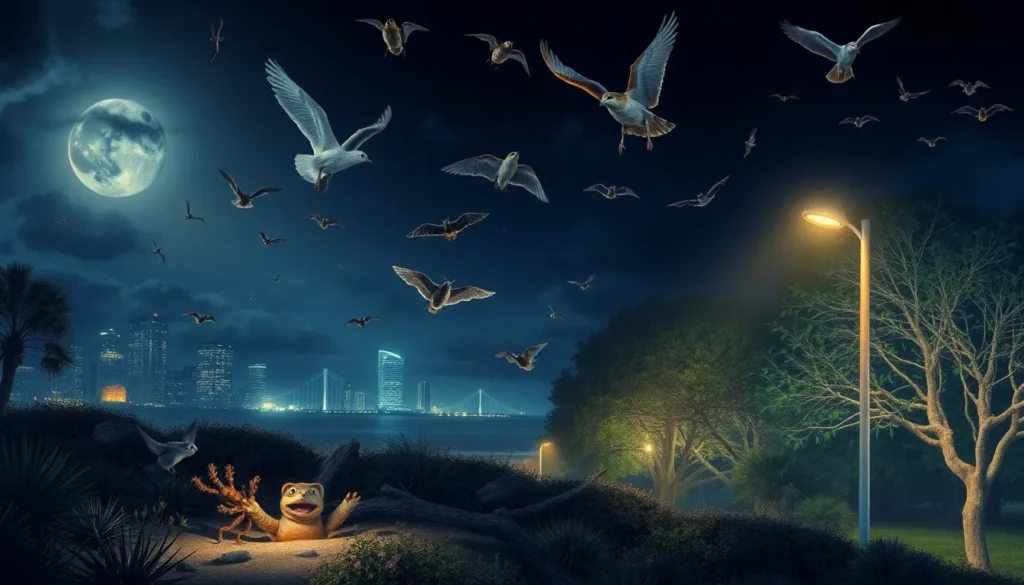
Short Answer
21 Facts About Light Pollution Effects on Animals
- Disruption of Circadian Rhythms
Artificial light at night interferes with animals’ internal biological clocks, altering sleep patterns and hormone production. - Impact on Migratory Birds
Bright city lights disorient migratory birds, leading to increased collisions with buildings and exhaustion during migration. - Altered Predator-Prey Dynamics
Increased illumination can benefit predators who hunt visually but disadvantage prey species by reducing their ability to hide. - Effects on Nocturnal Insects
Many nocturnal insects are attracted to artificial lights, which disrupts their natural behaviors and reduces their populations. - Sea Turtle Hatchling Disorientation
Artificial beachfront lighting confuses sea turtle hatchlings, causing them to move inland instead of toward the ocean. - Reduced Reproductive Success
Exposure to light pollution can inhibit reproductive behaviors and reduce fertility in some animal species. - Changes in Amphibian Calling Behavior
Light pollution can suppress the mating calls of frogs and toads, impacting their breeding success. - Impact on Bats
While some bat species avoid lit areas, others exploit insect concentrations near lights, affecting their feeding ecology. - Disruption of Plant-Pollinator Interactions
Light pollution affects nocturnal pollinators, which can reduce pollination efficiency for certain plants. - Altered Fish Behavior
Artificial lighting near aquatic environments can change fish feeding and migration patterns. - Impact on Small Mammals
Light pollution can increase predation risks for small mammals by exposing them to predators during normally dark periods. - Interference with Animal Navigation
Many animals rely on natural light cues like the moon and stars for navigation; artificial light disrupts these cues. - Changes in Invertebrate Community Structure
Light pollution can shift invertebrate populations by favoring light-attracted species and disadvantaging others. - Effect on Coral Spawning
Artificial light may interfere with the timing of coral spawning events, which are often synchronized with lunar cycles. - Impact on Owls and Other Nocturnal Birds
Owls may avoid lit areas, reducing their hunting grounds and affecting local rodent populations. - Increased Stress Levels in Wildlife
Prolonged exposure to artificial light can increase physiological stress markers in some animals. - Influence on Insect Pollination Timing
Nocturnal pollinators exposed to light pollution may alter their activity periods, affecting plant reproduction. - Disruption of Seasonal Behaviors
Light pollution can confuse animals that rely on day length cues for seasonal changes like hibernation or breeding. - Impact on Marine Mammals
Artificial lights near coastlines may disrupt the behavior of marine mammals such as seals and dolphins. - Reduction of Natural Darkness
Light pollution reduces the availability of natural dark habitats essential for many species’ survival. - Global Ecological Consequences
The widespread nature of light pollution contributes to ecosystem imbalances and biodiversity loss worldwide.
Habitat and Behavior
Animals affected by light pollution inhabit diverse environments ranging from urban areas to coastal regions and forests. Many species rely on natural darkness for essential behaviors such as foraging, mating, navigation, and predator avoidance. Night-active (nocturnal) animals are especially vulnerable, as artificial light can alter their activity cycles and reduce habitat suitability. For example, sea turtles hatch on sandy beaches and use moonlight to find the ocean, while migratory birds use celestial cues for navigation. Changes in lighting conditions disrupt these behaviors, often leading to decreased survival and reproductive success.
Why This Animal Matters
Although the term “animal” here encompasses a wide range of species, the collective impact of light pollution on animals is significant for ecosystem health and biodiversity. Animals play critical roles in food webs, pollination, seed dispersal, and nutrient cycling. Disruptions caused by artificial light can cascade through ecosystems, affecting plant reproduction, insect populations, and predator-prey relationships. Furthermore, many affected species have cultural and economic importance, such as sea turtles in ecotourism or bats in insect control. Conservation efforts addressing light pollution contribute to preserving these ecological functions and biodiversity.
Common Misconceptions
Misconception: Light pollution only affects humans.
Correction: Light pollution significantly impacts many animal species by disrupting their natural behaviors, physiology, and ecosystems, not just humans.
Misconception: Animals can easily adapt to artificial lighting.
Correction: While some species may adjust to altered light conditions, many animals experience negative effects such as disorientation, reduced reproductive success, and increased predation risks, which can threaten populations over time.
FAQ
How does light pollution affect animal migration?
Artificial lighting can disorient migratory animals, especially birds, by interfering with their natural navigation cues such as stars and moonlight, leading to collisions and exhaustion.
Can animals adapt to increasing light pollution?
Some species exhibit behavioral flexibility and may adjust activity patterns, but many animals suffer negative effects including reduced reproductive success and increased predation, indicating limited adaptation ability.
What are common sources of light pollution that impact wildlife?
Streetlights, building illumination, vehicle headlights, and outdoor advertising are common sources of artificial light that contribute to light pollution affecting animal habitats.

Leave a Reply