
Short Answer
21 Facts About Lionfish
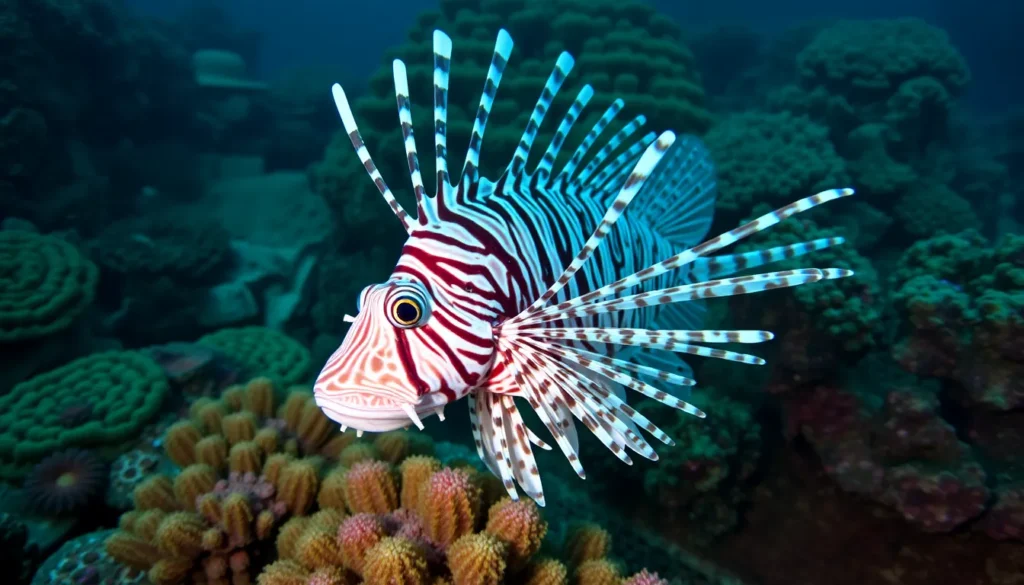
- Venomous Spines: Lionfish possess venomous spines that can deliver a painful sting. These spines are located on their dorsal, pelvic, and anal fins.
- Invasive Species: Lionfish are considered an invasive species in the Western Atlantic, Caribbean, and Gulf of Mexico.
- Native Habitat: Lionfish are originally from the Indo-Pacific region, inhabiting coral reefs and rocky crevices.
- Diet: Lionfish are carnivorous and primarily feed on small fish and invertebrates.
- Breeding: Lionfish can reproduce year-round in warm waters, with females capable of releasing up to 30,000 eggs every few days.
- Resilience: Lionfish have few natural predators in their invasive range, allowing their populations to thrive.
- Impact on Ecosystems: The presence of lionfish disrupts local ecosystems by preying on herbivorous fish that help maintain coral reef health.
- Human Interaction: Lionfish stings are rarely fatal but can cause severe pain and require medical attention.
- Culinary Use: Despite their venom, lionfish are considered a delicacy in some regions, and their meat is safe to eat after proper preparation.
- Conservation Status: Lionfish are not currently endangered, but their invasive nature poses a significant threat to local marine biodiversity.
- Venom Composition: The venom of lionfish contains proteins that can cause pain and inflammation in humans.
- Defensive Behavior: Lionfish use their venomous spines as a primary defense mechanism against predators.
- Seasonal Variations: Lionfish populations may exhibit seasonal variations in abundance based on environmental factors.
- Ecological Monitoring: Scientists are actively monitoring lionfish populations to evaluate their impact on marine ecosystems.
- Community Involvement: Local communities are encouraged to participate in lionfish removal efforts through fishing tournaments and awareness campaigns.
- Alternative Control Methods: Research into biological control methods is being explored as a potential way to manage lionfish populations.
- Public Awareness: Educating the public about lionfish and their impact is essential for effective management.
- International Cooperation: Managing lionfish invasions requires collaboration between countries and organizations.
- Research Opportunities: Lionfish present unique opportunities for scientific research, particularly regarding their venom.
- Future Projections: Without effective management, lionfish populations are expected to continue expanding in non-native regions.
The venom contains a mixture of neurotoxins and inflammatory substances, which can cause severe pain, swelling, and, in some cases, more serious health issues in humans.
They were first reported in these regions in the 1980s and have since spread rapidly, outcompeting native fish species for resources.
In their native habitat, they coexist with various marine species, maintaining ecological balance.
They are skilled ambush predators, using their vibrant coloration and fin display to lure prey closer.
This high reproductive rate contributes to their rapid population growth in non-native areas.
Native predators are often unable to effectively hunt lionfish due to their venomous spines.
This predation can lead to overgrowth of algae, which negatively affects coral reefs.
Proper treatment involves hot water immersion and pain relief medications.
Efforts to promote lionfish consumption aim to control their populations in invasive areas.
Conservation efforts focus on managing their populations and mitigating their impact on native species.
Research is ongoing to better understand the specific components and potential medical applications of lionfish venom.
This deterrent helps them avoid predation, allowing them to thrive in invasive areas.
Temperature and food availability can influence their breeding and survival rates.
Ongoing research is crucial to developing effective management strategies.
These initiatives aim to reduce lionfish numbers and promote sustainable fishing practices.
However, these methods require careful consideration to avoid unintended consequences on native species.
Raising awareness can foster community support for conservation initiatives.
Regional efforts are essential for addressing the broader impacts of lionfish on marine ecosystems.
Studies on lionfish venom can provide insights into pain management and potential therapeutic applications.
Proactive measures are necessary to mitigate their ecological impact and preserve biodiversity.
Habitat and Behavior
Lionfish inhabit various marine environments, including coral reefs and rocky substrates. They are primarily found in warm, tropical waters, where they utilize their agility and camouflage to ambush prey. Lionfish typically exhibit solitary behavior, although they may be seen in groups during breeding seasons. Their ability to adapt to different habitats contributes to their success as an invasive species.
Why This Animal Matters
Lionfish play a significant role in their native ecosystems by helping maintain population control of smaller fish species. However, as an invasive species, they pose a threat to biodiversity in non-native regions, disrupting local food webs and harming coral reef ecosystems. Understanding their impact is crucial for conservation efforts and managing marine health.
Common Misconceptions
Misconception: Lionfish are deadly and should be avoided at all costs.
Correction: While lionfish stings can be extremely painful, they are rarely fatal. Proper medical treatment can alleviate symptoms.
Misconception: Eating lionfish is dangerous due to their venom.
Correction: The venom is contained in the spines, and the meat of the lionfish is safe to eat when properly prepared.
FAQ
What should I do if stung by a lionfish?
Immerse the affected area in hot water to alleviate pain and seek medical attention.
Are lionfish edible?
Yes, lionfish meat is safe to eat when properly prepared, and it is considered a delicacy in some areas.
What are the ecological impacts of lionfish?
Lionfish disrupt local ecosystems by preying on herbivorous fish, leading to overgrowth of algae and negatively affecting coral reefs.



Leave a Reply