
Short Answer
21 Facts About Water Buffalo
- Domestication History
Water buffalo were first domesticated over 5,000 years ago, primarily in the Indian subcontinent and Southeast Asia. - Species Types
There are two main types: the river buffalo and the swamp buffalo, differing in habitat preference and physical characteristics. - Physical Size
Adult water buffalo can weigh between 300 to 1,200 kilograms, with males typically larger than females. - Distinctive Horns
They have large, curved horns that can span up to 2 meters in some river buffalo breeds. - Adaptation to Wetlands
Swamp buffalo are well-adapted to wet, marshy environments and are often used in rice paddies. - Milk Production
Water buffalo milk is richer in fat and protein compared to cow’s milk, making it ideal for producing products like mozzarella cheese. - Work Animal
They have been used extensively as draft animals in farming due to their strength and endurance. - Diet
Water buffalo are herbivores that mainly consume grasses, aquatic plants, and crop residues. - Social Behavior
They are social animals, often forming herds that can range from a few individuals to several dozen. - Water Affinity
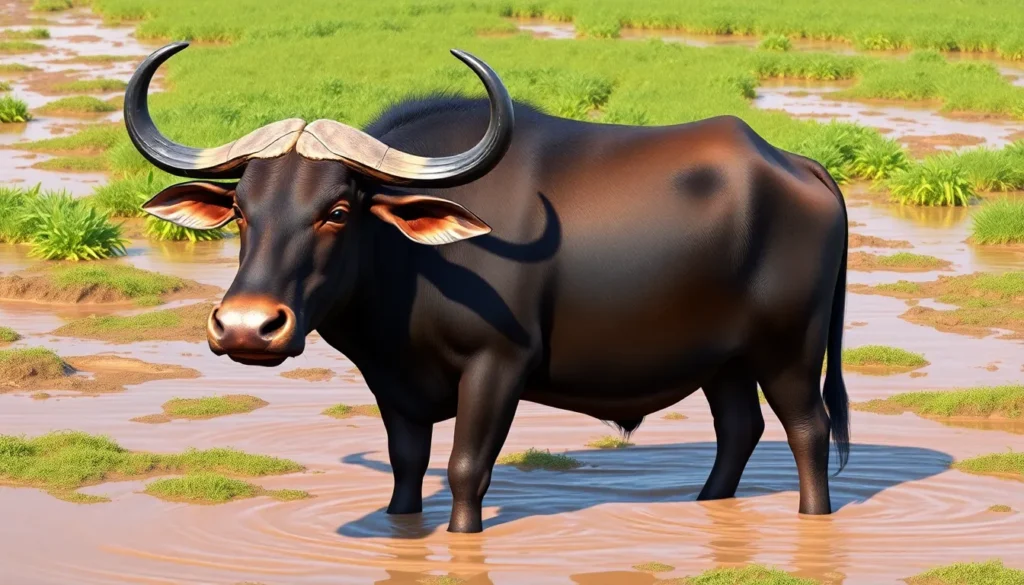
True to their name, water buffalo enjoy wallowing in mud or water to regulate their body temperature. - Geographical Distribution
They are primarily found in Asia, but populations also exist in parts of Africa, Australia, and South America. - Conservation Status
The wild water buffalo is classified as endangered due to habitat loss and hybridization with domestic buffalo. - Reproductive Cycle
Gestation lasts about 10 to 11 months, typically resulting in a single calf. - Longevity
Water buffalo can live up to 25 years in captivity under good care. - Role in Agriculture
They contribute significantly to plowing fields, transportation, and other farm-related tasks in many developing countries. - Economic Importance
Besides labor, they provide meat, milk, hides, and horns, supporting rural economies. - Resilience
Water buffalo are known for their ability to survive in harsh climatic conditions, including hot and humid environments. - Communication
They communicate through vocalizations, body language, and scent marking within their herds. - Predators
Natural predators include large cats such as tigers, though predation is generally low in domesticated populations. - Cultural Significance
Water buffalo hold symbolic and ritual importance in many Asian cultures, often featured in festivals and traditional ceremonies. - Hybridization
Interbreeding between wild and domestic water buffalo can threaten genetic purity of wild populations.
Habitat and Behavior
Water buffalo inhabit a range of environments, from wetlands and marshes to grasslands and agricultural fields. Swamp buffalo prefer lowland marshy areas and flooded rice paddies, while river buffalo are commonly found near rivers and lakes. Their behavior is characterized by social herd structures, often led by dominant females. They are crepuscular, being most active during dawn and dusk. Water buffalo rely heavily on water bodies for wallowing, which helps them cool down and protect against parasites. They graze on a variety of vegetation and can digest coarse plant material efficiently. Their ability to thrive in wet and muddy conditions makes them invaluable in tropical and subtropical regions where other livestock might struggle.
Why This Animal Matters
Water buffalo play a critical role in agricultural economies, particularly in Asia, where they are integral to smallholder farming systems. Their labor helps maintain crop production, especially rice cultivation, which feeds billions. Beyond agriculture, their milk and meat contribute to food security and nutrition. Ecologically, water buffalo grazing helps maintain wetland habitats by controlling vegetation growth and promoting biodiversity. Culturally, these animals are symbols of prosperity and strength, embedded in numerous traditions and rituals. Conservation of wild water buffalo is important to preserve genetic diversity and maintain ecosystem balance. Their continued use and preservation support rural livelihoods and cultural heritage.
Common Misconceptions
Misconception: Water buffalo are the same as American bison.
Correction: Water buffalo (Bubalus bubalis) are a different species from American bison (Bison bison), with distinct evolutionary histories, appearances, and habitats.
Misconception: All water buffalo live in water.
Correction: While water buffalo are closely associated with aquatic environments and enjoy wallowing in water, they do not live exclusively in water and spend much time grazing on land.
Misconception: Water buffalo are wild animals only.
Correction: Most water buffalo are domesticated and have been selectively bred for thousands of years, though some wild populations still exist.
FAQ
What is the difference between river and swamp water buffalo?
River buffalo typically have longer, curved horns and prefer deep water habitats, whereas swamp buffalo have broader, crescent-shaped horns and are adapted to marshy, flooded areas.
Are water buffalo endangered?
While domesticated water buffalo are widespread, wild water buffalo populations are classified as endangered due to habitat loss, hunting, and hybridization with domesticated types.
How are water buffalo used in farming?
They are primarily used as draft animals for plowing fields, transporting goods, and other labor-intensive agricultural tasks, especially in rice cultivation.




Leave a Reply