
Short Answer
21 Facts About Whale Sharks
- Largest Fish Species
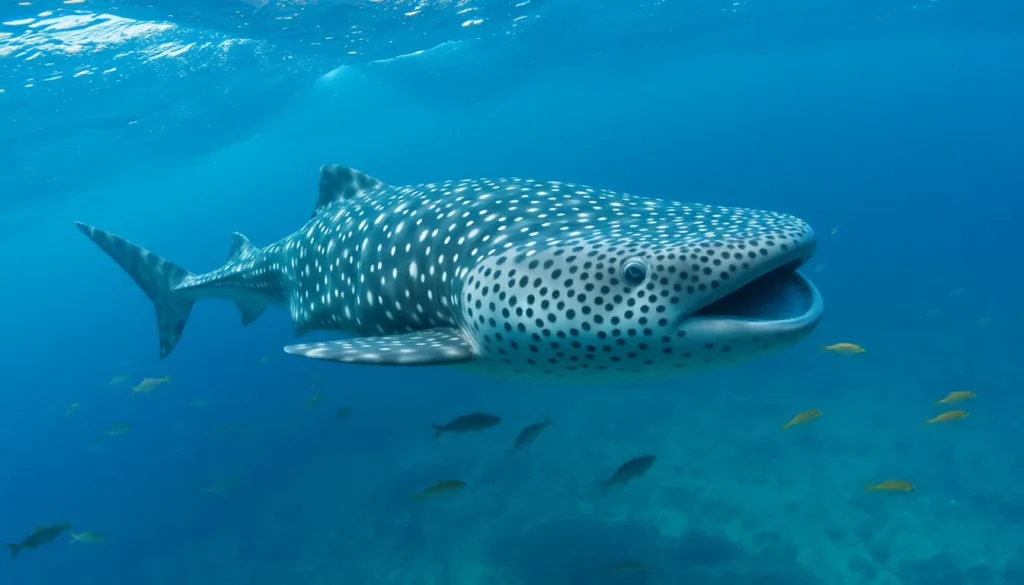
Whale sharks (Rhincodon typus) are the largest fish species, growing up to 12 meters (39 feet) or more in length. - Gentle Giants
Despite their size, whale sharks are filter feeders and pose no threat to humans. - Distinctive Patterns
Each whale shark has a unique pattern of spots and stripes that can be used to identify individuals. - Filter Feeders
They feed by filtering plankton, small fish, and squid through their gill rakers. - Wide Distribution
Whale sharks are found in tropical and warm-temperate oceans worldwide. - Slow Growth Rate
They grow slowly and may live up to 70-100 years, though exact lifespan is uncertain. - Reproductive Biology
Whale sharks are ovoviviparous; females give birth to live young after eggs hatch inside the mother. - Migration Patterns
They undertake long migrations to feed and possibly to breed, but their routes are not fully understood. - Social Behavior
Generally solitary, whale sharks sometimes gather in large groups during feeding events. - Slow Swimmers
Despite their size, they swim at a leisurely pace of about 3 miles per hour (5 km/h). - Filter Feeding Mechanism
They can filter up to 6,000 liters of water per hour while feeding. - Threats from Humans
Whale sharks face threats from fishing, boat strikes, and habitat degradation. - Protected Status
They are listed as endangered by the IUCN and are protected by various international agreements. - Tourism Impact
Whale shark tourism generates income but requires regulation to avoid disturbing the animals. - Scientific Studies
Tagging and photo identification help researchers study their movements and population health. - Unique Mouth Structure
Their mouths can be up to 1.5 meters wide, allowing large volumes of water to be filtered. - Cold-Blooded Fish
As fish, whale sharks are ectothermic, meaning they rely on the temperature of their environment. - Role in Ecosystems
By consuming large amounts of plankton, they help regulate marine food webs. - Slow Reproduction
Their slow reproductive rate makes populations vulnerable to decline. - First Described Species
Whale sharks were scientifically described in 1828 by Andrew Smith.
Habitat and Behavior
Whale sharks inhabit warm tropical and subtropical waters around the globe, typically found in coastal and oceanic regions. They prefer water temperatures between 21°C and 30°C (70°F to 86°F). These sharks are highly migratory, often traveling thousands of kilometers to reach feeding or breeding grounds. Their behavior is generally solitary, although they occasionally aggregate in areas rich in plankton, such as off the coasts of Mexico, the Philippines, and Australia. They swim slowly near the surface or at moderate depths, filtering plankton and small fish through their large mouths using specialized gill rakers. Whale sharks are known to dive to depths of around 1,000 meters (3,280 feet), but much about their deep-water behavior remains unknown.
Why This Animal Matters
Whale sharks play a crucial ecological role as filter feeders, helping maintain the balance of marine ecosystems by controlling plankton populations. Their presence can indicate healthy oceanic environments. Culturally, they hold significance in various coastal communities where they are revered or play a role in tourism. Conservation-wise, whale sharks are listed as endangered due to threats such as bycatch, targeted fishing, and habitat loss. Protecting whale sharks helps preserve marine biodiversity and supports sustainable economic activities like ecotourism. Continued research on whale sharks contributes to understanding marine ecosystem health and the impacts of human activities on ocean life.
Common Misconceptions
Misconception: Whale sharks are dangerous predators.
Correction: Whale sharks are filter feeders and harmless to humans. They feed on plankton and small fish, not large prey.
Misconception: Whale sharks are whales.
Correction: Despite their name, whale sharks are fish, not mammals. They belong to the shark family and breathe through gills.
Misconception: Whale sharks are slow-growing and not vulnerable to population decline.
Correction: Whale sharks have slow growth and reproduction rates, making them vulnerable to threats and population declines.
Misconception: Whale sharks only live near the surface.
Correction: Whale sharks can dive to great depths, sometimes over 1,000 meters, although they often feed near the surface.
Misconception: Whale sharks actively hunt large fish.
Correction: Whale sharks feed passively by filtering plankton and small organisms, not by hunting.
FAQ
How big do whale sharks get?
Whale sharks can grow up to 12 meters (39 feet) or longer, making them the largest fish species in the world.
Are whale sharks dangerous to humans?
No, whale sharks are gentle filter feeders that pose no threat to humans and are often approachable in the wild.
What do whale sharks eat?
Whale sharks feed primarily on plankton, small fish, and squid by filtering large volumes of water through their gills.




Leave a Reply