
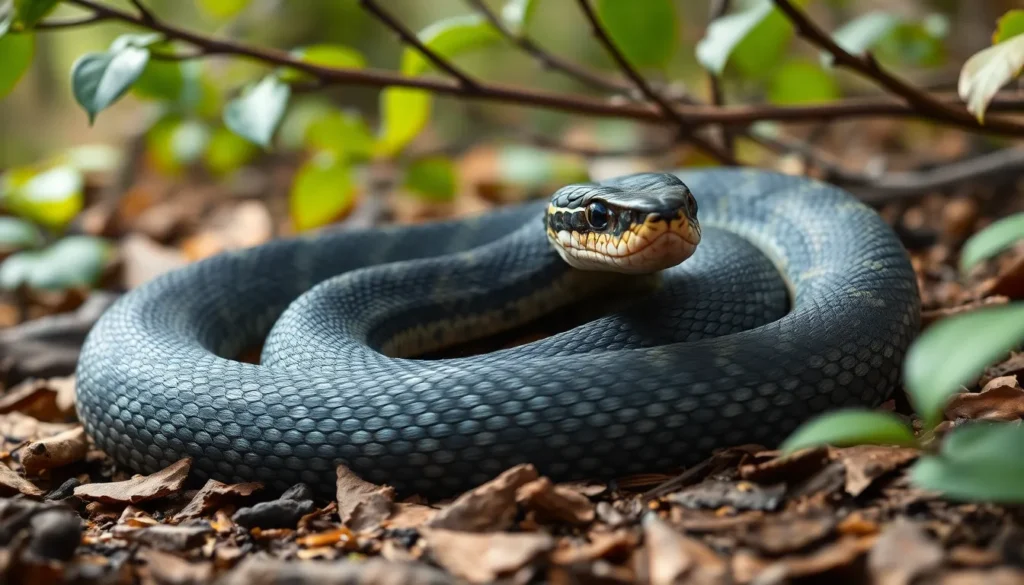
Short Answer
21 Facts About Vipers
- Vipers belong to the family Viperidae. This family includes venomous snakes characterized by long, hinged fangs that allow deep injection of venom.
- They possess solenoglyphous fangs. These are long, hollow, and foldable fangs located at the front of the upper jaw, which can be erected when striking.
- Viper venom is primarily hemotoxic. It affects blood and tissues, causing pain, swelling, and sometimes internal bleeding, although effects vary by species.
- Vipers are found on every continent except Australia and Antarctica. They inhabit diverse environments ranging from deserts to forests and mountains.
- Many vipers exhibit cryptic coloration. Their patterns help camouflage them within their natural habitat to ambush prey and avoid predators.
- Most vipers are nocturnal or crepuscular. They tend to be active during the night or twilight hours to hunt prey and avoid heat.
- Vipers use heat-sensing pits. In some species, such as pit vipers, specialized facial pits detect infrared radiation to locate warm-blooded prey.
- Their diet mainly consists of small mammals, birds, and amphibians. They rely on venom to immobilize prey quickly before ingestion.
- Vipers have a slow metabolism. They can survive for long periods without food after a large meal.
- They reproduce either oviparously or viviparously. Some vipers lay eggs while others give birth to live young depending on species and environmental conditions.
- Vipers play an important role in controlling rodent populations. This ecological role helps reduce crop damage and disease transmission.
- Many vipers exhibit defensive behaviors such as hissing, coiling, and striking. These behaviors warn potential threats and help avoid unnecessary conflicts.
- Viper venom composition varies between species. Venoms may contain proteins that target blood clotting, nervous system, or muscle tissue differently.
- Some vipers have relatively short lifespans in the wild. Typically, they live around 10 to 20 years depending on species and environmental factors.
- Vipers are generally solitary animals. They usually come together only during mating season.
- They can strike quickly and accurately. A viper’s strike can occur in a fraction of a second to capture prey or defend itself.
- The Gaboon viper has the longest fangs of any venomous snake. Their fangs can measure up to 2 inches (5 cm) in length.
- Vipers are often mistakenly confused with non-venomous snakes. Identification requires knowledge of specific physical traits.
- Some vipers are considered medically significant to humans. Bites can cause serious injury or death without prompt treatment, but fatalities are relatively rare with modern antivenoms.
- Vipers have evolved specialized venom delivery systems. Their fangs are connected to venom glands that inject venom deep into prey tissues.
- Conservation status varies widely among vipers. While some species are abundant, others face threats from habitat loss and human persecution.
Habitat and Behavior
Vipers inhabit a wide range of environments including deserts, rainforests, grasslands, rocky hillsides, and wetlands. Their ability to adapt to different climates allows them to thrive on multiple continents except Australia and Antarctica. Behaviorally, vipers are often ambush predators, relying on camouflage and patience to capture prey rather than active pursuit. Many species are nocturnal or crepuscular, which helps them avoid daytime heat and predators. They use their highly developed senses, including heat-sensing pits in some species, to detect prey and threats. During colder months, vipers may enter brumation, a state similar to hibernation, reducing their metabolic activity to survive low temperatures. Reproduction varies, with some species laying eggs while others give birth to live young, adapted to environmental conditions.
Why This Animal Matters
Vipers play a crucial ecological role as predators controlling populations of rodents and other small animals, thereby helping maintain balanced ecosystems and reducing crop damage. Their venom has been the subject of extensive scientific research, contributing to developments in medicine such as anticoagulants and painkillers derived from venom components. Culturally, vipers appear in folklore and symbolism worldwide, often representing danger or protection. Conservation-wise, some viper species face threats from habitat destruction and illegal trade, highlighting the importance of habitat preservation and education about their ecological value. Understanding vipers is essential for promoting coexistence and reducing unnecessary fear and persecution.
Common Misconceptions
Misconception: All vipers are deadly to humans.
Correction: While vipers possess venom that can be harmful, many bites are not fatal with prompt medical treatment. Fatalities are relatively rare due to advances in antivenom and medical care.
Misconception: Vipers aggressively chase humans.
Correction: Vipers generally avoid humans and strike only when threatened or provoked. They rely on camouflage and avoidance rather than confrontation.
Misconception: Non-venomous snakes are harmless and vipers are always easy to identify.
Correction: Some non-venomous snakes mimic vipers’ appearance as a defense mechanism, and accurate identification requires expertise to distinguish venomous from non-venomous species.
FAQ
What distinguishes vipers from other venomous snakes?
Vipers are distinguished by their long, hinged solenoglyphous fangs that fold back when not in use, allowing them to inject venom deeply and efficiently.
Are all vipers dangerous to humans?
While vipers possess venom that can be harmful or even fatal, many species have venom that is less toxic to humans, and fatalities are rare with proper medical treatment.
How do vipers hunt their prey?
Vipers typically use ambush tactics, relying on camouflage and heat-sensing abilities (in some species) to detect and quickly strike prey with venomous fangs.
Leave a Reply