
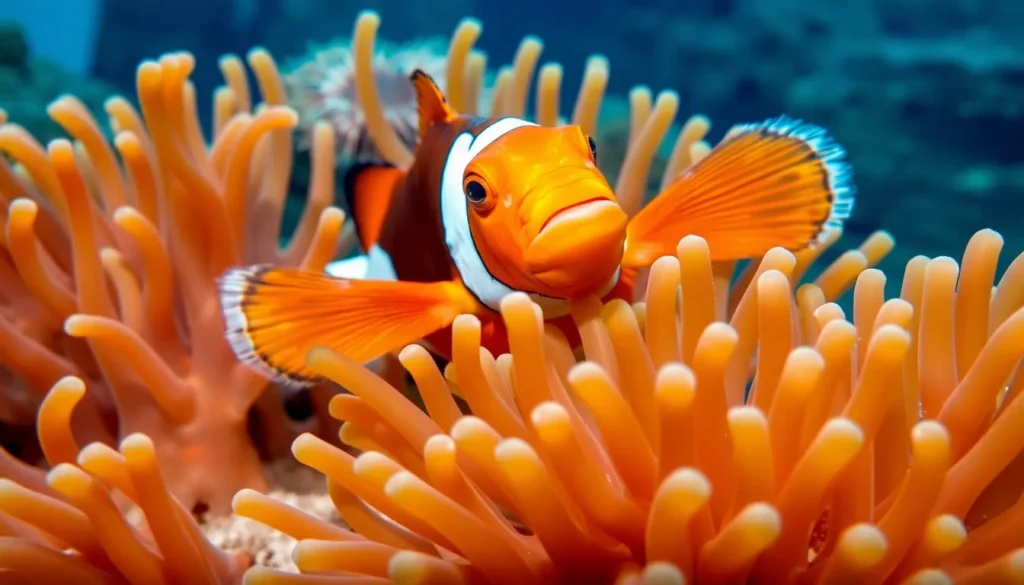
Short Answer
21 Facts About Clownfish Aggression
- Clownfish are territorial.
Clownfish exhibit aggressive behavior when defending their territory, particularly their host anemones, from intruders. - Hierarchy establishes dominance.
Within a group, clownfish establish a strict hierarchy that influences their aggression levels; the dominant female is usually the most aggressive. - Gender affects aggression.
Female clownfish are generally more aggressive than males, especially when defending their nesting sites. - Coloration signals aggression.
The brightness of a clownfish’s coloration can indicate its health and aggression, with brighter colors often signaling a more dominant fish. - Vocalizations are used in aggression.
Clownfish communicate using a series of vocalizations, which can include aggressive sounds to deter rivals. - Clownfish can be cannibalistic.
In extreme cases, clownfish may exhibit cannibalistic behavior, usually when food sources are scarce. - Juveniles display less aggression.
Young clownfish are less aggressive compared to adults and often take a subordinate role within their group. - Clownfish can change sex.
If the dominant female dies, the dominant male can change sex to become the new female, impacting group dynamics and aggression. - Species variation in aggression.
Different species of clownfish may exhibit varying levels of aggression, influenced by environmental factors and social structures. - Stress increases aggression.
Environmental stressors such as pollution or changes in water temperature can heighten aggressive behaviors in clownfish. - Aggression in aquariums.
Clownfish in captivity may display increased aggression due to limited space and resources compared to their natural habitats. - Defensive strategies.
Clownfish employ various strategies to defend their territory, including aggressive posturing and direct confrontations. - Symbiotic relationship influences aggression.
The mutualistic relationship with sea anemones provides clownfish with protection, allowing them to be more aggressive towards potential threats. - Parental care involves aggression.
Parent clownfish exhibit aggressive behavior to protect their eggs from predators, showcasing their nurturing instincts alongside aggression. - Group dynamics impact aggression.
The presence of more clownfish can lead to heightened competition and aggression over resources. - Aggression can deter predators.
By being aggressive, clownfish can deter larger predators and protect their home anemones. - Behavioral plasticity.
Clownfish can adapt their aggressive behaviors based on the presence of other fish and environmental changes. - Clownfish and other fish.
Interactions with non-anemone fish can lead to aggressive displays, especially when resources are contested. - Clownfish exhibit playful behavior.
Despite their aggression, clownfish also engage in playful interactions, particularly during mating rituals. - Clownfish can recognize individuals.
Research suggests that clownfish can recognize other individuals, which influences their aggressive interactions. - Aggression can have ecological impacts.
The aggressive behavior of clownfish can influence the distribution of other reef species and overall biodiversity.
Habitat and Behavior
Clownfish are primarily found in the warm waters of the Pacific and Indian Oceans, residing in shallow lagoons and coral reefs. They are known for their symbiotic relationship with sea anemones, which provide them with protection. Clownfish are diurnal, engaging in social interactions and territorial defense during the day while resting in the safety of their host anemones at night. Their aggressive behavior is often directed towards intruders that threaten their territory, reflecting the species’ adaptation to their environment for survival.
Why This Animal Matters
Clownfish play a crucial role in their ecosystem as both predators and prey. They help maintain the health of coral reefs by feeding on algae and parasites, which can otherwise harm the anemones and corals. Culturally, clownfish have gained popularity through media, notably the film “Finding Nemo,” raising awareness about marine life and conservation issues. Their interactions with sea anemones also contribute to the ecological balance, making them significant in the study of marine biodiversity and conservation efforts.
Common Misconceptions
Misconception: All clownfish are aggressive towards humans.
Correction: Clownfish typically show aggression towards other fish rather than humans, often retreating when approached by divers.
Misconception: Clownfish can survive without an anemone.
Correction: While clownfish can live without anemone, they thrive best in their presence due to the protection and resources anemones provide.
FAQ
What do clownfish eat?
Clownfish are omnivorous and primarily feed on algae, zooplankton, and small invertebrates.
How do clownfish communicate?
Clownfish communicate through vocalizations and body language, including aggressive displays.
What is the role of clownfish in the ecosystem?
Clownfish help maintain the health of reef ecosystems by controlling algae populations and providing nutrients to their host anemones.

Leave a Reply