
Short Answer
21 Facts About Shark Electrosensory Ampullae of Lorenzini
- Definition
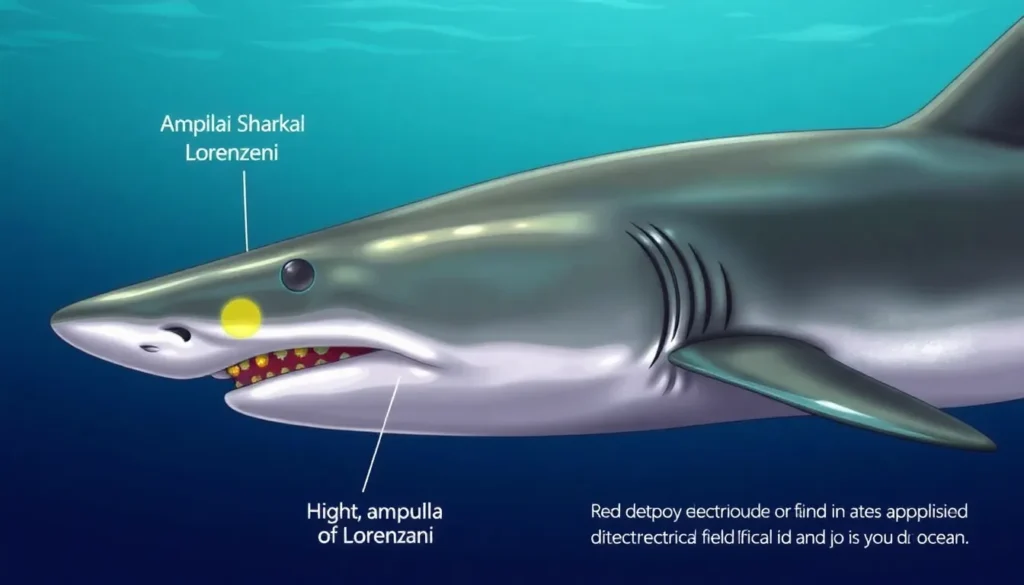
The ampullae of Lorenzini are specialized electroreceptor organs found in sharks and other cartilaginous fish, enabling them to detect electric fields. - Structure
These organs consist of jelly-filled canals that lead to sensory cells, sensitive to electrical impulses. - Location
Typically located on the shark’s head, around the snout, ampullae are crucial for hunting and navigation. - Detection Range
Sharks can detect electrical fields as weak as 1 microvolt per centimeter, allowing them to sense prey from significant distances. - Prey Detection
These electroreceptors help sharks locate prey by detecting the electric fields generated by muscle contractions and heartbeats. - Navigation
Ampullae assist in navigation by detecting the Earth’s magnetic field, aiding in long-distance migrations. - Behavioral Influence
Sharks often exhibit unique hunting behaviors, such as pausing to assess electric fields before striking. - Evolutionary Significance
The presence of ampullae of Lorenzini is believed to provide sharks with a competitive advantage in predation. - Species Variation
Different shark species have varying densities and distributions of ampullae, reflecting their ecological niches. - Research Applications
Studying these organs can provide insights into sensory biology and environmental adaptation in marine species. - Vulnerability
Sharks’ reliance on electroreception makes them vulnerable to environmental changes, such as pollution that can disrupt electric fields. - Behavioral Mimicry
Some prey species have developed behaviors or adaptations that reduce their electric signature to evade detection. - Development
Ampullae develop early in a shark’s life, indicating their importance for survival and feeding from a young age. - Comparison with Other Species
Other species, such as rays and some bony fish, also possess similar electroreceptive organs, but the ampullae of Lorenzini are unique to elasmobranchs. - Impact of Sharks on Ecosystems
Sharks play a vital role in marine ecosystems, and their ampullae contribute to their success as apex predators. - Cultural Significance
Sharks and their unique adaptations are often featured in cultural stories and marine education, highlighting their ecological importance. - Conservation Concerns
As apex predators, sharks are crucial for maintaining the balance of marine ecosystems, making their conservation vital. - Technological Inspiration
Research on shark electroreception has inspired technological advancements in robotics and sensor technology. - Historical Perspective
The ampullae of Lorenzini were first described by the Italian scientist Stefano Lorenzini in the 17th century. - Physiological Mechanism
The jelly-like substance in the ampullae allows for the transmission and amplification of electrical signals. - Impact of Climate Change
Changing ocean conditions may affect the function of ampullae, influencing shark behavior and survival. - Future Research Directions
Understanding the ampullae’s full capabilities may lead to breakthroughs in marine biology and conservation efforts.
Habitat and Behavior
Sharks inhabit a variety of marine environments, from shallow coastal waters to the deep ocean. They exhibit diverse behaviors influenced by their surroundings, including hunting, mating, and migration. Their ability to detect electric fields through the ampullae of Lorenzini enhances their effectiveness as hunters, allowing them to locate prey buried in the sand or hidden in the water column.
Why This Animal Matters
Sharks play a critical role in maintaining the health of marine ecosystems. By controlling the populations of other species, they help ensure biodiversity. Their unique adaptations, including the ampullae of Lorenzini, allow them to thrive in various environments, making them a focus of conservation efforts. Protecting sharks is essential for preserving marine ecosystems and the balance of life within them.
Common Misconceptions
Misconception: Sharks can see in complete darkness due to their ampullae of Lorenzini.
Correction: While the ampullae help sharks detect electric fields, they do not enhance vision; sharks rely on other senses in dark conditions.
Misconception: All sharks have the same number of ampullae of Lorenzini.
Correction: The number and distribution of ampullae vary among shark species, reflecting their ecological needs.
FAQ
How do sharks use their ampullae of Lorenzini?
Sharks use their ampullae to detect electric fields generated by prey, aiding in hunting.
Do all fish have ampullae of Lorenzini?
No, ampullae of Lorenzini are specific to cartilaginous fish like sharks and rays.
What role do sharks play in marine ecosystems?
Sharks help maintain the balance of marine ecosystems by controlling prey populations.






Leave a Reply