
Short Answer
21 Facts About Corn Snakes
- Scientific Name
Corn snakes are scientifically classified as Pantherophis guttatus, belonging to the family Colubridae. - Non-Venomous
They are non-venomous constrictors, subduing prey by coiling around and suffocating it rather than using venom. - Distinctive Coloration
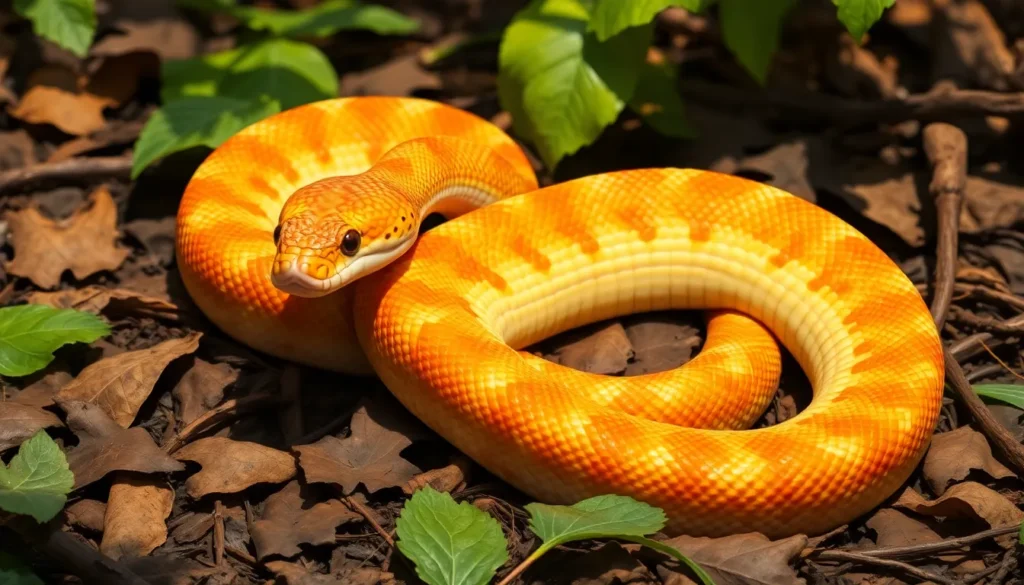
Corn snakes typically have a pattern of reddish-orange blotches bordered with black on a lighter background, aiding in camouflage. - Common Name Origin
The name “corn snake” may derive from their frequent presence near cornfields or the pattern on their belly scales resembling maize kernels. - Native Range
They are native to the southeastern and central United States, inhabiting states such as Florida, Georgia, and the Carolinas. - Habitat Versatility
Corn snakes thrive in a variety of habitats including forests, fields, agricultural areas, and abandoned buildings. - Diet
Their diet mainly consists of small rodents, birds, and occasionally amphibians, making them effective natural pest controllers. - Size
Adult corn snakes generally range from 2.5 to 5 feet in length, with females typically larger than males. - Docile Temperament
They are known for their calm and non-aggressive behavior, which contributes to their popularity in the pet trade. - Reproduction
Corn snakes lay clutches of 10 to 30 eggs during the spring, with incubation lasting around 60 to 70 days. - Hatchling Size
Newborn corn snakes are approximately 8 to 12 inches long and already capable of hunting small prey. - Activity Patterns
They are primarily nocturnal or crepuscular, being most active during dusk and dawn. - Climbing Ability
Corn snakes are excellent climbers, often found in trees and shrubs as well as on the ground. - Shedding
Like other snakes, corn snakes periodically shed their skin to allow for growth and remove parasites. - Camouflage
Their coloration helps them blend into leaf litter and forest floor environments to avoid predators. - Lifespan
In captivity, corn snakes can live up to 20 years or more, though wild lifespans tend to be shorter due to predation. - Conservation Status
Currently, corn snakes are not considered threatened or endangered and have stable populations. - Popular in Captivity
They are one of the most commonly kept pet snakes due to their manageable size and temperament. - Color Morphs
Selective breeding has produced numerous color and pattern variants, often referred to as morphs. - Role in Ecosystems
Corn snakes help maintain balanced rodent populations, indirectly benefiting agriculture by reducing crop damage. - Predators
Common predators include birds of prey, larger snakes, and some mammals such as raccoons.
Habitat and Behavior
Corn snakes are primarily found in the southeastern United States, where they inhabit a broad range of environments including deciduous forests, overgrown fields, abandoned structures, and farmland. They prefer areas with ample ground cover and access to climbing opportunities such as trees and rocky outcrops. Corn snakes are mostly terrestrial but are known to be adept climbers, which aids in hunting and avoiding predators.
Behaviorally, corn snakes are secretive and primarily nocturnal or crepuscular, becoming most active during dawn and dusk. They rely on their keen sense of smell and heat-sensing capabilities to locate prey. When threatened, corn snakes tend to flee rather than confront predators, although they can vibrate their tails and mimic rattlesnakes as a defense mechanism.
Their diet consists mainly of small rodents, birds, and occasionally amphibians. By controlling rodent populations, corn snakes play an important ecological role. They kill their prey by constriction, wrapping their muscular bodies around the animal until it suffocates.
Why This Animal Matters
Corn snakes contribute significantly to the control of pest populations, especially rodents, which can damage crops and spread diseases. Their presence in agricultural areas is often beneficial to farmers. Additionally, as a non-venomous and generally docile species, corn snakes serve as an accessible subject for education and reptile husbandry.
Culturally, corn snakes have gained popularity as pets, raising awareness about reptiles and encouraging conservation efforts. Their adaptability and stable wild populations mean they are not currently at risk, but habitat preservation remains important to maintain their natural ecosystems.
Common Misconceptions
Misconception: Corn snakes are venomous and dangerous.
Correction: Corn snakes are non-venomous constrictors that pose no significant threat to humans. They kill prey by constriction, not venom.
Misconception: Corn snakes are aggressive and bite frequently.
Correction: Corn snakes are known for their docile and calm nature, rarely biting unless provoked or handled improperly.
Misconception: Corn snakes only live in cornfields.
Correction: While often found near agricultural areas, corn snakes inhabit diverse environments including forests, fields, and abandoned buildings.
Misconception: All corn snakes look the same.
Correction: There are numerous color and pattern morphs in corn snakes, especially due to captive breeding, resulting in a wide variety of appearances.
Misconception: Corn snakes can grow very large, exceeding 10 feet.
Correction: Corn snakes typically grow to about 2.5 to 5 feet in length; they do not reach sizes comparable to large constrictors like pythons or boas.
FAQ
Are corn snakes venomous?
No, corn snakes are non-venomous and kill their prey through constriction. They pose no venom-related risk to humans.
What do corn snakes eat?
Corn snakes primarily feed on small rodents such as mice and rats, but they may also eat birds and amphibians when available.
Can corn snakes be kept as pets?
Yes, corn snakes are popular pets due to their manageable size, docile temperament, and ease of care.


Leave a Reply