
Short Answer
21 Facts About Tardigrades
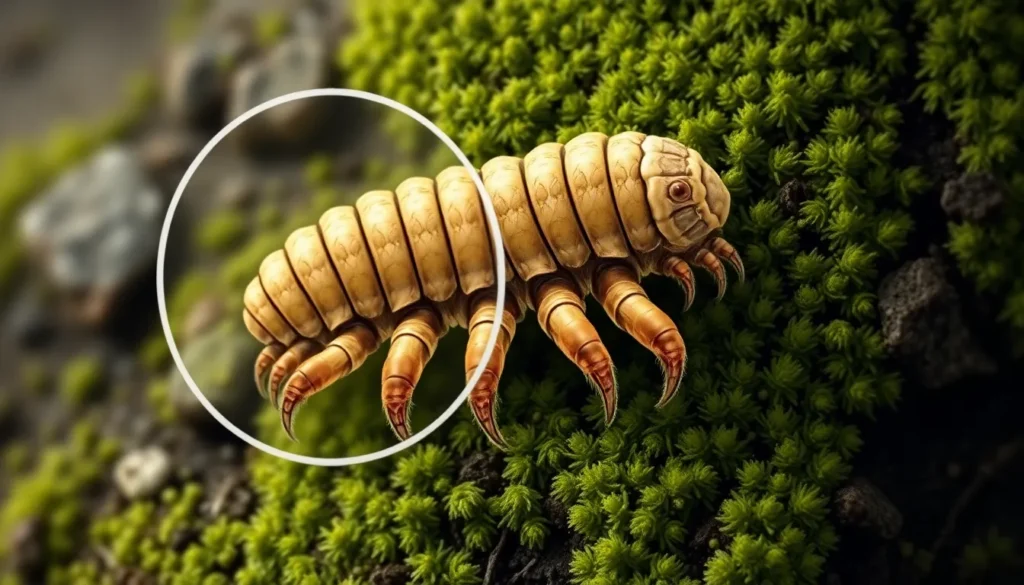
- Tardigrades are microscopic animals. They typically measure between 0.3 and 0.5 millimeters in length, making them visible only under a microscope.
- They are also called water bears. This nickname arises from their bear-like gait and appearance under magnification.
- Tardigrades belong to their own phylum, Tardigrada. They are a distinct group of eight-legged segmented micro-animals.
- They were first discovered in 1773. German zoologist Johann August Ephraim Goeze described them initially, and later, Christian Gottfried Ehrenberg named them Tardigrada in 1777.
- Tardigrades can survive extreme environmental conditions. They endure temperatures from near absolute zero to above boiling point, extreme radiation, and intense pressures.
- They survive desiccation by entering a cryptobiotic state. In this state, they lose almost all water and suspend metabolic activity, allowing survival for decades.
- Tardigrades have a global distribution. They inhabit diverse environments including mosses, lichens, leaf litter, freshwater, and marine ecosystems worldwide.
- They possess a unique protein called Dsup. This protein protects their DNA from damage caused by radiation and oxidative stress.
- Tardigrades have a simple body structure. Their bodies consist of a head and four body segments with eight legs ending in claws or suction pads.
- They feed on plant cells, algae, and small invertebrates. Using their stylets, they pierce cells to extract nutrients.
- Tardigrades reproduce sexually and asexually. Some species lay eggs that hatch into miniature adults, while others can reproduce without fertilization.
- They have a slow metabolism but can become nearly dormant. This ability aids survival during unfavorable conditions.
- Tardigrades can survive the vacuum and radiation of outer space. Experiments have shown survival after exposure to space conditions aboard satellites.
- They have existed for over 500 million years. Fossil records indicate their presence since the Cambrian period.
- Tardigrades lack a respiratory and circulatory system. They absorb oxygen directly through their body surface.
- Their nervous system is simple but effective. It includes a brain and paired nerve cords facilitating movement and sensory processing.
- Tardigrades can withstand high doses of radiation. Their DNA repair mechanisms are highly efficient compared to many other organisms.
- They undergo molting to grow. Tardigrades shed their cuticle periodically as they increase in size.
- Tardigrades are used as model organisms in scientific research. Their resilience provides insights into biology, astrobiology, and the limits of life.
- Despite their toughness, they are preyed upon. Some small invertebrates and nematodes feed on tardigrades.
- Tardigrades contribute to ecosystem functioning. By feeding on plant cells and microorganisms, they participate in nutrient cycling in microhabitats.
Habitat and Behavior
Tardigrades inhabit moist environments such as moss, lichens, leaf litter, soil, freshwater sediments, and marine environments. They require a thin film of water to be active and move using their clawed legs. In dry conditions, tardigrades enter cryptobiosis, a reversible state of suspended animation where metabolic activities nearly cease, allowing them to survive extreme desiccation and other environmental stresses. Their behavior is mostly influenced by moisture availability, and they feed by piercing plant cells, algae, or small invertebrates with their stylets. Although slow-moving, tardigrades are capable of crawling and swimming short distances in search of food or suitable habitat.
Why This Animal Matters
Tardigrades are significant for several reasons. Ecologically, they contribute to nutrient cycling in microhabitats and serve as prey for other microscopic organisms. Scientifically, they are important model organisms for studying extremotolerance—the ability to survive extreme conditions like radiation, dehydration, and space vacuum. Their unique proteins and DNA repair mechanisms inspire research in biotechnology and medicine. Understanding tardigrades also informs astrobiology, offering clues about life’s potential to survive beyond Earth. While not currently endangered, their resilience highlights the diversity of life and adaptability in changing environments.
Common Misconceptions
Misconception: Tardigrades are indestructible.
Correction: While tardigrades are incredibly resilient to many extreme conditions, they are not invincible. They can be killed by prolonged exposure to high temperatures, certain chemicals, or predation.
Misconception: Tardigrades can survive in outer space indefinitely.
Correction: Tardigrades have survived short-term exposure to space vacuum and radiation, but this does not imply indefinite survival or adaptation to space environments without protection.
Misconception: Tardigrades are harmful to humans.
Correction: Tardigrades are harmless to humans and do not cause diseases or damage to crops or property.
FAQ
What are tardigrades?
Tardigrades, also known as water bears, are microscopic, eight-legged animals known for their ability to survive extreme environmental conditions.
How do tardigrades survive extreme conditions?
They enter a state called cryptobiosis, where their metabolic processes nearly stop, allowing them to survive desiccation, radiation, and temperature extremes.
Where can tardigrades be found?
Tardigrades are found worldwide in moist environments such as mosses, lichens, freshwater, and marine habitats.


Leave a Reply