
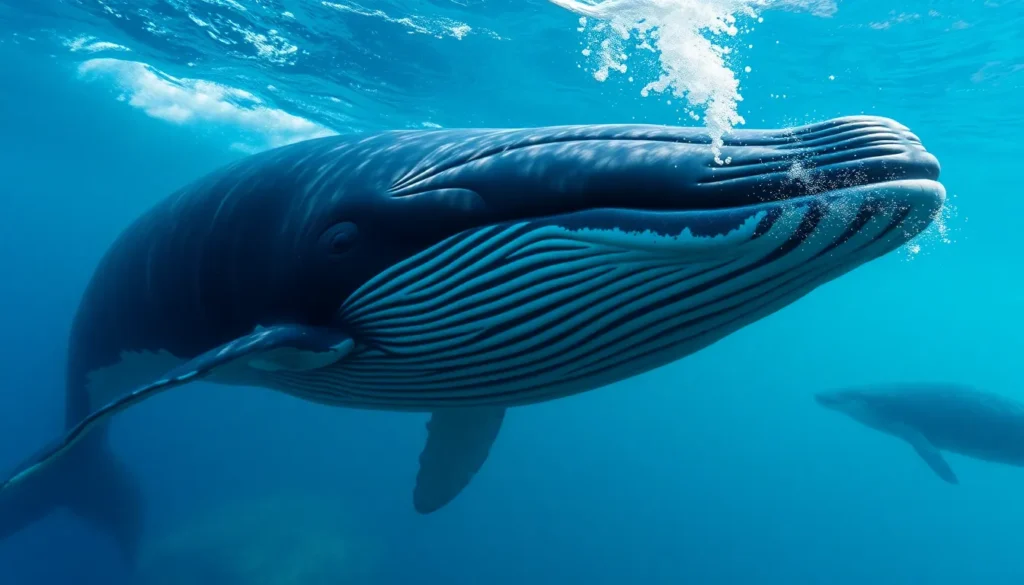
Short Answer
21 Facts About Whale Songs
- Whale songs are primarily produced by male humpback whales. These males sing complex sequences of sounds during the breeding season, believed to play a role in mating behavior.
- Whale songs can last from a few minutes to over 20 minutes. These sequences often repeat continuously for hours at a time.
- Whale songs consist of a series of themes made up of phrases and units. These structured elements give the songs a pattern that can evolve over time.
- Whale songs can travel vast distances underwater. Due to water’s efficient sound transmission, some songs have been recorded hundreds of miles away from the singer.
- Each population of humpback whales has its own distinct song. These songs can change gradually within a population and spread across regions.
- Whale songs are not random noises but show complexity similar to human music. Researchers have noted patterns such as rhythm, repetition, and variation.
- Other whale species also produce vocalizations, but only some, like humpbacks, are known for long, elaborate songs. Blue, fin, and bowhead whales produce simpler calls rather than structured songs.
- Whale songs may serve multiple functions, including mate attraction and male-to-male competition. While exact purposes remain partially speculative, evidence supports reproductive roles.
- Whales do not have vocal cords; instead, they produce sounds using specialized structures in their nasal passages. These adaptations enable the generation of diverse vocalizations underwater.
- Whale songs can evolve over time, with gradual changes occurring season by season. Entire populations may adopt new versions of songs, demonstrating cultural transmission.
- Scientists first recorded whale songs in the 1950s using underwater hydrophones. These early recordings sparked interest in marine bioacoustics.
- Whale songs have been used in scientific studies to monitor whale populations and behavior. Passive acoustic monitoring helps researchers track migration and distribution patterns.
- Natural and anthropogenic noise pollution can interfere with whale songs. Ship traffic and industrial noise may mask or disrupt communication.
- Whale songs have inspired human music and art. Composers and musicians have incorporated whale melodies into their works.
- Some whales sing continuously during migration. This may help maintain social cohesion or coordinate group movement.
- Whale songs can be detected by sonar and underwater listening devices. This enables scientists to study whales even when they are out of sight.
- Whale calves learn songs from adults, indicating vocal learning capabilities. This is relatively rare among non-human animals.
- Not all whales produce songs; toothed whales, such as dolphins and sperm whales, rely more on clicks and whistles. Song production is mainly a characteristic of baleen whales.
- Whale songs can include a wide frequency range, from very low to mid-frequency sounds. This range helps them communicate over different distances and environments.
- Scientists continue to study whale songs to better understand their cognitive abilities and social structures. Ongoing research explores how whales use sound to interact and navigate their environment.
- Whale songs contribute to the broader understanding of animal communication and the evolution of complex vocal behavior. They provide valuable insights into how non-human animals use sound to convey information.
Habitat and Behavior
Whales that produce songs, particularly humpback whales, inhabit oceans worldwide, migrating long distances between feeding grounds in colder waters and breeding grounds in warmer, tropical or subtropical regions. These whales are social animals, often traveling in groups, though singing males may be solitary during the breeding season. The songs are primarily associated with mating behavior, suggesting they play a role in reproduction, possibly by attracting females or establishing dominance among males. Whales survive by feeding primarily on small marine organisms such as krill and small fish, using baleen plates to filter their food from seawater. Their ability to communicate through songs enhances social interaction and coordination during these extensive migrations.
Why This Animal Matters
Whales that produce songs are key components of marine ecosystems, contributing to the health of ocean environments. Their feeding behavior influences marine food webs, and their movements help distribute nutrients across ocean regions. Culturally, whale songs have fascinated humans for decades, influencing art, music, and conservation awareness. Scientifically, the study of whale songs provides critical insights into animal communication, cognition, and behavior. Conservation efforts are crucial, as many whale populations have been historically depleted by whaling and remain vulnerable to threats such as noise pollution, ship strikes, and habitat disruption. Protecting these animals helps preserve marine biodiversity and the ecological balance of the oceans.
Common Misconceptions
Misconception: All whales sing complex songs.
Correction: Only certain species, mainly humpback whales, produce elaborate songs. Other whales vocalize but do not sing complex structured songs.
Misconception: Whale songs are simple and repetitive.
Correction: Whale songs are highly complex, consisting of multiple levels of structure including units, phrases, and themes, with patterns that evolve over time.
Misconception: Whale songs are only used to attract mates.
Correction: While mating is a primary function, songs may also serve social functions such as male competition or maintaining group cohesion during migration.
Misconception: Whales use vocal cords like humans to produce songs.
Correction: Whales produce sounds using specialized nasal structures, as they lack vocal cords.
Misconception: Whale songs are unaffected by human activity.
Correction: Increasing ocean noise from shipping and industry can interfere with whale communication, potentially impacting their behavior and survival.
FAQ
Why do whales sing?
Whales, especially male humpback whales, sing primarily during the breeding season. The songs are believed to attract females or assert dominance among males, although they may also serve social functions such as maintaining group cohesion or navigation.
Can whale songs be heard by humans?
Whale songs are typically at frequencies and volumes that can be detected by humans using underwater microphones called hydrophones. However, without such equipment, the sounds are generally inaudible to people above water.
Do all whales sing songs?
No. Only certain baleen whale species, such as humpback whales, produce long, complex songs. Other whales, including many toothed whales like dolphins and sperm whales, produce different types of vocalizations such as clicks and whistles.






Leave a Reply