
Short Answer
21 Facts About Termite Mounds
- Termite mounds are engineered habitats. They are constructed by termite colonies using soil, saliva, and fecal matter to create durable and complex structures.
- They regulate temperature and humidity. The design of termite mounds enables internal climate control, maintaining stable conditions vital for the colony’s survival.
- Size can vary greatly. Some termite mounds reach heights of over 6 meters (20 feet), making them visible landmarks in savanna and forest regions.
- Ventilation systems are intricate. Many mounds have a network of tunnels and vents that facilitate airflow, removing carbon dioxide and introducing oxygen.
- They provide protection. The mounds shield termites from predators and environmental hazards like heavy rain and extreme temperatures.
- Construction is a collective effort. Worker termites coordinate to gather and deposit building materials, following species-specific patterns.
- Some mounds last for decades. Even after termites abandon them, the structures may persist and become habitats for other animals.
- Termite mounds influence soil properties. The soil around mounds is often enriched with nutrients, benefiting local vegetation.
- The architecture varies by species. Different termite species build distinct mound shapes, such as towering spires or sprawling flat nests.
- Termites communicate via vibrations. This communication guides construction and colony activities within the mound.
- They are found mainly in tropical and subtropical regions. Termite mounds are most common in Africa, Australia, Asia, and parts of the Americas.
- Termite mounds can harbor diverse microecosystems. Various insects, reptiles, and plants may live in or near mounds.
- Some termite mounds have been studied for biomimicry. Architects and engineers look to mounds for sustainable building designs.
- The queen termite resides deep within the mound. The queen is responsible for reproduction and can live for many years.
- Termite mounds serve as indicators of environmental health. Their presence and condition can reflect ecosystem stability.
- Termites recycle dead plant material. Mounds facilitate decomposition and nutrient cycling in ecosystems.
- Termite mounds can affect local hydrology. Their structure influences water infiltration and retention in soil.
- Some termite mounds are culturally significant. Indigenous peoples may use mounds for food sources or traditional purposes.
- Termite mounds have inspired scientific research. Studies range from ecology to materials science and climate adaptation.
- Termite mounds can be threatened by human activity. Land development and agriculture can destroy mounds and termite habitats.
- Despite their hard exterior, termite mounds are fragile ecosystems. They rely on continuous maintenance by the termite colony to remain functional.
Habitat and Behavior
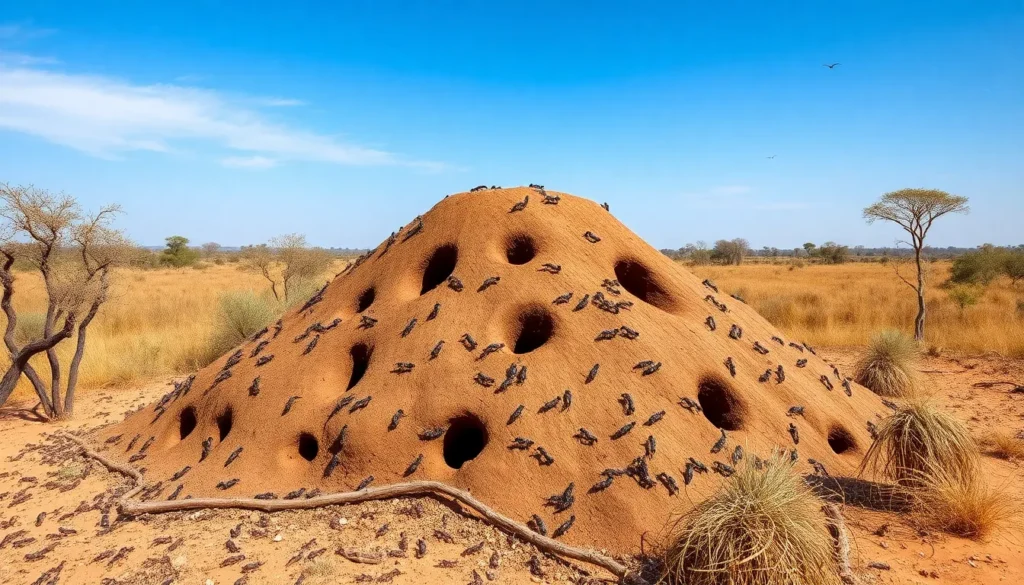
Termite mounds are found primarily in warm climates such as tropical and subtropical regions, including parts of Africa, Australia, Southeast Asia, and Central and South America. These mounds serve as the central hub for termite colonies, housing thousands to millions of individuals. The termites construct their mounds from a mixture of soil, saliva, and feces, creating a hardened structure that protects them from predators and environmental extremes.
The internal architecture of termite mounds is highly sophisticated. It includes a network of tunnels and chambers that facilitate ventilation and waste disposal. This design helps regulate temperature and humidity, critical to maintaining the delicate balance required for fungal farming (in some species) and the survival of the colony. Termites exhibit social behavior, working collectively to build and maintain the mound while foraging for food, primarily cellulose from dead wood and plant material.
Why This Animal Matters
Termites and their mounds play a crucial ecological role as decomposers, breaking down dead plant matter and recycling nutrients back into the soil. This activity improves soil fertility and promotes plant growth, supporting entire ecosystems. The mounds themselves can influence local biodiversity by creating microhabitats for various species.
In addition to their ecological importance, termite mounds have cultural significance in some indigenous communities, where they may be used for food or traditional medicine. Scientific interest in termite mounds has grown due to their efficient natural ventilation systems, inspiring sustainable architectural designs. Conservation of termite habitats is essential as they contribute to ecosystem health and stability.
Common Misconceptions
Misconception: Termite mounds are just piles of dirt with no real function.
Correction: Termite mounds are complex, engineered structures that regulate climate, protect the colony, and facilitate vital colony functions.
Misconception: All termite mounds are the same shape and size.
Correction: Termite mound architecture varies widely among species and environments, ranging from small, flat mounds to towering spires.
Misconception: Termites only damage human structures.
Correction: While some termites can be pests, many species primarily consume dead plant material and contribute positively to ecosystems.
Misconception: Termite mounds are permanent and unchanging.
Correction: Mounds require constant maintenance by termites and can degrade or be abandoned over time.
Misconception: Termite mounds are uninhabited except for termites.
Correction: Various other animals and plants often utilize termite mounds as habitat or resources.
FAQ
How do termite mounds regulate temperature?
Termite mounds have a complex system of tunnels and vents that facilitate airflow, allowing heat to escape and cooler air to enter, maintaining a stable internal temperature despite external fluctuations.
Are termite mounds harmful to the environment?
No, termite mounds play an important ecological role by recycling nutrients, improving soil quality, and supporting biodiversity. While some termite species can damage wooden structures, mounds themselves are beneficial components of natural ecosystems.
Can termite mounds be used for human purposes?
In some cultures, termite mounds have been used as sources of clay for pottery or as food sources when termites are harvested. Additionally, the ventilation principles of termite mounds have inspired sustainable architectural designs.



Leave a Reply