
Short Answer
21 Facts About Junglefowl
- Junglefowl are the wild ancestors of domestic chickens. The red junglefowl (Gallus gallus) is widely recognized as the primary progenitor of the domestic chicken.
- There are four species of junglefowl. These include the red junglefowl, grey junglefowl, Sri Lankan junglefowl, and green junglefowl.
- Junglefowl are native to South and Southeast Asia. Their range covers countries such as India, Sri Lanka, Thailand, Indonesia, and the Philippines.
- They primarily inhabit dense forests and jungle areas. Junglefowl prefer tropical and subtropical forest habitats but can also be found in scrublands and grasslands near forests.
- Junglefowl exhibit sexual dimorphism. Males are usually more colorful and larger than females, with bright plumage and longer tail feathers.
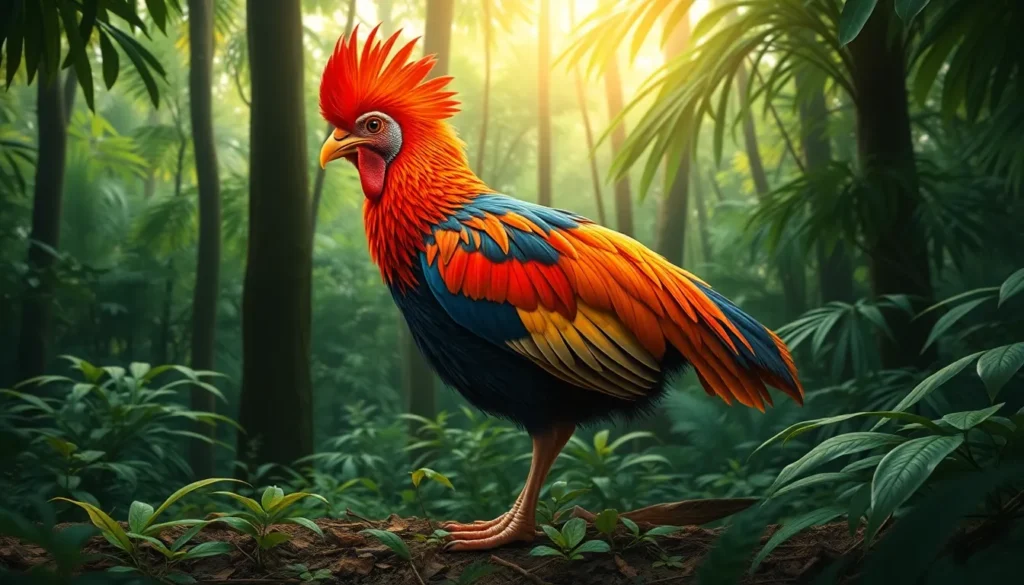
- The red junglefowl male has a vivid red and orange plumage. This distinctive coloring helps in attracting mates and establishing dominance.
- Junglefowl are omnivorous. Their diet includes seeds, fruits, insects, and small animals.
- They are ground-dwelling birds but roost in trees at night. This behavior helps them avoid predators and stay safe while resting.
- Junglefowl males perform elaborate courtship displays. These displays include wing spreading, crowing, and strutting to attract females.
- They are generally monogamous or polygynous depending on species and environment. Some males mate with multiple females while others form pair bonds.
- Junglefowl have loud, distinctive calls. These vocalizations serve to communicate territory, warn of danger, and attract mates.
- The incubation period for junglefowl eggs is around 21 days. Females typically incubate the eggs and care for the chicks after hatching.
- Junglefowl chicks are precocial. They are able to leave the nest and feed themselves shortly after hatching.
- They play significant ecological roles as seed dispersers and insect population controllers. By feeding on seeds and insects, junglefowl contribute to forest regeneration and pest management.
- Hybridization between junglefowl species and domestic chickens occurs occasionally. This has implications for genetic diversity and conservation.
- Junglefowl have cultural importance in many Asian societies. They feature in folklore, art, and religious symbolism, often representing courage and fertility.
- Conservation status varies among species. While the red junglefowl is relatively common, others like the green junglefowl face habitat loss pressures.
- Junglefowl are vulnerable to habitat destruction and hunting. Deforestation and land conversion threaten their natural environments.
- Scientific studies on junglefowl genetics have helped understand the domestication of chickens. These studies reveal the timeline and geographic origins of poultry farming.
- Junglefowl have complex social hierarchies. Dominance is established through displays and occasional fights among males.
- They are important indicators of healthy forest ecosystems. Their presence often signifies intact and biodiverse habitats.
Habitat and Behavior
Junglefowl primarily inhabit tropical and subtropical forests across South and Southeast Asia. They are ground-dwelling birds that forage on the forest floor but roost in trees to avoid predators at night. Their behavior includes complex social interactions, with males establishing territories through vocalizations and displays. Junglefowl are omnivorous, feeding on a varied diet of seeds, fruits, insects, and small animals, which supports their survival in diverse habitats. Their reproductive behavior involves males performing elaborate courtship rituals to attract females, who then incubate the eggs and care for the precocial chicks.
Why This Animal Matters
Junglefowl are ecologically significant as seed dispersers and natural controllers of insect populations, contributing to forest health and regeneration. Culturally, they have held symbolic importance throughout history in many Asian cultures, often associated with traits like bravery and fertility. From a scientific perspective, junglefowl are critical to understanding the domestication of chickens, one of the world’s most widespread domesticated animals. Conservation of junglefowl species and their habitats also helps protect broader forest ecosystems and biodiversity.
Common Misconceptions
Misconception: Junglefowl are just wild chickens.
Correction: While domestic chickens descend from junglefowl, they are distinct species with different behaviors and ecological roles in the wild.
Misconception: All junglefowl species look the same.
Correction: There are four species of junglefowl with varying appearances, colors, and sizes, adapted to different environments.
Misconception: Junglefowl do not contribute to the ecosystem.
Correction: Junglefowl play important ecological roles, including seed dispersal and pest control, which help maintain forest health.
FAQ
What are junglefowl?
Junglefowl are wild bird species native to South and Southeast Asia, known as the wild ancestors of domestic chickens.
How many species of junglefowl are there?
There are four recognized species: red junglefowl, grey junglefowl, Sri Lankan junglefowl, and green junglefowl.
Why are junglefowl important ecologically?
Junglefowl contribute to forest ecosystems by dispersing seeds and controlling insect populations, helping maintain biodiversity.



Leave a Reply