
Short Answer
21 Facts About Lyrebirds
- Exceptional Mimicry Ability
Lyrebirds are famous for their ability to imitate a wide variety of sounds, including other bird calls, chainsaws, camera shutters, car alarms, and human voices. This mimicry is used primarily by males during mating displays. - Two Species
There are two species of lyrebirds: the Superb Lyrebird (Menura novaehollandiae) and the Albert’s Lyrebird (Menura alberti), both native to Australia. - Long Tail Feathers
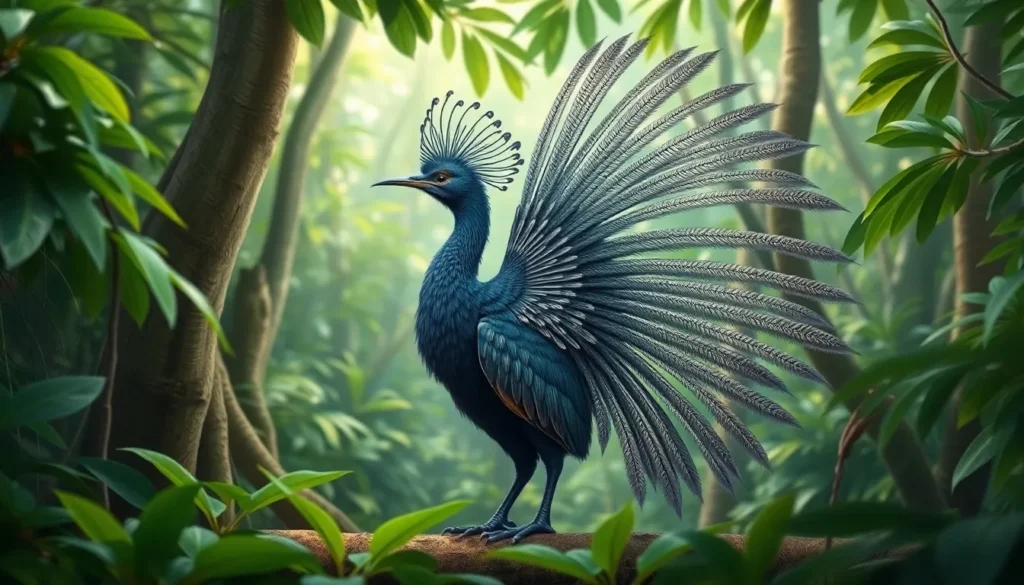
The male Superb Lyrebird has ornate tail feathers that resemble a lyre, an ancient Greek stringed instrument, which it fans out during courtship displays. - Large Ground-Dwelling Birds
Lyrebirds are among the largest passerine birds, with the Superb Lyrebird reaching lengths of up to 100 centimeters (39 inches). - Habitat
They inhabit dense forests, especially rainforests and wet sclerophyll forests in southeastern Australia, where thick leaf litter provides feeding grounds. - Diet
Lyrebirds primarily feed on insects, spiders, and other small invertebrates found in the soil and leaf litter. - Ground Nesting
They build dome-shaped nests from sticks and leaves on or near the ground, where females lay one or two eggs. - Secretive Behavior
Lyrebirds are generally shy and elusive, spending much of their time foraging on the forest floor and avoiding predators. - Long Lifespan
In the wild, lyrebirds can live up to 30 years, which is relatively long for passerine birds. - Vocal Learning
Lyrebirds learn their complex songs and mimicry from other birds and environmental sounds, often improving their repertoire over years. - Mating Displays
Males perform elaborate courtship displays involving tail feather fanning, dancing, and impressive vocal mimicry to attract females. - Territorial
Males are territorial during the breeding season, defending their display areas aggressively against rivals. - Conservation Status
Both species are currently not considered endangered but face threats from habitat destruction and introduced predators. - Ecological Role
By consuming large quantities of invertebrates, lyrebirds play a role in controlling insect populations and aerating soil with their foraging behavior. - Unique Sound Repertoire
The lyrebird’s call includes both natural bird sounds and human-made noises, a rarity among wild birds. - Historical Recognition
Lyrebirds were first described scientifically in the early 19th century and quickly became a subject of fascination due to their mimicry. - Scientific Studies
Research on lyrebirds has contributed significantly to understanding vocal learning and communication in birds. - Cultural Symbol
The Superb Lyrebird is an iconic species in Australia and has appeared on postage stamps and currency, symbolizing natural heritage. - Slow Breeders
Lyrebirds have relatively low reproductive rates, with females investing heavily in raising their few offspring. - Adaptations for Foraging
Lyrebirds have strong legs and curved claws adapted for scratching and digging through dense leaf litter. - Display Sites
Males prepare and maintain display platforms on the forest floor, clearing leaves and debris to enhance visibility during courtship.
Habitat and Behavior
Lyrebirds are native to southeastern Australia, inhabiting wet forests, including rainforests and wet sclerophyll forests. They are terrestrial birds that spend most of their time on the forest floor. Their behavior is characterized by solitary or loosely grouped living, with males establishing and defending display territories during the breeding season. Lyrebirds forage by scratching and digging in the leaf litter to find insects and other invertebrates. The male’s mating display includes a combination of elaborate tail feather postures and a complex series of vocalizations, which often incorporate mimicry of other forest sounds and even anthropogenic noises. Females build nests on or near the ground and care for their young alone, as males do not participate in parental care.
Why This Animal Matters
Lyrebirds hold ecological importance as insectivores that help regulate invertebrate populations and contribute to soil health through their foraging activities. Their remarkable vocal mimicry has made them subjects of scientific interest in the study of vocal learning and animal communication. Culturally, lyrebirds are emblematic of Australia’s unique biodiversity and have been featured in art, media, and currency, symbolizing the country’s natural heritage. Conservation efforts aim to protect their habitats from deforestation and invasive species, ensuring the survival of these distinctive birds.
Common Misconceptions
Misconception: Lyrebirds only mimic other birds.
Correction: While lyrebirds often mimic other bird species, they are also known to imitate a wide range of sounds including mammals, mechanical noises, and human-made sounds such as camera shutters and chainsaws.
Misconception: Only male lyrebirds sing.
Correction: Although males are more known for their complex songs and mimicry used in courtship, females do produce calls, but these are generally less elaborate.
FAQ
What sounds can lyrebirds mimic?
Lyrebirds can mimic a vast array of sounds, including calls of other bird species, mammals, and even human-made noises such as camera shutters, chainsaws, car alarms, and camera clicks.
Why do lyrebirds mimic sounds?
Male lyrebirds primarily mimic sounds as part of their courtship display to attract females and to establish territory. Their vocal mimicry demonstrates their fitness and ability to learn complex sounds.
Are lyrebirds endangered?
Neither the Superb Lyrebird nor Albert's Lyrebird is currently classified as endangered, but habitat destruction and introduced predators pose ongoing threats to their populations.

Leave a Reply