
Short Answer
21 Facts About Brittle Stars
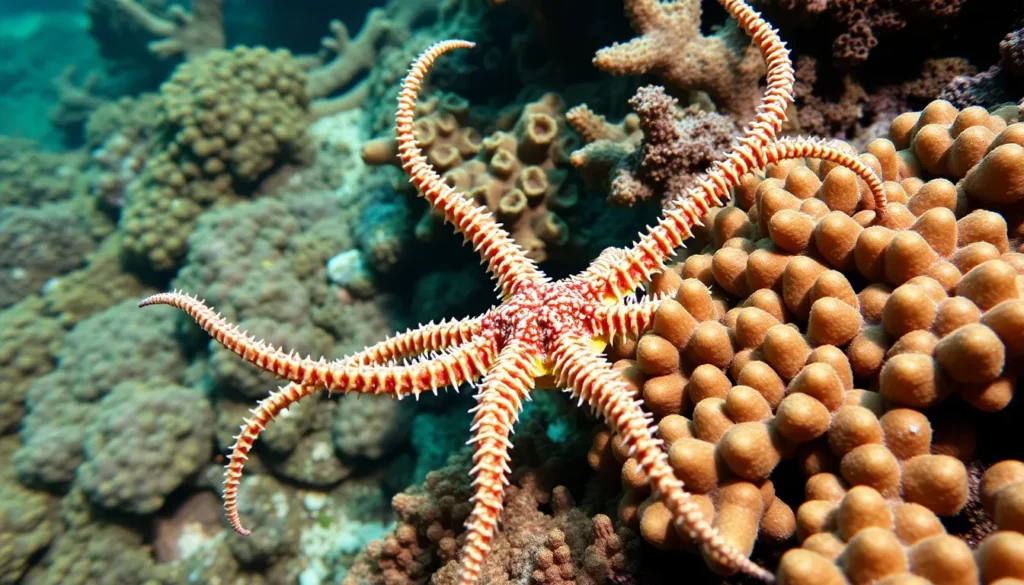
- Brittle stars belong to the class Ophiuroidea. They are echinoderms closely related to starfish but differ in anatomy and movement.
- They have a distinct central disc and long, flexible arms. Unlike starfish, their arms are clearly separated from the central body and are slender.
- Brittle stars use their arms primarily for locomotion. They move by wriggling their arms rather than using tube feet as starfish do.
- They possess a water vascular system. This hydraulic system aids in movement, feeding, and respiration.
- Many species are nocturnal. They tend to hide during the day and become active at night to avoid predators.
- Brittle stars can regenerate lost arms. If an arm is severed, it can regrow over time, which helps them escape threats.
- They have no anus. Waste is expelled through the mouth after digestion.
- Their diet is diverse. They are generally scavengers or detritivores, feeding on small organisms, organic debris, and plankton.
- Brittle stars inhabit a wide range of marine environments. They are found from shallow reefs to deep-sea trenches worldwide.
- They exhibit both sexual and asexual reproduction. Most reproduce sexually by releasing eggs and sperm into the water, but some can reproduce by fragmentation.
- Some brittle stars show bioluminescence. Certain species can produce light, possibly for defense or communication.
- They have no brain but a nerve ring. Their nervous system is decentralized, allowing coordinated arm movement without a central brain.
- Brittle stars have tiny spines on their arms. These spines assist in sensing the environment and sometimes in feeding.
- They contribute to sediment mixing. By moving through sediment, brittle stars help aerate and recycle nutrients in the ocean floor.
- Some species live commensally with other marine animals. They may inhabit sponges, corals, or reside in burrows made by other organisms.
- They are prey to various fish, crabs, and other predators. Their fragile arms make them vulnerable, but their ability to shed arms aids survival.
- Brittle stars can detect light despite lacking eyes. Light-sensitive cells on their arms help them respond to environmental changes.
- Their fossil record dates back over 500 million years. This makes them among the oldest known echinoderms still extant today.
- The name “brittle star” comes from their tendency to break arms easily. This brittleness is a defense mechanism to escape predators.
- They play a role in coral reef ecosystems. By scavenging and recycling organic matter, they help maintain reef health.
- Scientists study brittle stars to understand regeneration and decentralized nervous systems. Their unique biology provides insights into evolutionary and developmental processes.
Habitat and Behavior
Brittle stars are found in oceans worldwide, from shallow coastal waters to abyssal depths exceeding 6,000 meters. They commonly inhabit rocky crevices, under coral rubble, beneath sediment, or within sponges and coral colonies. These animals are primarily nocturnal, sheltering during daylight hours to avoid predation and emerging at night to feed. Their locomotion is distinctive; they use coordinated arm movements to crawl swiftly across substrates, unlike the slow tube-foot movement of starfish. Brittle stars feed on detritus, plankton, small invertebrates, and organic particles. Their ability to regenerate lost arms is crucial for survival, allowing them to escape predators by autotomizing limbs. Some species exhibit bioluminescence, which may serve as a defense mechanism or aid in communication. Reproduction is typically sexual, with external fertilization, though some species can reproduce asexually by fragmentation.
Why This Animal Matters
Brittle stars play an essential role in marine ecosystems. As scavengers and detritivores, they contribute to nutrient cycling and sediment turnover, promoting healthy ocean floor habitats. Their presence in coral reefs supports ecosystem balance by cleaning organic debris and serving as prey for other animals. From a scientific perspective, brittle stars are valuable models for studying regeneration, decentralized nervous systems, and evolutionary biology due to their ancient lineage and unique physiology. Conservation of brittle star habitats contributes to maintaining biodiversity and the overall health of marine environments. Although not widely targeted for commercial use, brittle stars are indicators of environmental changes, making them relevant for marine ecological monitoring.
Common Misconceptions
Misconception: Brittle stars are harmful predators.
Correction: Brittle stars are primarily scavengers and detritivores and do not pose a threat to larger marine animals or humans.
Misconception: Brittle stars are a type of starfish.
Correction: Although related, brittle stars belong to a different class (Ophiuroidea) and have distinct anatomy and behaviors compared to starfish (Asteroidea).
FAQ
How do brittle stars move?
Brittle stars move by wriggling their long, flexible arms in a coordinated manner, which allows them to crawl quickly across the seafloor.
Can brittle stars regenerate lost arms?
Yes, brittle stars can regenerate lost arms over time, which helps them escape predators and recover from injury.
Are brittle stars dangerous to humans?
No, brittle stars are harmless to humans. They are small marine animals that primarily scavenge and do not pose any threat.

Leave a Reply