
Short Answer
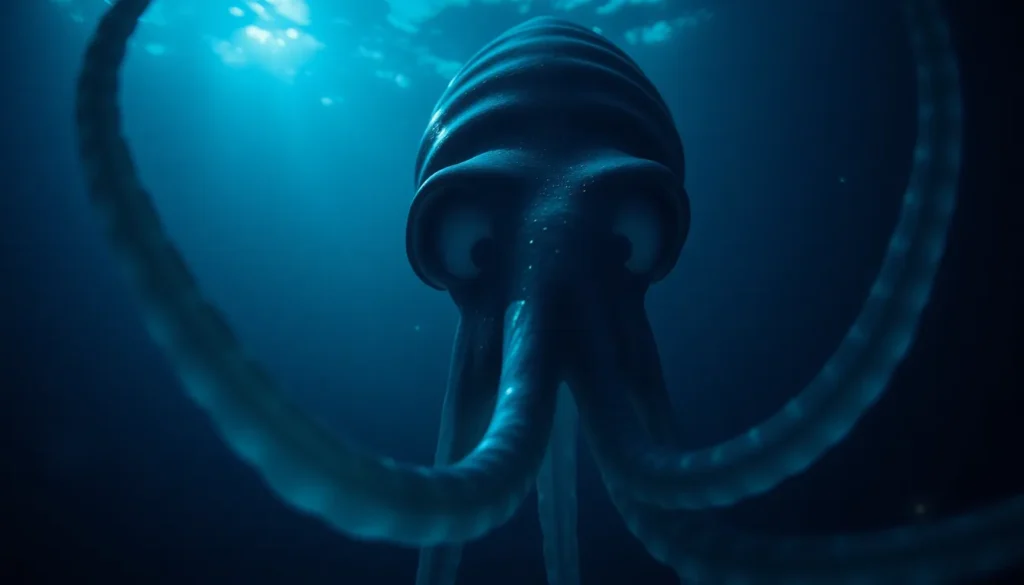
21 Facts About Giant Squid
- Enormous Size: Giant squids can grow up to 12-13 meters (39-43 feet) in length, making them one of the largest invertebrates alive.
- Elusive Creatures: They live in deep ocean waters, making direct observation very rare until recent decades.
- Deep-Sea Habitat: Typically found at depths between 300 to 1000 meters, giant squids inhabit cold, dark environments.
- Large Eyes: Their eyes can reach up to 27 centimeters (11 inches) in diameter, among the largest in the animal kingdom, adapted to detect faint light in deep waters.
- Long Tentacles: They have two long feeding tentacles equipped with powerful suckers lined with sharp teeth to grasp prey.
- Diet: Their diet mainly consists of deep-sea fish and other squids, including smaller squid species.
- Speed and Movement: They use jet propulsion to move quickly through the water by expelling water through a funnel.
- Beak Structure: Like other cephalopods, giant squids possess a sharp, parrot-like beak for biting and tearing prey.
- Ink Defense: They can eject ink to create a smokescreen to evade predators.
- Predators: The sperm whale is the giant squid’s primary natural predator, evidenced by squid beaks found in whale stomachs.
- Reproductive Biology: Giant squids reproduce sexually, but much of their breeding behavior remains unknown.
- Short Lifespan: They are believed to live only around 5 years.
- Scientific Study Challenges: Most knowledge comes from specimens washed ashore or found in predator stomachs rather than live observation.
- First Live Video: The first confirmed live images of a giant squid in its natural habitat were captured in 2012.
- Bioluminescence: While not bioluminescent themselves, they inhabit regions where many bioluminescent organisms exist.
- Body Composition: Their bodies are mostly soft tissue, making them fragile and difficult to study.
- Taxonomy: The giant squid belongs to the genus Architeuthis within the family Architeuthidae.
- Historical Myths: They are believed to be the basis for sea monster legends such as the Kraken.
- Ecological Role: As both predator and prey, they play an important role in deep-sea ecosystems.
- Conservation Status: Due to their elusive nature, their population status is not well known, but they are not currently listed as endangered.
- Specimen Records: The largest scientifically verified giant squid specimen measured approximately 13 meters (43 feet).
Habitat and Behavior
Giant squids inhabit the deep ocean, primarily in temperate and subtropical waters worldwide. They dwell at depths ranging from 300 to 1000 meters, where light penetration is minimal. These squids are solitary and elusive creatures, rarely seen by humans. They use jet propulsion to navigate the deep-sea environment and rely on their large eyes to detect bioluminescent cues and potential prey. Their long tentacles allow them to capture fast-moving fish and smaller squids. Their behavior remains largely mysterious due to difficulties in studying them in their natural habitat.
Why This Animal Matters
The giant squid holds ecological significance as a mid-level predator in deep ocean food webs, controlling populations of smaller marine animals and serving as prey for large predators such as sperm whales. Culturally, it has inspired myths and folklore about sea monsters for centuries. Scientifically, studying giant squids helps researchers understand deep-sea biology, adaptations to extreme environments, and the evolutionary history of cephalopods. Despite limited data, their presence highlights the vast biodiversity of the ocean’s depths and the importance of deep-sea conservation.
Common Misconceptions
Misconception: Giant squids frequently attack ships.
Correction: There is no evidence that giant squids attack ships. They are deep-sea animals that avoid human contact.
Misconception: Giant squids are the largest squid species.
Correction: While among the largest, the colossal squid (Mesonychoteuthis hamiltoni) is generally considered larger and heavier.
Misconception: Giant squids are slow-moving and helpless.
Correction: Giant squids are capable of rapid movements using jet propulsion and have sophisticated hunting adaptations.
FAQ
How big can giant squids get?
Giant squids can grow up to 12 to 13 meters (39 to 43 feet) in length, including their tentacles.
Where do giant squids live?
They live in deep ocean waters worldwide, typically at depths of 300 to 1000 meters, where sunlight is minimal.
Are giant squids dangerous to humans?
There is no evidence that giant squids pose any danger to humans as they live in deep water and avoid contact with humans.


Leave a Reply