
Short Answer
21 Facts About White-bellied Sea Eagles
- Scientific Classification: The white-bellied sea eagle (Haliaeetus leucogaster) belongs to the family Accipitridae, which includes hawks, eagles, and kites. It is closely related to the bald eagle.
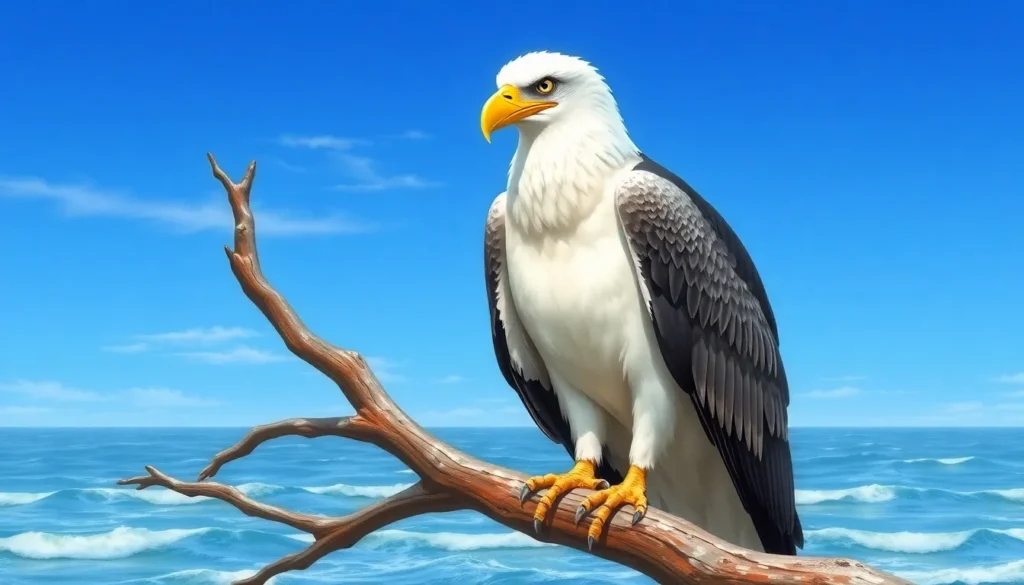
- Distinctive Appearance: Adults have a striking white head, breast, and underparts with dark grey wings and back, making them easily identifiable in flight.
- Size and Wingspan: These eagles typically measure 70 to 90 cm in length with a wingspan ranging from 1.8 to 2.2 meters, making them one of the larger sea eagles.
- Habitat Range: They are found mainly near large bodies of water, including coasts, estuaries, and large rivers, primarily across Australia, Southeast Asia, and parts of South Asia.
- Diet: Their diet mainly consists of fish, but they are opportunistic hunters and may consume birds, mammals, and carrion when available.
- Hunting Technique: They hunt by soaring and scanning the water surface before diving to capture prey with their powerful talons.
- Nesting Habits: White-bellied sea eagles build large nests made of sticks in tall trees or cliffs near water, often reusing and enlarging the same nest over multiple years.
- Reproduction: Typically, the female lays one to two eggs per breeding season, and both parents share incubation and chick-rearing duties.
- Flight Behavior: Their flight is characterized by strong wingbeats interspersed with soaring, which conserves energy during long-distance travel.
- Lifespan: In the wild, white-bellied sea eagles can live up to 20 years, though exact lifespan data is limited.
- Conservation Status: Classified as Least Concern by the IUCN, they face localized threats such as habitat destruction and human disturbance.
- Role in the Ecosystem: As apex predators, they help maintain healthy fish populations and scavenge carrion, contributing to ecosystem balance.
- Vocalizations: They emit loud, high-pitched whistles and screams, especially during breeding season or territorial displays.
- Monogamous Pairing: White-bellied sea eagles typically form long-term monogamous pairs that cooperate extensively in raising offspring.
- Migration Patterns: While generally resident birds, some populations may disperse seasonally in response to food availability or environmental conditions.
- Adaptations: Their sharp talons, hooked beak, and keen eyesight are well adapted for hunting and handling slippery aquatic prey.
- Interaction with Humans: They are sometimes impacted by fishing activities and pollution but are also admired and protected in various regions.
- Historical Significance: Indigenous cultures in Australia have featured the white-bellied sea eagle in traditional stories and as a symbol of power and freedom.
- Scientific Studies: Research on their ecology helps inform conservation strategies and understanding of coastal ecosystem health.
- Population Trends: Populations are stable in many parts of Australia but may be declining locally due to habitat loss in Asia.
- Identification Challenges: Juvenile white-bellied sea eagles have mottled brown and white plumage, which can be confused with other sea eagles.
Habitat and Behavior
White-bellied sea eagles predominantly inhabit coastal regions, estuaries, and large inland water bodies where fish are abundant. They are territorial birds, often maintaining large home ranges that include both hunting and nesting sites. Their behavior includes soaring at considerable heights to scan for prey, and they may hunt alone or in pairs. These eagles are skilled fishers, diving to seize fish near the water’s surface, but are also opportunistic feeders that will consume a variety of other animals, including birds and small mammals. Nesting usually occurs in tall trees or on cliffs overlooking water, with nests reused and added to over successive years. Both sexes contribute to nest building, incubation, and feeding of chicks. They communicate using loud calls, especially during breeding and territorial defense.
Why This Animal Matters
As apex predators in their coastal ecosystems, white-bellied sea eagles play a crucial role in maintaining the balance of aquatic food webs by regulating fish populations and scavenging carrion, which helps prevent disease spread. Their presence is an indicator of healthy aquatic environments. Culturally, they hold significance for Indigenous Australian communities, symbolizing strength and freedom in traditional stories and art. From a conservation perspective, they are a species of interest due to their sensitivity to environmental changes, helping scientists monitor the impacts of habitat degradation and pollution. Protecting white-bellied sea eagles also benefits other species sharing their habitats, promoting broader ecosystem conservation.
Common Misconceptions
Misconception: White-bellied sea eagles only eat fish.
Correction: Although fish make up the majority of their diet, white-bellied sea eagles are opportunistic and will consume birds, mammals, reptiles, and carrion when available.
Misconception: These eagles migrate long distances seasonally.
Correction: While some populations may disperse locally based on food availability, white-bellied sea eagles are generally considered resident birds rather than long-distance migrants.
Misconception: Juvenile white-bellied sea eagles look the same as adults.
Correction: Juveniles have mottled brown and white plumage that differs significantly from the distinctive white and dark grey coloration of adults, which can sometimes cause identification confusion.
FAQ
What does the white-bellied sea eagle eat?
The white-bellied sea eagle primarily feeds on fish but also consumes birds, small mammals, reptiles, and carrion when available.
Where can white-bellied sea eagles be found?
They are commonly found near coastal regions, estuaries, and large rivers across Australia, Southeast Asia, and parts of South Asia.
Are white-bellied sea eagles endangered?
No, they are currently classified as Least Concern by the IUCN, although localized threats exist due to habitat loss and human disturbance.


Leave a Reply