
Short Answer
21 Facts About Diademed Sifaka (lemur)
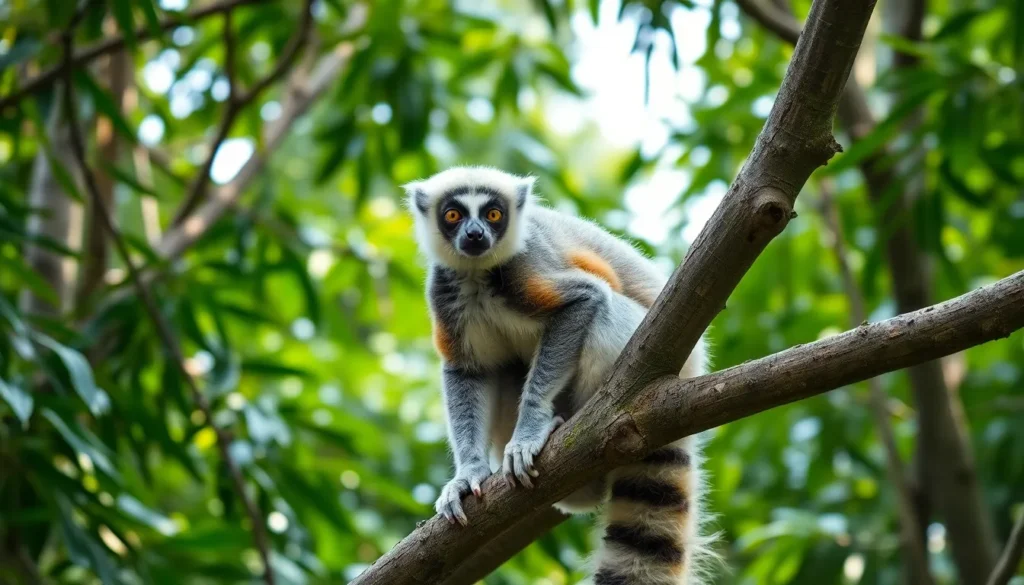
- Species Description: The diademed sifaka (Propithecus diadema) is a large lemur species known for its distinctive white and gray fur with a golden-orange crown, called a “diadem.”
- Endemic Location: It is found exclusively in the eastern rainforests of Madagascar.
- Size: Diademed sifakas can weigh between 3.5 to 6 kilograms (7.7 to 13.2 pounds).
- Locomotion: They are arboreal and move primarily by vertical clinging and leaping between trees.
- Diet: Their diet mainly consists of leaves, fruits, flowers, and seeds.
- Social Structure: Diademed sifakas live in social groups usually consisting of 2 to 10 individuals.
- Communication: They use vocalizations, scent marking, and body language to communicate within groups.
- Reproduction: Females typically give birth to one offspring per year after a gestation period of about 135 days.
- Lifespan: In the wild, they can live approximately 20 years.
- Activity Pattern: Diademed sifakas are primarily diurnal, active during the day and resting at night.
- Conservation Status: Classified as Critically Endangered by the IUCN due to habitat loss and hunting pressures.
- Predators: Natural predators include the fossa, birds of prey, and snakes.
- Role in Seed Dispersal: They aid in forest regeneration by dispersing seeds through their diet.
- Distinctive Calls: Their loud, piercing calls can travel long distances through dense forest to maintain group cohesion.
- Threats: Primary threats include deforestation for agriculture, logging, and human encroachment.
- Conservation Efforts: Protected areas and community-based conservation programs aim to preserve their habitat and populations.
- Adaptations: Their strong hind limbs and long tail assist in powerful leaps and balance in the canopy.
- Fur Coloration: The striking fur pattern serves as camouflage within the dappled light of the forest canopy.
- Scientific Importance: As a flagship species, they help raise awareness about Madagascar’s unique biodiversity.
- Genus: The diademed sifaka belongs to the genus Propithecus, which comprises several sifaka species known for their leaping abilities.
- Research Status: Studies continue to investigate their behavior, ecology, and responses to environmental changes.
Habitat and Behavior
The diademed sifaka inhabits the humid, eastern rainforests of Madagascar, where it primarily occupies the mid to upper canopy. As an arboreal primate, it relies heavily on the dense tree cover for shelter, food, and locomotion. Their mode of movement is characterized by powerful vertical leaps between tree trunks and branches, which is energy efficient and aids in avoiding ground-based predators.
Socially, diademed sifakas live in small groups ranging from pairs to about ten individuals, often led by dominant females in a matriarchal system. Communication within groups is maintained through a complex system of vocalizations, scent marking, and visual signals. They spend much of their day foraging, feeding primarily on leaves but also incorporating fruits and flowers when available. The species is diurnal, with activity peaks in the morning and late afternoon.
Why This Animal Matters
The diademed sifaka plays a vital role in Madagascar’s ecosystems, especially in seed dispersal which contributes to forest regeneration and biodiversity maintenance. Its presence indicates a healthy forest environment, making it an important bioindicator species. Moreover, as one of Madagascar’s most visually striking lemurs, it holds cultural significance and is a symbol for conservation efforts on the island.
Due to its critical conservation status, the diademed sifaka draws scientific and conservation attention which helps protect broader rainforest habitats. Preservation of this species directly benefits numerous other plants and animals sharing its ecosystem, highlighting its ecological importance.
Common Misconceptions
Misconception: Diademed sifakas are monkeys.
Correction: Diademed sifakas are lemurs, a distinct group of primates native to Madagascar, separate from monkeys and apes.
Misconception: They are aggressive animals.
Correction: Diademed sifakas are generally gentle and social animals that avoid conflict, relying on vocal communication and group cohesion.
Misconception: They can survive in any forest type.
Correction: This species is highly specialized to humid eastern rainforests and does not thrive outside this specific habitat.
Misconception: They are abundant and not endangered.
Correction: The diademed sifaka is classified as Critically Endangered due to significant habitat loss and hunting pressures.
Misconception: They eat only fruit.
Correction: While they consume fruit, their diet mainly consists of leaves, flowers, and seeds, displaying dietary flexibility.
FAQ
Where is the diademed sifaka found?
The diademed sifaka is found exclusively in the eastern rainforests of Madagascar, where it inhabits dense, humid forest canopies.
What does the diademed sifaka eat?
Its diet primarily consists of leaves, fruits, flowers, and seeds, enabling it to adapt to seasonal changes in food availability.
Why is the diademed sifaka endangered?
The diademed sifaka is critically endangered mainly due to habitat loss from deforestation, agriculture, and hunting pressures in Madagascar.




Leave a Reply