
Short Answer
21 Facts About Parrotfish Gender Switching
- Sequential hermaphroditism: Parrotfish change sex during their lifetime, typically from female to male, a process known as protogynous hermaphroditism.
- Social structure influence: Gender switching in parrotfish is often influenced by social hierarchy and the absence of dominant males in their group.
- Terminal phase males: The largest males, called terminal phase males, usually maintain harems of females.
- Initial phase individuals: Parrotfish in the initial phase can be females or primary males who did not transition from female.
- Hormonal changes: The sex change involves complex hormonal shifts, including changes in estrogen and androgen levels.
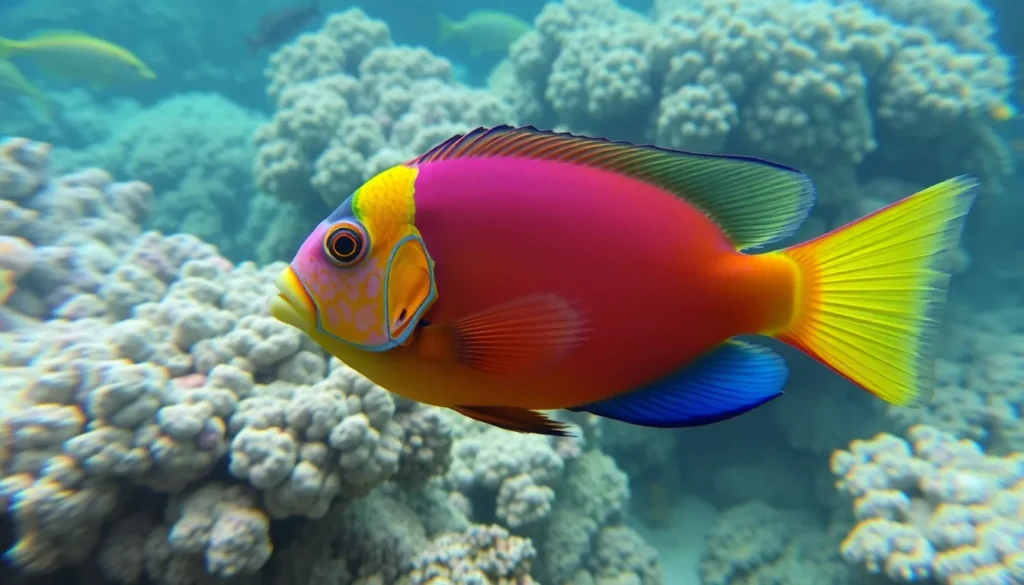
- Color pattern shifts: Parrotfish often change coloration to signal their new gender and social status.
- Environmental triggers: Factors such as population density and social cues can trigger gender switching.
- Reproductive advantage: Gender switching maximizes reproductive success by allowing individuals to function as the sex most beneficial at a given life stage.
- Species variation: Not all parrotfish species exhibit gender switching; the behavior varies by species and environmental conditions.
- Growth-related change: Sex change usually occurs after the fish reaches a certain size or age.
- Impact on population dynamics: This flexibility helps stabilize population sex ratios in changing environments.
- Role in coral reefs: Gender switching supports social stability critical for parrotfish roles in reef ecosystems.
- Behavioral changes: Males often exhibit territorial and mating behaviors post-transition not seen in females.
- Genetic control: While genetics play a role, environmental and social factors are key triggers for sex change.
- Reversibility rarity: Once changed, the sex switch is typically irreversible in parrotfish.
- Similar mechanisms in other fish: Gender switching is common in several reef fish families, not just parrotfish.
- Importance for aquaculture: Understanding gender switching is important for managing breeding in captive parrotfish populations.
- Protective coloration: Color change during sex switching also aids in camouflage and communication.
- Sexual dimorphism: Male and female parrotfish can differ markedly in size, shape, and color, especially after sex change.
- Reproductive timing: Sex change timing is often synchronized with breeding seasons for optimal mating success.
- Research significance: Parrotfish gender switching provides insight into vertebrate sexual development and evolutionary biology.
Habitat and Behavior
Parrotfish are primarily found in tropical and subtropical coral reefs throughout the Atlantic, Indian, and Pacific Oceans. They inhabit shallow reef environments where they play a crucial role in bioerosion and reef maintenance by feeding on algae and dead coral. Parrotfish exhibit diurnal activity patterns, grazing during the day and seeking shelter at night. Their social behavior is complex, with groups often consisting of one dominant male and multiple females. Gender switching plays a significant role in maintaining this social structure, as the absence of a dominant male may prompt the largest female to transform into a male. This reproductive strategy ensures that mating opportunities are optimized and social hierarchies remain stable in their reef communities.
Why This Animal Matters
Parrotfish are vital to coral reef ecosystems due to their herbivorous diet, which helps control algal growth and promotes coral health. Their gender-switching ability supports dynamic social systems that enhance reproductive efficiency and population resilience. Ecologically, this adaptability contributes to reef biodiversity and stability. From a conservation perspective, understanding parrotfish reproductive biology, including gender switching, aids in managing reef fish populations threatened by overfishing and habitat degradation. Culturally, parrotfish are significant in many coastal communities for subsistence and economic reasons, underscoring the importance of sustainable management of these species.
Common Misconceptions
Misconception: All parrotfish are born male and switch to female.
Correction: Most parrotfish are born female and switch to male (protogynous hermaphroditism), though some species have primary males born as males.
Misconception: Gender switching in parrotfish is a quick process.
Correction: The transition is gradual, involving physiological, morphological, and behavioral changes over days to weeks.
Misconception: Parrotfish can switch back and forth between genders multiple times.
Correction: Once a parrotfish switches sex, it generally remains that sex for life.
Misconception: Gender switching is purely genetically determined.
Correction: Environmental and social factors largely influence whether and when parrotfish switch sex.
Misconception: Gender switching occurs in all fish species.
Correction: Gender switching is relatively rare and occurs mostly in certain fish families, such as wrasses and parrotfish.
FAQ
What is gender switching in parrotfish?
Gender switching in parrotfish is the process where individuals change their sex, usually from female to male, as part of their natural reproductive cycle.
Why do parrotfish change sex?
Parrotfish change sex to maximize reproductive success and maintain social hierarchies, often triggered by the absence of a dominant male in their group.
Is gender switching common in all fish?
No, gender switching is relatively rare and occurs predominantly in certain reef fish families like parrotfish and wrasses.




Leave a Reply