
Short Answer
21 Facts About Wolf Packs
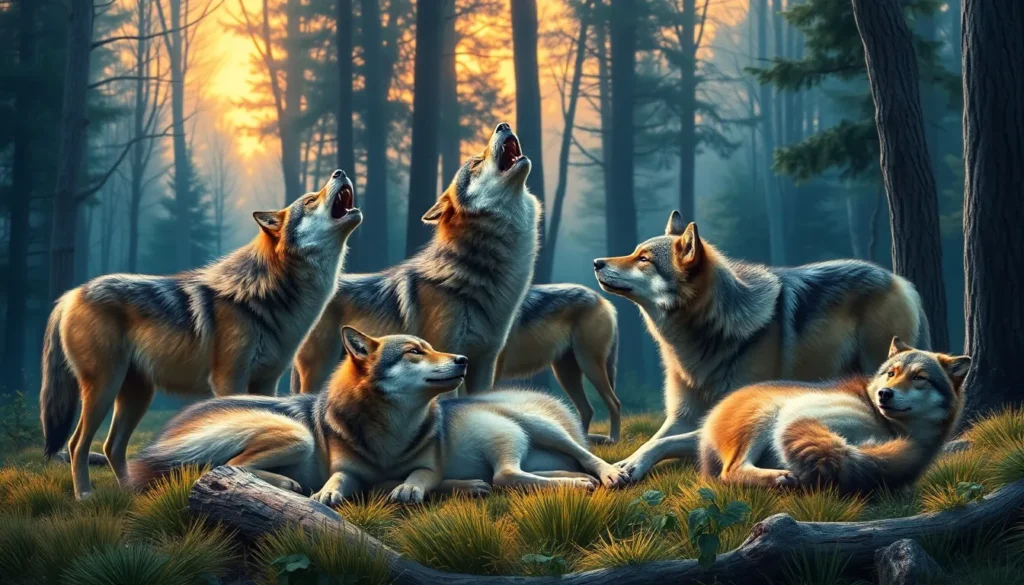
- Wolf packs are family units. Typically, a pack consists of a breeding pair (often called the alpha male and female) and their offspring from several years.
- Packs vary in size. The average pack size ranges from 6 to 10 wolves, but it can be smaller or larger depending on prey availability and habitat.
- Alpha terminology is oversimplified. The concept of an “alpha” wolf leading through dominance has been revised; leadership is more about parental roles and social bonds.
- Communication within packs is complex. Wolves use vocalizations such as howls, body language, and scent marking to coordinate and maintain social bonds.
- Hunting cooperatively increases success. Packs work together to hunt large prey, such as deer or elk, which would be difficult for a lone wolf to catch.
- Territorial behavior is strong. Packs defend territories that can range from 50 to over 1,000 square miles depending on habitat and prey density.
- Pups are raised communally. All pack members help care for and protect the young.
- Hierarchy is maintained through subtle social cues. Dominance is established more by respect and family ties than by aggression.
- Dispersal is key to genetic diversity. Young wolves leave their natal pack to find mates and establish new packs, preventing inbreeding.
- Wolf packs have a stable core. The breeding pair generally remains consistent for many years, providing stability.
- Howling serves multiple purposes. It helps locate pack members, signal territory boundaries, and strengthen social bonds.
- Pack members show cooperative care. Injured or sick wolves may be fed and protected by others, demonstrating social empathy.
- Dominant breeding pair controls reproduction. Usually, only the alpha pair breeds, while subordinate wolves do not reproduce.
- Social learning occurs. Younger wolves learn hunting and social behaviors by observing older, more experienced pack members.
- Wolf packs adapt to environmental conditions. Pack size and hunting strategies can change based on prey availability and competition.
- Territorial disputes can lead to pack conflicts. Encounters with rival packs may result in vocal confrontations or physical fights to defend territory.
- Wolves use scent marking extensively. Urine, feces, and gland secretions mark territory boundaries and individual identity.
- Subordinate wolves often assist in hunting and pup rearing. Their cooperation is vital for the pack’s survival even if they do not reproduce.
- Wolf pack social structure influences survival rates. Packs with strong cohesion tend to have higher pup survival and hunting success.
- Wolf packs show seasonal behavioral changes. Breeding, pup rearing, and hunting patterns shift with the seasons to optimize survival.
- Human activity affects pack dynamics. Habitat loss, hunting, and conflict with livestock can disrupt social structures and reduce pack sizes.
Habitat and Behavior
Wolf packs inhabit a wide range of environments, including forests, tundras, grasslands, and deserts across North America, Europe, and Asia. Their behavior is adapted to the availability of prey and environmental conditions. Wolves are territorial and rely on scent marking and howling to communicate territory boundaries and pack cohesion. Pack members cooperate in hunting strategies to take down large prey. The social structure revolves around the breeding pair and their offspring, with a clear but flexible hierarchy maintained through social bonds rather than aggression. Dispersal of young wolves is critical for maintaining genetic diversity and establishing new packs. Seasonal changes influence pack activities, with breeding and pup rearing occurring typically in late winter and spring.
Why This Animal Matters
Wolf packs play a crucial ecological role as apex predators, helping regulate prey populations and maintain ecosystem balance. By controlling herbivore numbers, they indirectly support vegetation health and biodiversity. Wolves have cultural significance in many societies, symbolizing wilderness and social cooperation. Conservation of wolf populations and their pack structures is vital, as human activities such as habitat destruction and persecution have historically threatened their survival. Understanding wolf pack dynamics helps inform conservation strategies to protect these important predators and their habitats.
Common Misconceptions
Misconception: Wolf packs are always led by aggressive alpha wolves.
Correction: Modern research shows that leadership is often based on parental roles and social bonds rather than dominance through aggression.
Misconception: All wolves in a pack get to breed.
Correction: Typically, only the dominant breeding pair reproduces, while other pack members assist in raising the pups.
FAQ
What defines a wolf pack?
A wolf pack is generally defined as a family group consisting of a breeding pair and their offspring, working cooperatively for hunting, territory defense, and pup rearing.
Do all wolves in a pack get to breed?
No, typically only the dominant breeding pair reproduces, while other members assist in raising the pups.
Why do young wolves leave their pack?
Young wolves disperse to find mates and establish their own territories, which helps prevent inbreeding and promotes genetic diversity.




Leave a Reply