

Short Answer
21 Facts About Deception in Animals
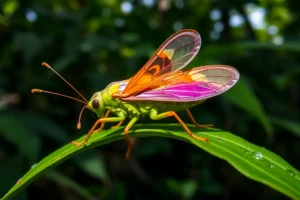
- Camouflage as a form of deception. Many animals, such as leaf insects and stick insects, blend into their environments to avoid predators by mimicking leaves or sticks.
- Mimicry to deceive predators or prey. The harmless king snake mimics the coloration of the venomous coral snake to deter predators, a phenomenon known as Batesian mimicry.
- False eye spots to misdirect attacks. Butterflies and fish sometimes have eye-like patterns on their bodies that confuse predators about the location of vital body parts.
- Feigning death to avoid predation. Opossums famously play dead, a behavior called thanatosis, to escape threats.
- Distraction displays. Some ground-nesting birds, like the killdeer, perform injury-feigning behaviors to lure predators away from their nests.
- Deceptive signaling in mating. Male cuttlefish can change their coloration to resemble females, fooling rival males and gaining mating opportunities.
- Alarm call deception. Certain bird species use false alarm calls to scare off competitors and protect food sources.
- Brood parasitism involves deception. Cuckoo birds lay eggs in other birds’ nests, tricking them into raising cuckoo chicks.
- Tool use to deceive prey. Some predators, like the archerfish, shoot water jets at insects, capitalizing on their prey’s inability to detect the attack source.
- Deceptive coloration in spiders. Some orb-weaver spiders mimic bird droppings to avoid predation.
- Social deception among primates. Chimpanzees have been observed hiding food or misleading rivals to gain competitive advantages.
- False mating signals. Male fireflies of some species mimic the flash patterns of other species to lure and prey on females.
- Deceptive vocalizations. Certain species of birds and mammals imitate calls of other species to gain access to resources or confuse predators.
- Deceptive body postures. Some lizards puff up or display threatening postures to appear larger and deter predators.
- Use of bioluminescence for deception. Deep-sea creatures like the anglerfish use glowing lures to attract prey in the darkness.
- Deceptive egg coloration. Some fish and amphibians lay eggs that resemble those of other species to reduce predation risk.
- Deceptive scent marking. Wolves and other canids sometimes alter scent marks to deceive rivals about territory boundaries.
- Deceptive begging behavior by offspring. Some bird chicks exaggerate their hunger signals to receive more food from parents.
- Deceptive alarm calls within species. Meerkats use false alarms to gain access to food or manipulate group behavior.
- Deceptive cooperation. Cleaner fish sometimes cheat by eating mucus instead of parasites, deceiving their clients.
- Deceptive mimicry by harmless animals of dangerous ones. The viceroy butterfly mimics the monarch butterfly’s warning coloration to avoid predation.
Habitat and Behavior
Deceptive behaviors occur across a wide range of habitats, including forests, oceans, deserts, and freshwater environments. These behaviors are often adapted to the ecological conditions and predator-prey dynamics of the species’ habitat. For example, camouflage and mimicry are prevalent in dense forests and coral reefs where visual deception is effective. Social deception tends to be more common in animals with complex social structures such as primates, birds, and canids. Deceptive tactics aid survival by reducing predation risk, increasing mating success, or improving access to resources.
Why This Animal Matters
Deceptive behaviors in animals illuminate the complexity of evolutionary adaptations and communication in the natural world. They showcase the intricate arms race between predators and prey and contribute significantly to species survival and ecological balance. Understanding these behaviors aids conservation efforts by highlighting the importance of habitat preservation, as these adaptations often rely on specific environmental contexts. Moreover, studying deception in animals provides insights into cognition, social interaction, and evolutionary biology.
Common Misconceptions
Misconception: Deception in animals is always intentional and conscious.
Correction: While some animals demonstrate cognitive abilities related to deception, many deceptive behaviors are instinctual adaptations rather than deliberate acts.
Misconception: Only highly intelligent animals, like primates, engage in deception.
Correction: Deceptive behaviors occur in a broad range of species, including insects, fish, and birds, indicating that complex cognition is not always required.
Misconception: All mimicry is a form of deception to avoid predation.
Correction: Mimicry can serve various purposes, including attracting mates or luring prey, not just predator avoidance.
Misconception: Deceptive behaviors are rare and unusual.
Correction: Deception is widespread and a common survival strategy across many animal taxa.
FAQ
What is deception in animals?
Deception in animals refers to behaviors that mislead other animals, including predators, prey, or conspecifics, to gain an advantage such as avoiding predation, securing food, or reproductive success.
Are deceptive behaviors in animals always learned?
Not necessarily. While some deception involves learning and cognitive skills, many deceptive behaviors are innate and have evolved through natural selection.
How does mimicry differ from camouflage?
Camouflage allows an animal to blend into its background to avoid detection, while mimicry involves resembling another species or object, often to deceive predators or prey by imitation.




Leave a Reply