
Short Answer
21 Facts About Oncilla (Wild Cat)
- Scientific Name: The oncilla is scientifically known as Leopardus tigrinus.
- Size: It is one of the smallest wild cat species, typically weighing between 1.5 to 3.5 kilograms (3.3 to 7.7 pounds).
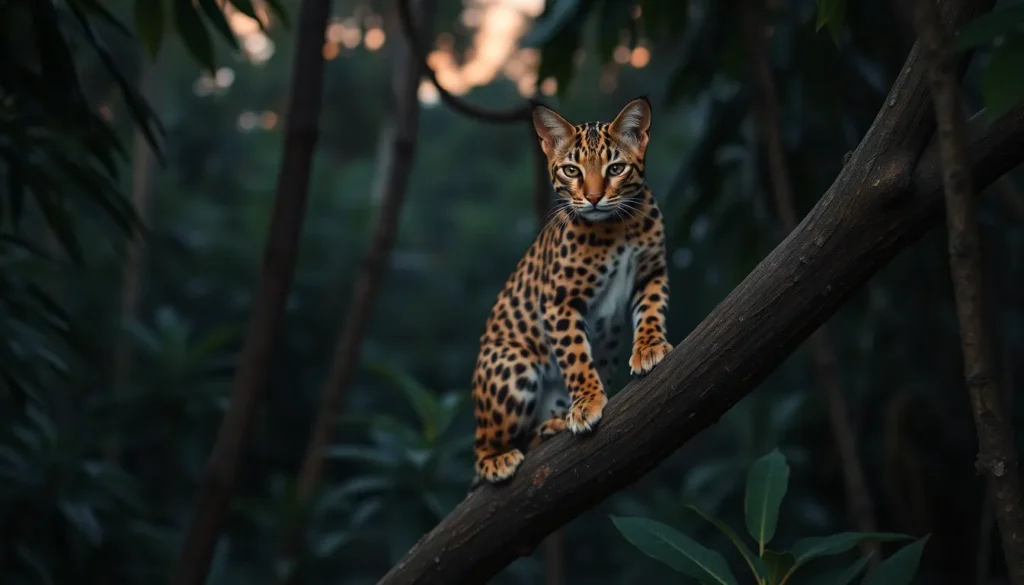
- Appearance: The oncilla has a distinctive coat marked with small, irregularly shaped rosettes and spots on a tawny yellow or reddish background.
- Distribution: It is native to Central and South America, with populations found from Costa Rica through the Amazon basin to northern Argentina.
- Habitat: Oncillas prefer tropical and subtropical forests, including cloud forests, rainforests, and montane forests.
- Nocturnal Behavior: This species is primarily nocturnal, hunting mainly at night and resting during the day.
- Diet: Oncillas are carnivorous, feeding on small mammals, birds, reptiles, and insects.
- Climbing Ability: They are adept climbers, often hunting and resting in trees.
- Territoriality: Oncillas maintain territories that they mark with scent markings and scratches.
- Reproduction: The gestation period lasts around 74 to 76 days, usually resulting in one to three kittens per litter.
- Vocalizations: They communicate through a series of calls including purrs, growls, and hisses.
- Conservation Status: Classified as Vulnerable by the International Union for Conservation of Nature (IUCN) due to habitat loss and fragmentation.
- Population Threats: Deforestation, human encroachment, and illegal hunting pose significant risks to oncilla populations.
- Camouflage: Their spotted coat provides effective camouflage in the dappled light of forest environments.
- Lifespan: In the wild, oncillas can live up to 11 years, while in captivity they may live longer.
- Taxonomy: The oncilla belongs to the genus Leopardus, which includes other small spotted cats of the Americas.
- Behavioral Traits: They are solitary animals, coming together only for mating.
- Activity Range: Home ranges vary, but they are generally small due to their size and prey availability.
- Adaptability: Oncillas can adapt to various forest types but are sensitive to extensive habitat disturbance.
- Research Challenges: Their elusive nature and similarity to other small cats make them difficult to study in the wild.
- Conservation Efforts: Several protected areas in South America help conserve oncilla habitats, and research is ongoing to better understand their ecology.
Habitat and Behavior
The oncilla inhabits a range of forested environments across Central and South America, including cloud forests, tropical rainforests, and montane regions. It prefers dense vegetation that provides cover for hunting and protection from predators. Primarily nocturnal, the oncilla spends daylight hours resting in trees or dense foliage. Its arboreal skills allow it to climb trees efficiently, which it uses both for hunting prey such as birds and small mammals and for avoiding larger predators. Solitary by nature, oncillas maintain and defend territories marked by scent. They are carnivorous predators, using stealth and agility to capture a variety of small animals. The species’ elusive behavior and camouflage make direct observation challenging, contributing to limited data on its population dynamics and ecology.
Why This Animal Matters
The oncilla plays a significant ecological role as a small predator in its ecosystem, helping to regulate populations of rodents, birds, and insects. This predation maintains balanced food webs within forest habitats. Culturally, the oncilla is part of the rich biodiversity of Central and South America and contributes to the region’s natural heritage. Conservation-wise, the oncilla serves as an indicator species for forest health, as its presence reflects intact and functioning ecosystems. Protecting the oncilla also aids in the conservation of broader forest habitats and the many other species that share them, highlighting its importance in biodiversity preservation efforts.
Common Misconceptions
Misconception: The oncilla is a small leopard or a baby jaguar.
Correction: Although the oncilla has a spotted coat that might resemble leopards or jaguars, it is a distinct species of small wild cat native to the Americas and is unrelated to true leopards, which are native to Africa and Asia.
Misconception: Oncillas are common and not at risk.
Correction: Oncillas are considered Vulnerable due to habitat loss and fragmentation, and their populations are declining in many parts of their range.
Misconception: Oncillas can be kept as pets.
Correction: Oncillas are wild animals with specific ecological needs and behaviors; they are not suitable as pets and are protected under wildlife conservation laws in many countries.
FAQ
What is the main diet of the oncilla?
The oncilla primarily feeds on small mammals, birds, reptiles, and insects, employing stealth and nocturnal hunting strategies.
Where is the oncilla typically found?
The oncilla is found in tropical and subtropical forests throughout Central and South America, including countries such as Costa Rica, Brazil, and Argentina.
Why is the oncilla considered vulnerable?
The oncilla is classified as Vulnerable due to habitat loss, deforestation, fragmentation, and illegal hunting, which have led to population declines.



Leave a Reply