
Short Answer
21 Facts About Vultures
- Vultures are scavengers. They primarily feed on carrion, the remains of dead animals, playing a crucial role in ecosystems by preventing the spread of disease.
- Two main groups of vultures exist. Old World vultures belong to the family Accipitridae, while New World vultures belong to the family Cathartidae, though they are not closely related.
- Vultures have a strong stomach acid. Their digestive systems can neutralize dangerous bacteria and toxins found in decaying meat.
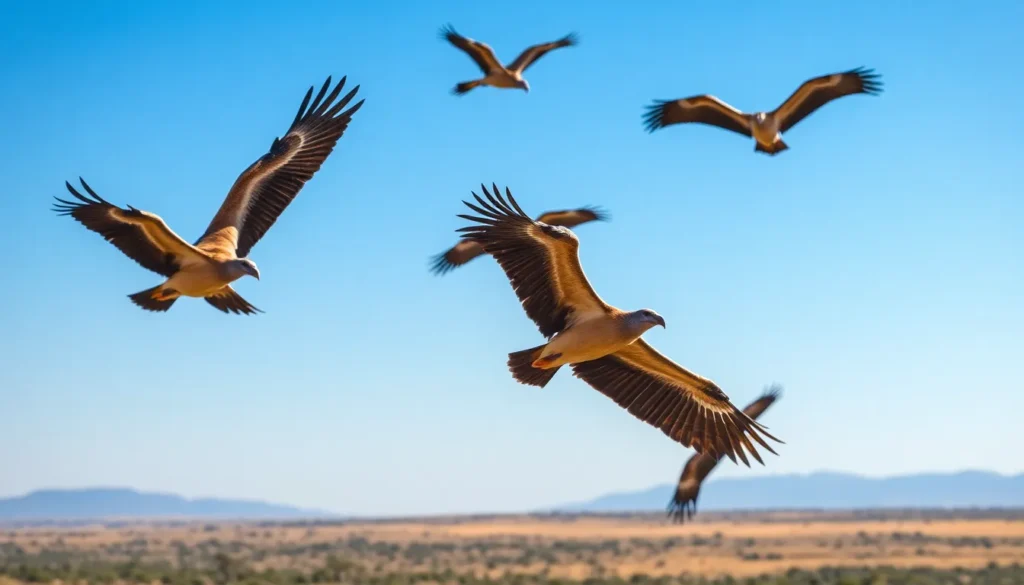
- They have excellent eyesight. Vultures can spot carcasses from miles away while soaring high in the sky.
- Bald heads are common among vultures. The lack of feathers helps keep their heads clean when feeding inside carcasses.
- Some vultures use tools. For example, Egyptian vultures use rocks to crack open ostrich eggs.
- Vultures play a critical ecological role. By consuming dead animals, they help recycle nutrients and reduce disease outbreaks in wildlife and human populations.
- Vultures are found on every continent except Australia and Antarctica. They inhabit diverse environments including savannas, deserts, and mountains.
- Many vulture species are endangered or threatened. Causes include poisoning, habitat loss, and collisions with man-made objects.
- Vultures often soar for hours without flapping their wings. They rely on thermal updrafts to conserve energy while searching for food.
- Some vultures nest on cliffs or tall trees. These elevated sites provide safety from predators and good vantage points.
- Vultures are social birds. They often feed and roost in groups, which can range from a few individuals to hundreds.
- Unlike many birds of prey, vultures do not have strong talons. Instead, their feet are adapted for walking and holding carcasses.
- Vultures communicate through body language and occasional hisses or grunts. They lack a syrinx and cannot produce complex vocalizations.
- New World vultures have a keen sense of smell. This is rare among birds and helps them locate hidden carrion.
- Old World vultures rely mostly on sight, not smell. They often watch other scavengers to find food.
- Vultures have been culturally significant. In many societies, they symbolize death, cleansing, or rebirth.
- Some vultures have been used in traditional medicine. This practice has contributed to population declines in certain regions.
- Conservation efforts include captive breeding and anti-poisoning campaigns. These aim to stabilize and recover vulture populations globally.
- Vultures can consume large amounts of food in a single feeding. Some species eat up to 20% of their body weight at once.
- Vultures contribute to preventing the spread of zoonotic diseases. By quickly removing carcasses, they limit opportunities for pathogens to infect other animals or humans.
Habitat and Behavior
Vultures inhabit a wide range of environments including open plains, deserts, mountains, and forests. Their distribution spans most continents except Australia and Antarctica. They are highly adapted to soaring flight, using thermal updrafts to cover vast areas with minimal energy expenditure while searching for carrion. Social behavior is common, with vultures often forming large groups at feeding sites or communal roosts. Nesting varies by species but typically involves cliffs, tall trees, or secluded ground sites. Their feeding behavior involves locating carcasses through keen eyesight or, in New World species, a strong sense of smell. Vultures tend to avoid fresh kills and prefer dead or decomposed animals, playing a vital role in natural recycling processes.
Why This Animal Matters
Vultures serve an essential ecological function by consuming dead animals that could otherwise become breeding grounds for bacteria and disease. This scavenging behavior helps control the spread of pathogens such as anthrax and rabies, benefiting both wildlife and human populations. Additionally, vultures contribute to nutrient cycling by breaking down carcass matter and returning nutrients to the soil. Their cultural importance varies worldwide, with some societies revering them as symbols of purification or death. Conservation concerns have increased due to declining populations caused by poisoning, habitat destruction, and human activity. Protecting vultures has become a priority to maintain ecosystem health and biodiversity.
Common Misconceptions
Misconception: Vultures actively kill animals for food.
Correction: Vultures are primarily scavengers that feed on dead animals and rarely, if ever, kill live prey.
Misconception: All vultures have a bad sense of smell.
Correction: While Old World vultures rely mostly on sight, New World vultures, such as the turkey vulture, have a highly developed sense of smell to locate carrion.
Misconception: Vultures spread diseases because they eat dead animals.
Correction: Vultures help prevent the spread of diseases by rapidly consuming carcasses and destroying harmful pathogens through their powerful digestive systems.
Misconception: Vultures are solitary birds.
Correction: Many vulture species are social and often feed, roost, and nest in groups.
Misconception: Vultures are dirty or unattractive birds.
Correction: Their bald heads and specialized behaviors are evolutionary adaptations suited to their scavenging lifestyle, not indicators of uncleanliness.
FAQ
Why do vultures have bald heads?
Vultures have bald heads to help keep clean when feeding inside carcasses. Feathers would trap bacteria and blood, so a featherless head reduces the risk of infection.
Do vultures kill animals for food?
No, vultures are primarily scavengers that feed on dead animals. They rarely hunt live prey and depend mainly on carrion for their diet.
How do vultures help prevent disease?
By consuming carcasses quickly, vultures reduce the spread of harmful bacteria and pathogens that can cause diseases in wildlife, livestock, and humans.




Leave a Reply