
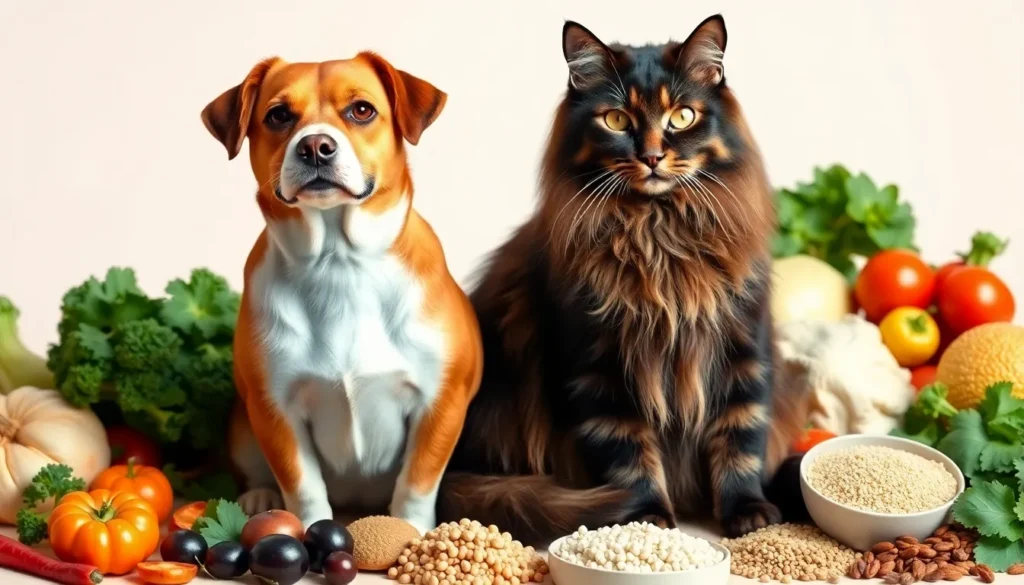
Short Answer
21 Facts About Dogs and Cats on Vegetarian and Vegan Diets
- Dogs are omnivores: Unlike cats, dogs have evolved to digest both animal and plant-based foods, which makes adapting to vegetarian or vegan diets more feasible for them.
- Cats are obligate carnivores: Cats require specific nutrients found primarily in animal tissues, such as taurine, arachidonic acid, and vitamin A, which makes vegetarian or vegan diets challenging and potentially unsafe without careful supplementation.
- Plant-based diets require careful formulation: To meet all nutritional needs, vegetarian and vegan pet diets must be balanced and supplemented properly to avoid deficiencies.
- Commercial vegan pet foods exist: There are commercially available vegan dog and cat foods designed to provide balanced nutrition, but their long-term effects require further study.
- Protein sources differ: Vegetarian and vegan pet foods often use soy, peas, lentils, and other legumes as primary protein sources instead of meat.
- Taurine supplementation is critical for cats: Since cats cannot synthesize enough taurine, vegan cat diets must include synthetic taurine to prevent heart and eye diseases.
- Vitamin B12 is essential: This vitamin is naturally found in animal products, so vegan diets for pets require B12 supplementation.
- Digestive adaptations vary: Dogs have a more flexible digestive system than cats, enabling better digestion of plant materials.
- Health outcomes are mixed: Some dogs on vegetarian or vegan diets have shown good health, but long-term studies are limited, especially for cats.
- Risk of nutrient deficiencies: Improperly formulated vegetarian or vegan diets can lead to deficiencies in essential amino acids, fatty acids, vitamins, and minerals.
- Ethical motivations: Owners may choose vegetarian or vegan diets for pets due to concerns about animal welfare and environmental impact.
- Veterinary opinions vary: Many veterinarians caution against vegan diets for cats, while some acknowledge that vegan diets can be carefully managed for dogs.
- Homemade diets require expertise: Creating balanced vegetarian or vegan meals at home for pets demands precise knowledge and supplementation to avoid health risks.
- Palatability challenges: Some pets may reject plant-based diets due to taste preferences, especially cats accustomed to meat flavors.
- Obesity and weight management: Vegetarian diets can be formulated to be lower in fat, potentially helping with weight control in pets.
- Environmental impact: Plant-based pet diets generally have a lower environmental footprint compared to meat-based diets.
- Allergies and sensitivities: Vegetarian and vegan diets may benefit pets with allergies to certain animal proteins.
- Monitoring is essential: Regular veterinary check-ups and blood work are recommended for pets on vegetarian or vegan diets.
- Behavioral effects are unclear: Limited evidence exists on how plant-based diets affect pet behavior and activity levels.
- Legal and regulatory considerations: Some countries have regulations regarding pet food nutrition and labeling that impact vegetarian and vegan products.
- Growing market trend: Interest in vegetarian and vegan pet diets is increasing, reflecting broader consumer trends in human nutrition.
Habitat and Behavior
Dogs (Canis lupus familiaris) are domesticated descendants of wolves and have adapted to diverse environments worldwide, living closely with humans. They are omnivorous, capable of consuming a variety of foods, and display flexible feeding behaviors. Cats (Felis catus) are obligate carnivores and solitary hunters by nature, requiring animal proteins to thrive. Both species depend on humans for food when domesticated, and their behavior and survival have been shaped by this close relationship. In wild or feral states, cats hunt small prey for essential nutrients, while dogs may scavenge or hunt in packs.
Why This Animal Matters
Dogs and cats hold significant ecological, cultural, and social roles. Ecologically, feral populations can impact native wildlife. Culturally, they are among the most popular companion animals globally, contributing to human well-being. The choice of diet for these animals reflects evolving ethical considerations about animal welfare and environmental sustainability. Understanding the nutritional needs and impacts of vegetarian and vegan diets on these pets is important for animal health, owner responsibility, and the pet food industry.
Common Misconceptions
Misconception: Cats can thrive on a vegan diet just like dogs.
Correction: Cats are obligate carnivores requiring nutrients found in animal tissues; vegan diets for cats must be carefully supplemented and are generally not recommended without veterinary guidance.
Misconception: All dogs can safely eat vegetarian or vegan diets without health risks.
Correction: While dogs are omnivores, vegetarian and vegan diets must be properly balanced and supplemented to avoid nutrient deficiencies and health problems.
Misconception: Homemade vegetarian or vegan pet diets are sufficient without professional input.
Correction: Homemade diets require expert formulation and supplementation to ensure complete nutrition and avoid serious health issues.
Misconception: Vegetarian or vegan diets are always better for the environment.
Correction: Plant-based diets generally reduce environmental impact, but sourcing, processing, and transport factors also influence sustainability.
Misconception: Pets will naturally prefer vegetarian or vegan foods.
Correction: Many pets, especially cats, have strong preferences for meat flavors and may reject plant-based diets without gradual adaptation or flavor enhancements.
FAQ
Can cats survive on a vegetarian or vegan diet?
Cats are obligate carnivores and require nutrients like taurine, which are primarily found in animal tissues. Vegan diets can be risky and must be carefully supplemented under veterinary supervision to avoid serious health problems.
Are vegetarian diets safe for dogs?
Dogs are omnivores and can adapt to vegetarian diets if these are well-balanced and supplemented properly. However, poorly planned diets may result in nutritional deficiencies.
What are the main challenges of feeding pets a vegan diet?
Challenges include ensuring complete nutrition, supplementing essential amino acids and vitamins, maintaining palatability, and monitoring health to prevent deficiencies or adverse effects.

Leave a Reply