
Short Answer
21 Facts About Takahe
- Endemic to New Zealand
The takahe (Porphyrio hochstetteri) is native exclusively to New Zealand and is not naturally found anywhere else in the world. - Flightless Bird
Unlike many birds, the takahe has lost the ability to fly due to its relatively large size and small wings, adapting instead to a terrestrial lifestyle. - Large Size
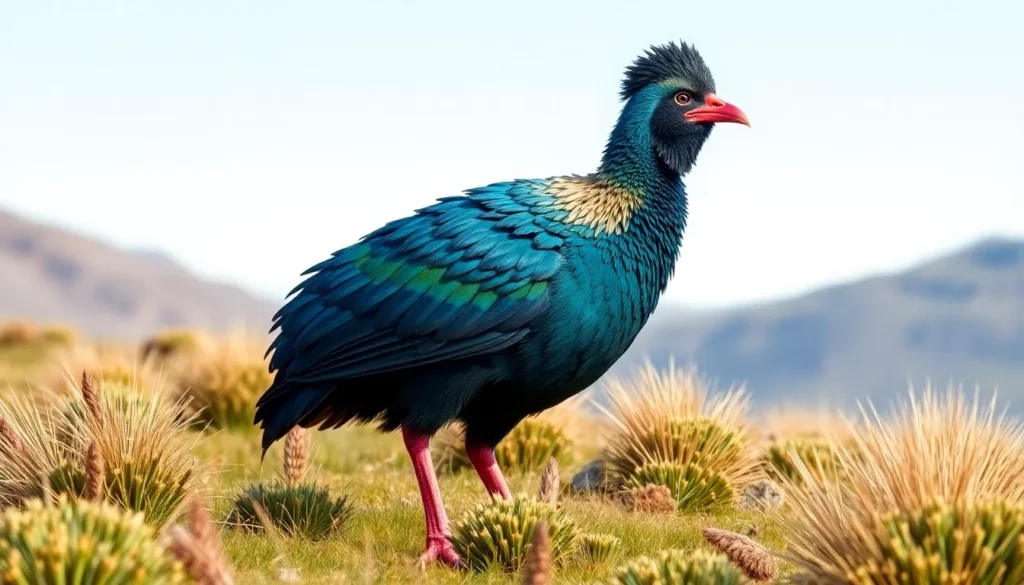
It is one of the largest members of the rail family, measuring about 63 cm (25 inches) in length and weighing up to 3.5 kg (7.7 lbs). - Colorful Plumage
Takahes have vibrant blue and green feathers, with a bright red beak and legs, making them visually distinctive. - Herbivorous Diet
They primarily eat grasses, shoots, and seeds, using their strong beaks to cut tough plant material. - Once Thought Extinct
The takahe was believed to be extinct after the late 19th century until a small population was rediscovered in 1948. - Conservation Efforts
Since its rediscovery, the takahe has been the subject of intensive conservation programs, including captive breeding and habitat protection. - Habitat Preferences
The takahe prefers alpine grasslands and tussock plains but has also adapted to island sanctuaries. - Slow Reproductive Rate
Takahes typically breed once per year, laying one to three eggs, which contributes to their vulnerability. - Long Lifespan
In the wild and captivity, takahe can live for up to 20 years or more. - Strong Legs
They have powerful legs adapted for walking, running, and even jumping to escape predators. - Secretive Nature
Takahes are generally shy and elusive, making them difficult to observe in the wild. - Social Behavior
They are usually solitary or live in pairs, especially during the breeding season. - Vocalizations
Takahes communicate through a variety of calls, including grunts and whistles, used to signal alarm or maintain contact. - Introduced Predators
Predation by introduced mammals like stoats and rats has been a major factor in their population decline. - Protected Species
The takahe is legally protected under New Zealand law, with efforts aimed at habitat restoration and predator control. - Ecological Role
As herbivores, takahe influence vegetation dynamics by grazing and seed dispersal. - Cultural Significance
The takahe holds importance in Māori culture and is a symbol of New Zealand’s unique wildlife heritage. - Genetic Studies
Genetic research has helped clarify the takahe’s evolutionary relationships within the rail family and informs conservation strategies. - Captive Breeding Success
Captive breeding programs have increased population numbers and allowed reintroductions to predator-free islands. - Ongoing Threats
Despite conservation gains, habitat loss and the risk of disease remain ongoing challenges for takahe survival.
Habitat and Behavior
The takahe primarily inhabits alpine grasslands and subalpine tussock areas in New Zealand. After their rediscovery in the Murchison Mountains, conservationists established predator-free island sanctuaries to provide safe habitats. These birds are flightless, relying on strong legs for movement, and are adapted to dense, grassy environments where they forage for tough vegetation. Takahes are mostly solitary or found in pairs and are known to be secretive, which makes studying their behavior challenging. Their diet consists mainly of various grasses and shoots, and they play an important ecological role by grazing and affecting plant community structures. Breeding occurs annually with small clutches, and both parents are involved in caring for the young. Their survival depends heavily on continuous predator control and habitat management.
Why This Animal Matters
The takahe is an important species for several reasons. Ecologically, as a large herbivore, it helps shape the vegetation of its alpine habitat, influencing plant species composition and promoting biodiversity. Culturally, the takahe is a symbol of New Zealand’s unique endemic fauna and holds significance in Māori traditions and conservation narratives. From a conservation perspective, the takahe is emblematic of the challenges faced by flightless birds in island ecosystems, particularly regarding introduced predators and habitat loss. Its survival story highlights the successes and ongoing efforts in species recovery programs, representing a flagship species for conservation in New Zealand. Protecting the takahe also helps preserve the broader ecological integrity of its native habitats.
Common Misconceptions
Misconception: The takahe is extinct.
Correction: Although once thought extinct, the takahe was rediscovered in 1948 and currently survives due to active conservation efforts.
Misconception: The takahe can fly.
Correction: The takahe is a flightless bird, having lost the ability to fly and adapted to a terrestrial lifestyle.
Misconception: The takahe is a type of kiwi bird.
Correction: The takahe is not a kiwi; it belongs to the rail family and differs significantly in appearance and behavior.
Misconception: Takahes are aggressive birds.
Correction: Takahes are generally shy and elusive rather than aggressive, avoiding human contact when possible.
Misconception: The takahe’s population is no longer at risk.
Correction: Despite conservation progress, the takahe remains vulnerable due to habitat limitations and predation threats.
FAQ
Why is the takahe flightless?
The takahe is flightless due to evolutionary adaptations that favored a terrestrial lifestyle with strong legs for walking and running, resulting in reduced wing size and inability to fly.
How was the takahe rediscovered?
The takahe was rediscovered in 1948 in the remote Murchison Mountains of New Zealand after being presumed extinct for several decades, when a small population was found by conservationists.
What are the main threats to the takahe today?
The primary threats include habitat loss, predation by introduced mammals like stoats and rats, and limited genetic diversity, all of which pose challenges to the species' survival.






Leave a Reply