
Short Answer
21 Facts About Goliath Birdeater (Spider)
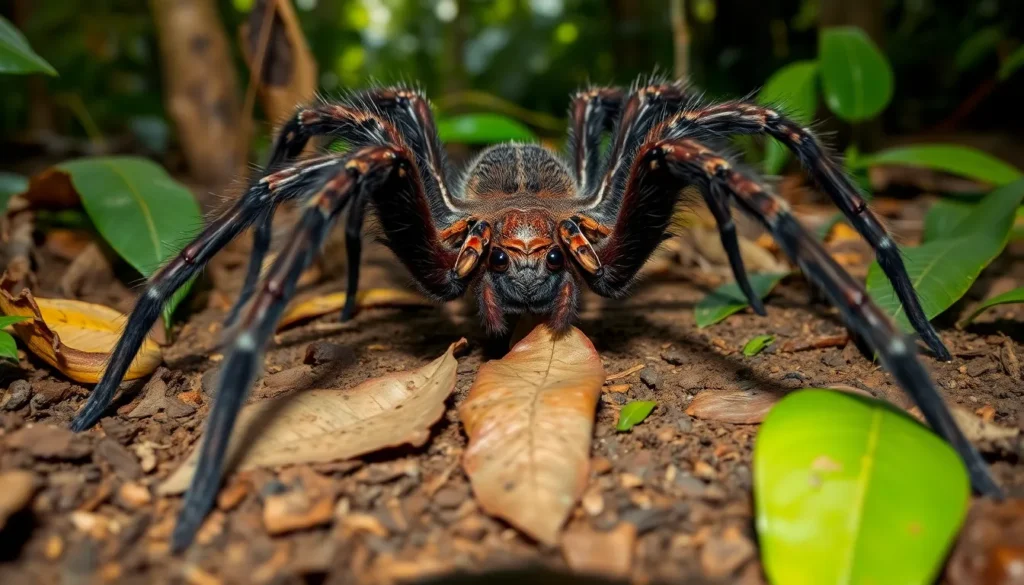
- Largest Spider by Mass: The Goliath birdeater (Theraphosa blondi) is recognized as the largest spider by mass, with some individuals weighing over 170 grams.
- Impressive Leg Span: It can have a leg span reaching up to 30 centimeters (approximately 12 inches), making it one of the largest spiders by leg span as well.
- Native Range: This spider is native to the rainforests of northern South America, particularly in countries such as Brazil, Venezuela, Suriname, and Guyana.
- Diet Includes Small Vertebrates: Despite its name, it rarely eats birds; its diet mainly consists of insects, frogs, small rodents, and occasionally small snakes or lizards.
- Nocturnal Hunter: The Goliath birdeater is primarily nocturnal, hunting at night using its sensitive hairs to detect prey.
- Defensive Behaviors: When threatened, it can rub specialized hairs (urticating hairs) off its abdomen, which irritate the skin and mucous membranes of potential predators.
- Venom Properties: It possesses venom that is relatively mild to humans, causing localized pain and swelling but is not considered dangerous.
- Burrowing Lifestyle: The spider constructs burrows or uses natural shelters on the forest floor to rest and hide during the day.
- Molting Process: Like other tarantulas, the Goliath birdeater molts its exoskeleton periodically to grow, a process that can take several hours to complete.
- Longevity: Females can live up to 15–25 years in captivity, whereas males typically have shorter lifespans, often dying shortly after reaching maturity.
- Reproductive Behavior: Females lay eggs within a silk egg sac, guarding it until spiderlings emerge several weeks later.
- Silk Use: Although it does not spin typical webs for catching prey, it uses silk to line its burrow and protect its egg sacs.
- Slow Movers: The Goliath birdeater is generally slow-moving but can deliver a rapid bite or escape quickly when necessary.
- Predators: Natural predators include large birds, snakes, and small mammals that can overcome the spider’s defenses.
- Role in the Ecosystem: As a predator of insects and small vertebrates, it helps control population levels and contributes to rainforest biodiversity.
- Scientific Interest: This spider’s large size and defensive behaviors make it a subject of study in arachnology and venom research.
- Not Aggressive by Nature: Despite its intimidating size, it usually only bites in self-defense when provoked or handled improperly.
- Theraphosidae Family: The Goliath birdeater belongs to the Theraphosidae family, commonly known as tarantulas.
- Common Misnomer: The name “birdeater” originates from an early report of the spider eating a hummingbird; however, this is rare and not a primary food source.
- Adaptations for Survival: Its large fangs can pierce tough exoskeletons, and its urticating hairs provide a unique defense mechanism against predators.
- Conservation Status: There is no current assessment by the IUCN, but habitat loss due to deforestation may impact local populations.
Habitat and Behavior
The Goliath birdeater inhabits tropical rainforest regions of northern South America, where it prefers the humid, warm environment of the forest floor. It typically occupies burrows it digs or natural shelters such as hollow logs or spaces under roots. This spider is nocturnal, emerging at night to hunt using its sensitive hairs to detect vibrations and movements of prey. It is primarily a ground-dwelling species and does not spin webs to catch prey but rather relies on ambush tactics. When threatened, it exhibits defensive behaviors such as stridulating (producing a hissing sound by rubbing body parts) and releasing urticating hairs to deter predators. It molts regularly to grow, shedding its exoskeleton in a vulnerable process. The Goliath birdeater’s diet is diverse, including insects, amphibians, small mammals, and occasionally birds, though the latter is uncommon.
Why This Animal Matters
The Goliath birdeater plays an important role in its ecosystem as a predator of various insects and small animals, helping to maintain balanced populations within the rainforest. It also serves as a food source for larger predators, contributing to the complex food web. Scientifically, it is notable for its size and unique behavioral adaptations, providing insight into arachnid biology and ecology. Its presence is indicative of healthy rainforest environments, and studying its responses to habitat changes can inform conservation efforts. Additionally, its urticating hairs and venom have been subjects of research for potential medical applications. Culturally, the spider has fascinated people worldwide and is often featured in educational materials about biodiversity and arachnid diversity.
Common Misconceptions
Misconception: The Goliath birdeater frequently preys on birds.
Correction: Although its name suggests it eats birds, this behavior is rare. The spider’s diet primarily consists of insects and small vertebrates such as frogs and rodents.
Misconception: The bite of the Goliath birdeater is deadly to humans.
Correction: Its venom is relatively mild and typically causes only localized pain and swelling. It is not considered dangerous to humans.
Misconception: The spider is aggressive and will attack humans unprovoked.
Correction: The Goliath birdeater is generally docile and only bites or defends itself when threatened or handled improperly.
Misconception: It spins large webs to catch prey.
Correction: Unlike many spiders, the Goliath birdeater does not build webs for hunting but relies on ambushing prey on the ground.
FAQ
Is the Goliath birdeater spider dangerous to humans?
No, the Goliath birdeater's venom is relatively mild and usually causes only localized pain and swelling. It is not considered dangerous or deadly to humans.
Why is it called the birdeater if it rarely eats birds?
The name "birdeater" originates from an early report of the spider consuming a hummingbird, but such predation is rare. Its diet mainly consists of insects, frogs, and small mammals.
How big does the Goliath birdeater get?
It can have a leg span of up to 30 centimeters (about 12 inches) and weigh over 170 grams, making it one of the largest spiders by mass and size in the world.



Leave a Reply