
Short Answer
21 Facts About Mosquitoes
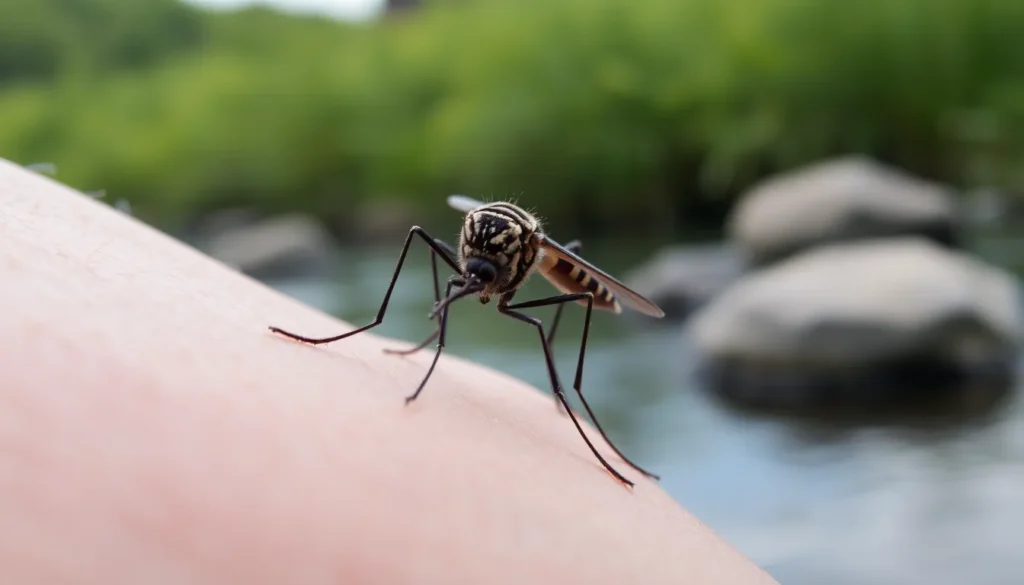
- Mosquitoes belong to the family Culicidae. They are small flies with slender bodies, long legs, and elongated mouthparts adapted for piercing skin and sucking blood.
- Only female mosquitoes bite humans and animals. Females require blood proteins to develop their eggs, while males feed primarily on nectar.
- Mosquitoes are found on every continent except Antarctica. They thrive in diverse environments from tropical rainforests to temperate zones.
- Mosquito larvae develop in standing water. Eggs hatch into larvae that live in water before transforming into pupae and then adults.
- Mosquitoes can detect carbon dioxide and body heat. These cues help females locate potential hosts for blood meals.
- The mosquito’s proboscis contains multiple needles. It pierces the skin to extract blood while injecting saliva that prevents clotting and causes itching.
- Mosquitoes are vectors for many diseases. They can transmit malaria, dengue fever, Zika virus, West Nile virus, chikungunya, and yellow fever among others.
- There are over 3,500 known mosquito species. Only a fraction of these species bite humans or transmit diseases.
- Mosquitoes typically live for two weeks to a month. Their lifespan varies with species, environmental conditions, and availability of food.
- Mosquitoes undergo complete metamorphosis. Their life cycle includes egg, larva, pupa, and adult stages.
- Some mosquito species are active during the day, others at night. Activity patterns depend on the species and environmental factors.
- Mosquitoes use sound to find mates. Males and females recognize each other by the frequency of wing beats.
- The Asian tiger mosquito is an invasive species. It has spread globally and is known for aggressive biting and disease transmission.
- Mosquito saliva contains anticoagulants and proteins. These substances trigger immune responses in hosts, causing itching and swelling.
- Mosquitoes can fly at speeds of 1 to 1.5 miles per hour. Their flight is characterized by a distinctive buzzing sound.
- Genetic research is ongoing to control mosquito populations. Techniques such as gene drives aim to reduce disease transmission risks.
- Mosquitoes have been around for over 100 million years. Fossils suggest they existed during the time of dinosaurs.
- Some mosquito species feed on amphibians, reptiles, and birds instead of mammals. Host preference varies widely among species.
- Mosquitoes can survive cold winters by entering diapause. This dormant state allows them to overwinter in egg or adult form.
- Not all mosquito bites cause disease. Many bites result only in mild irritation without infection.
- Controlling mosquito breeding sites is key to managing populations. Eliminating standing water reduces larval habitats and lowers adult mosquito numbers.
Habitat and Behavior
Mosquitoes inhabit a wide range of environments worldwide, except Antarctica. They are highly adaptable insects that primarily require standing water to complete their life cycle. This includes natural bodies of water such as ponds, marshes, and tree holes, as well as artificial containers like discarded tires, flower pots, and gutters. Mosquito larvae and pupae develop in these aquatic habitats before emerging as winged adults.
Adult mosquitoes exhibit varied behaviors depending on species and environmental conditions. Females actively seek blood meals from mammals, birds, reptiles, or amphibians, using sensory cues such as carbon dioxide, body heat, and body odor. Males typically feed on nectar and do not bite. Mosquitoes are generally crepuscular or nocturnal, with some species active during daylight hours. Their flight is weak but sufficient for local dispersal, and mating often occurs near breeding sites.
Why This Animal Matters
Mosquitoes play significant ecological roles and have substantial impacts on human health. Ecologically, they serve as food for various predators, including birds, bats, amphibians, and other insects. Their larvae contribute to aquatic food webs by filtering organic matter. However, mosquitoes are best known as vectors of serious human diseases, including malaria, dengue fever, Zika virus, and West Nile virus, which collectively cause millions of illnesses and deaths worldwide annually.
Due to their disease transmission capabilities, mosquitoes are a major focus of public health efforts and scientific research. Understanding their biology and behavior is essential for developing effective control strategies. Furthermore, mosquitoes hold cultural significance in some societies, appearing in folklore and symbolism related to health and disease. Conservation is generally not a concern for mosquitoes due to their prolific breeding, but managing their populations is critical for reducing health risks.
Common Misconceptions
Misconception: All mosquitoes bite humans.
Correction: Only female mosquitoes bite humans and other animals to obtain blood needed for egg development; males feed on nectar and do not bite.
Misconception: Mosquitoes only transmit malaria.
Correction: Mosquitoes transmit several diseases including dengue fever, Zika virus, chikungunya, West Nile virus, yellow fever, and more, depending on species and region.
Misconception: Mosquito bites always cause disease.
Correction: Many mosquito bites cause only mild irritation; disease transmission depends on the mosquito species and the presence of pathogens.
Misconception: Mosquitoes are only a nuisance and have no ecological role.
Correction: Mosquitoes are important components of ecosystems as prey for many animals and contributors to aquatic food chains.
Misconception: Mosquitoes can breed in any kind of water.
Correction: Mosquito larvae require stagnant or slow-moving water to develop; fast-flowing or very clean water is usually unsuitable.
FAQ
Why do only female mosquitoes bite humans?
Female mosquitoes bite humans and animals to obtain blood proteins necessary for egg production. Male mosquitoes do not require blood and feed on nectar instead.
How do mosquitoes transmit diseases?
Mosquitoes transmit diseases by injecting saliva containing pathogens into the host’s bloodstream during blood feeding. These pathogens can include viruses and parasites that cause illnesses such as malaria and dengue fever.
What can be done to reduce mosquito populations?
Reducing mosquito populations involves eliminating standing water where larvae develop, using insect repellents, installing window screens, and employing biological or chemical control methods. Public health initiatives also focus on mosquito habitat management and surveillance.




Leave a Reply