
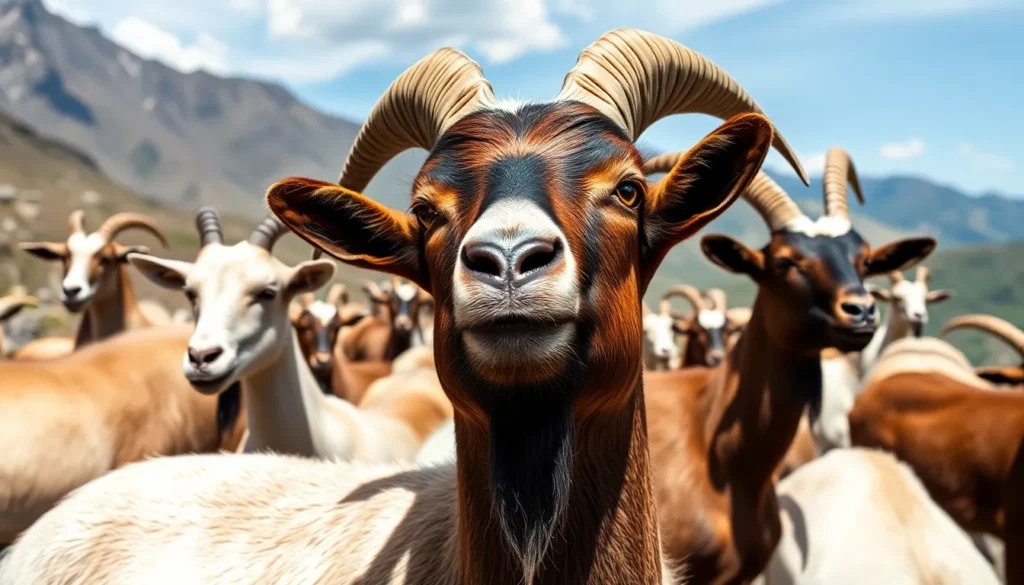
Short Answer
21 Facts About Goats
- Goats are one of the oldest domesticated animals.
Archaeological evidence suggests goats were among the first animals domesticated by humans over 10,000 years ago in the Near East. - There are over 300 distinct breeds of goats.
These breeds vary widely in size, coat color, and purpose, including dairy, meat, fiber, and ornamental types. - Goats have rectangular pupils.
This unique eye shape gives them a wide field of vision, enabling better detection of predators. - They are natural climbers.
Goats can scale steep, rocky terrain with agility, which helps them forage in difficult environments. - Goats are social animals.
They prefer to live in groups called herds and exhibit complex social hierarchies. - They have a four-chambered stomach.
Like other ruminants, goats digest food through a specialized stomach system that allows them to process tough plant material efficiently. - Goats are browsers, not grazers.
Unlike sheep, goats prefer to eat shrubs, leaves, and weeds rather than grass. - They communicate using various vocalizations and body language.
Goats can bleat to express distress, contentment, or call their young. - Goat milk is highly nutritious.
It contains less lactose and smaller fat globules than cow’s milk, making it easier to digest for some people. - Some goats produce valuable fibers like cashmere and mohair.
These fibers are harvested from specific breeds and used in textiles. - Goats have strong memories.
Studies show they can remember faces and recognize individual humans and other goats. - They are used for land management.
Goats help control invasive plant species and reduce wildfire risks by clearing brush. - Goat horns serve multiple functions.
They are used for defense, dominance displays, and thermoregulation. - Goats have been symbols in various cultures.
They appear in folklore, mythology, and religious symbolism worldwide. - They can adapt to diverse climates.
Goats inhabit environments from deserts and mountains to temperate regions. - Goats have a lifespan of about 10 to 18 years.
Lifespan varies depending on breed, environment, and care. - They have a unique grooming behavior.
Goats often rub their bodies against objects to scratch and maintain coat health. - Goats are curious and intelligent.
They can learn to operate simple mechanisms and solve problems. - Some goats can swim.
While not common, certain breeds are capable swimmers when necessary. - Goats produce a natural scent used in perfumes.
Some goat breeds produce musk that can be harvested for fragrance creation. - They have contributed significantly to agriculture and human economy.
Goats provide milk, meat, fiber, and skins essential to many cultures and industries.
Habitat and Behavior
Goats are highly adaptable animals found globally in a wide range of habitats. Originally native to mountainous regions of the Middle East and Central Asia, they have been introduced worldwide. They thrive in environments ranging from arid deserts to alpine zones, often inhabiting rugged and rocky terrain where their agility allows them to access food sources unavailable to other animals.
Behaviorally, goats are social herd animals that establish complex dominance structures. They communicate through vocalizations, body postures, and scent markings. Goats are primarily browsers, feeding on leaves, shrubs, and twigs rather than just grass. This dietary preference allows them to utilize diverse vegetation. Their four-chambered stomachs facilitate the digestion of fibrous plant material. Goats are known for their curious and intelligent nature, often exploring their environment and interacting with other animals.
Why This Animal Matters
Goats play an important ecological role by influencing vegetation patterns and serving as prey for predators in many ecosystems. Their browsing behavior can help control invasive plant species and maintain biodiversity. Agriculturally, goats are valuable livestock providing milk, meat, fiber, and hides, which support the livelihoods of millions of people, especially in developing regions.
Culturally, goats have been significant in human societies for millennia, appearing in myths, religious texts, and art. They symbolize fertility, vitality, and resilience in various traditions. Conservation-wise, while many domestic goat breeds are abundant, some wild goat species face threats from habitat loss and hunting, making conservation efforts important to maintain genetic diversity and ecological balance.
Common Misconceptions
Misconception: Goats eat anything, including toxic plants.
Correction: While goats are known for eating a wide variety of plants, they generally avoid toxic species and use their keen sense of smell and taste to select safe foods.
Misconception: Goats are unintelligent and stubborn.
Correction: Goats are actually quite intelligent and capable of learning complex tasks, exhibiting problem-solving skills and social awareness.
Misconception: Goats are just smaller sheep.
Correction: Although both are ruminants, goats and sheep are distinct species with different behaviors, dietary preferences, and physical characteristics.
FAQ
Are goats good pets?
Goats can be good pets for people who have enough space and understand their social and dietary needs. They require companionship, proper fencing, and a suitable diet.
What do goats eat?
Goats primarily eat shrubs, leaves, twigs, and weeds rather than grass. They are browsers and use their specialized stomachs to digest fibrous plant materials.
Can goats climb trees?
While goats are excellent climbers on rocky surfaces, some goats in certain regions have been observed climbing trees, especially in places like Morocco, to reach leaves and fruit.





Leave a Reply