
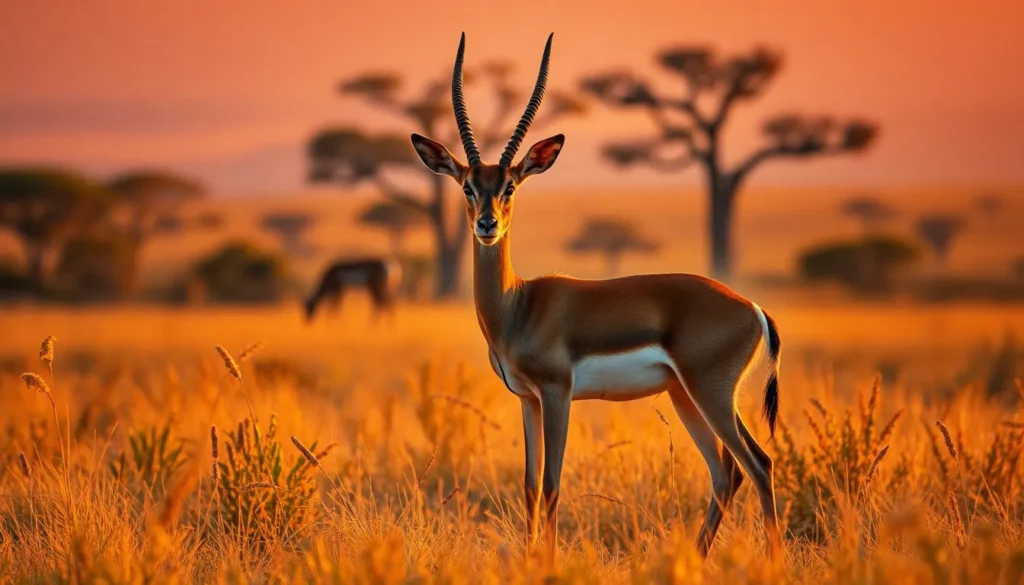
Short Answer
21 Facts About Gazelles
- Gazelles belong to the genus Gazella. They are part of the Bovidae family, which includes antelopes, goats, and cattle.
- There are about 12 recognized species of gazelles. These species vary in size, habitat, and behavior across Africa and Asia.
- Gazelles are adapted for speed and agility. They can reach speeds of up to 60 miles per hour (97 kilometers per hour) in short bursts to evade predators.
- Most gazelles have distinctive facial markings. These often include dark stripes on the face and sides, which can help with species identification.
- Gazelles are herbivores. Their diet mainly consists of grasses, leaves, shoots, and sometimes fruits depending on availability.
- They inhabit a variety of ecosystems. Gazelles are found in savannas, grasslands, deserts, and mountainous regions.
- Gazelles have a unique alarm system. When threatened, they perform a behavior called “stotting” or “pronking,” where they leap high into the air to warn others and confuse predators.
- Most species of gazelles are social animals. They live in herds that can range from a few individuals to hundreds, depending on species and environmental conditions.
- Male gazelles often establish territories. They use scent marking and displays to defend their areas and attract females.
- Gazelle horns are present in both sexes in some species. In others, only males have horns, which are used in fights over dominance.
- Gazelles have excellent eyesight and hearing. These senses help them detect predators early in open habitats.
- Gazelles are prey for many large African carnivores. These include lions, cheetahs, leopards, and hyenas.
- Some gazelle species have adapted to arid environments. They can survive with minimal water by obtaining moisture from their food.
- Gazelles are important prey animals in their ecosystems. They support predator populations and contribute to maintaining a balanced food web.
- Gazelle populations have declined in some regions. Habitat loss, hunting, and competition with livestock have contributed to this decline.
- Conservation efforts are in place for several gazelle species. These efforts include protected areas and anti-poaching measures.
- Gazelles communicate through vocalizations and body language. They use calls to alert the herd and signals during mating or territorial disputes.
- Young gazelles are called fawns. They are able to stand and run shortly after birth, which is crucial for survival.
- Gazelles play a role in seed dispersal. By feeding on various plants, they help spread seeds through their droppings.
- Gazelles have inspired cultural symbolism. They are often associated with grace, speed, and beauty in African and Middle Eastern folklore.
- Research on gazelles contributes to understanding desert and savanna ecology. Studying their behavior and adaptations informs broader ecological and conservation science.
Habitat and Behavior
Gazelles primarily inhabit open landscapes such as savannas, grasslands, and deserts across Africa and parts of Asia. They thrive in arid and semi-arid environments where vegetation is sparse but sufficient for grazing. Gazelles are diurnal, meaning they are most active during the day, especially in the cooler morning and late afternoon hours. Their social structures vary by species, with some forming large herds that provide safety in numbers, while others live in smaller family groups or solitary territories. Gazelles rely on their exceptional speed and agility to evade predators, using quick bursts of running and the distinctive stotting behavior to confuse attackers and signal danger to other gazelles. Their diet consists mainly of grasses and leaves, but they can adapt to seasonal changes by consuming different plant materials. Gazelles also exhibit territorial behaviors, especially males defending areas to attract females during the breeding season.
Why This Animal Matters
Gazelles play a vital ecological role as herbivores within their ecosystems. By grazing, they influence plant community dynamics and contribute to nutrient cycling. They serve as a key prey species for many large carnivores, thus supporting predator populations and helping maintain balanced food webs. Gazelles also contribute to seed dispersal through their feeding habits, aiding plant regeneration. Culturally, gazelles have been significant symbols in African and Middle Eastern societies, representing grace and speed. Conservation-wise, some gazelle species face threats from habitat loss and hunting, making them important indicators of ecosystem health. Efforts to protect gazelles help preserve broader biodiversity and ecological integrity in their native regions.
Common Misconceptions
Misconception: Gazelles are just small antelopes and not important to the ecosystem.
Correction: Despite their size, gazelles are important herbivores and prey animals that play a critical role in maintaining ecological balance in their habitats.
Misconception: All gazelles look the same and live in the same environments.
Correction: There are multiple species of gazelles with varying physical traits and adaptations to different environments, from deserts to grasslands.
FAQ
How fast can gazelles run?
Gazelles can reach speeds of up to 60 miles per hour (97 kilometers per hour) in short bursts, enabling them to quickly escape predators.
What do gazelles eat?
Gazelles are herbivores that primarily feed on grasses, leaves, shoots, and sometimes fruits, adapting their diet to seasonal availability.
Where do gazelles live?
Gazelles inhabit a variety of ecosystems including savannas, grasslands, deserts, and mountainous areas across Africa and parts of Asia.






Leave a Reply